
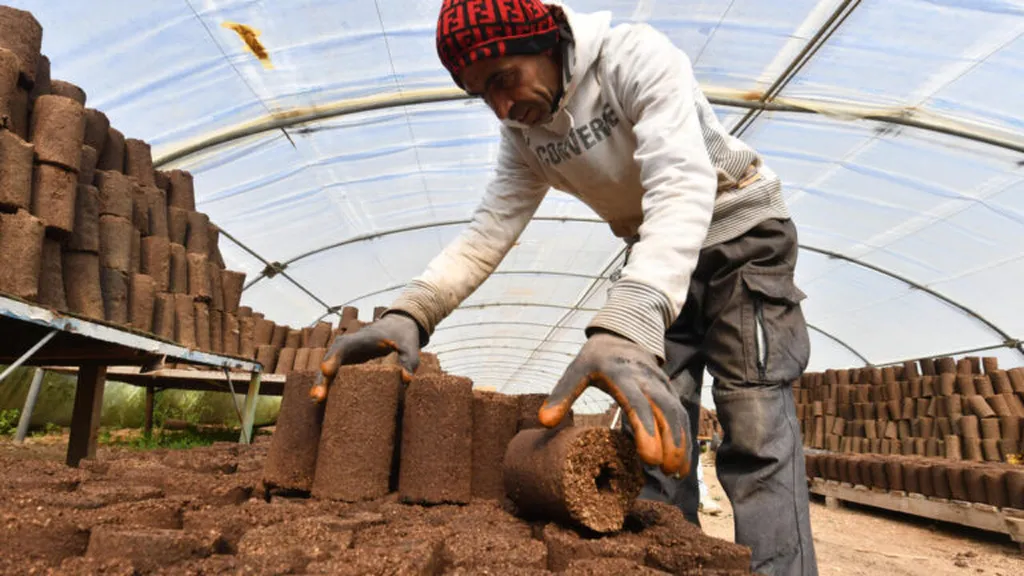
In the heart of Tunisia, a groundbreaking project is transforming agricultural waste into a powerful tool for cleaning up industrial wastewater, offering a promising solution for arid and semi-arid regions. The VALCARB project, led by BenAli Sihem of the Dryland Farming and Oasis Cropping Laboratory at the Arid Land Institute, is pioneering a circular economy model that could revolutionize wastewater management in the agro-industrial sector.
The project’s recent findings, published in the E3S Web of Conferences (which translates to Environmental Sciences and Sustainable Development Conferences), shed light on the severe pollution levels in effluents from the Société des Boissons de Tunisie (SBT). The results are stark: electrical conductivity levels soaring at 9,420 μS/cm, chloride levels at 2,455 mg/L, and chemical oxygen demand (COD) around 820 mg O2/L. These figures point to significant salinization and organic loading, posing serious risks to soil health.
“Our analyses revealed not only high levels of organic and saline pollution but also concerning microbiological contamination, including various fungal species,” BenAli Sihem explained. “This underscores the urgent need for effective wastewater treatment solutions in these regions.”
The project’s innovative approach involves converting agricultural residues into eco-friendly biosorbents, specifically biochars, which are then used to treat wastewater. The biochars produced from olive residues demonstrated impressive properties, with specific surface areas ranging from 200-300 m2/g and a porous structure ideal for adsorbing pollutants. This dual approach of valorizing biomass and remediating wastewater presents a sustainable solution that could have significant commercial impacts, particularly in the energy sector.
“By turning agricultural waste into valuable resources for wastewater treatment, we’re not only addressing environmental challenges but also creating opportunities for economic growth,” BenAli Sihem noted. “This model has the potential to be replicated in other regions facing similar issues, offering a scalable and sustainable solution.”
The preliminary results of the VALCARB project highlight the potential for biochar-based treatment systems to significantly improve wastewater quality. Treated samples showed a marked reduction in COD to 90 mg O2/L and conductivity below 2,400 μS/cm, demonstrating the effectiveness of the biological treatment system. This research could pave the way for future developments in the field, encouraging the adoption of circular economy models that prioritize sustainability and resource efficiency.
As the world grapples with increasing environmental challenges, projects like VALCARB offer a glimmer of hope. By harnessing the power of agricultural residues and innovative treatment technologies, we can move towards a more sustainable future, one where waste is minimized, and resources are maximized. The insights from this research not only shape future developments in wastewater management but also inspire a broader shift towards sustainable practices across industries.