
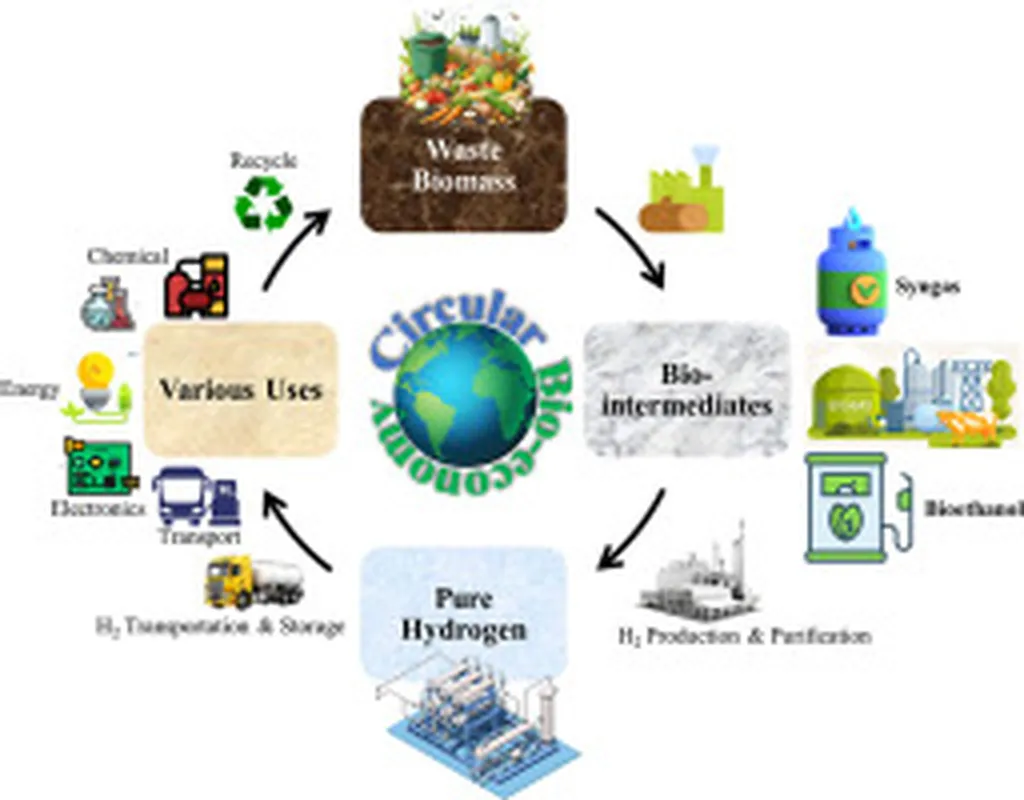
In a significant stride towards a sustainable future, researchers have unveiled a promising pathway to produce green hydrogen from waste biomass, potentially revolutionizing the energy sector. This innovative approach not only addresses energy security but also tackles waste management and climate mitigation, offering a holistic solution for a circular bio-economy.
The study, led by Subhrajit Roy from the Department of Chemical Engineering at the Indian Institute of Technology Roorkee, explores the conversion of various waste biomass feedstocks—such as agricultural residues, forestry waste, municipal solid waste, and industrial by-products—into hydrogen through an integrated biorefinery framework. This process involves multiple stages, starting with feedstock characterization and pretreatment, followed by the production of intermediates like bioethanol, biogas, syngas, and bio-oil. These intermediates are then transformed into hydrogen using established and emerging technologies.
“By valorizing waste biomass, we can simultaneously address multiple global challenges,” Roy explained. “This approach not only provides a sustainable source of hydrogen but also contributes to waste reduction and carbon emissions mitigation.”
The research delves into advanced hydrogen purification techniques, including pressure swing adsorption, hybrid membranes, sorption-enhanced systems, and next-generation adsorbents, which are crucial for delivering high-purity hydrogen. The study also highlights the economic viability and environmental benefits of biomass-derived hydrogen, particularly when integrated with carbon capture and utilization/storage technologies.
A conceptual holistic biorefinery model is proposed, emphasizing process integration, co-product valorization, and circular economy principles. This model could serve as a blueprint for future developments in the field, bridging technological, economic, and environmental dimensions.
The findings, published in the journal ‘Sustainable Chemistry for Climate Action’ (translated to English as ‘Sustainable Chemistry for Climate Action’), underscore the potential of waste biomass-derived green hydrogen as a cornerstone of the sustainable hydrogen economy. The research identifies technical challenges, research gaps, and future directions in catalyst development, process intensification, and policy support, paving the way for a more sustainable and efficient energy sector.
As the world transitions towards net-zero emissions, this innovative approach to green hydrogen production could play a pivotal role in shaping the future of the energy industry. By leveraging waste biomass, we can create a more sustainable and circular economy, reducing our reliance on fossil fuels and mitigating the impacts of climate change.