
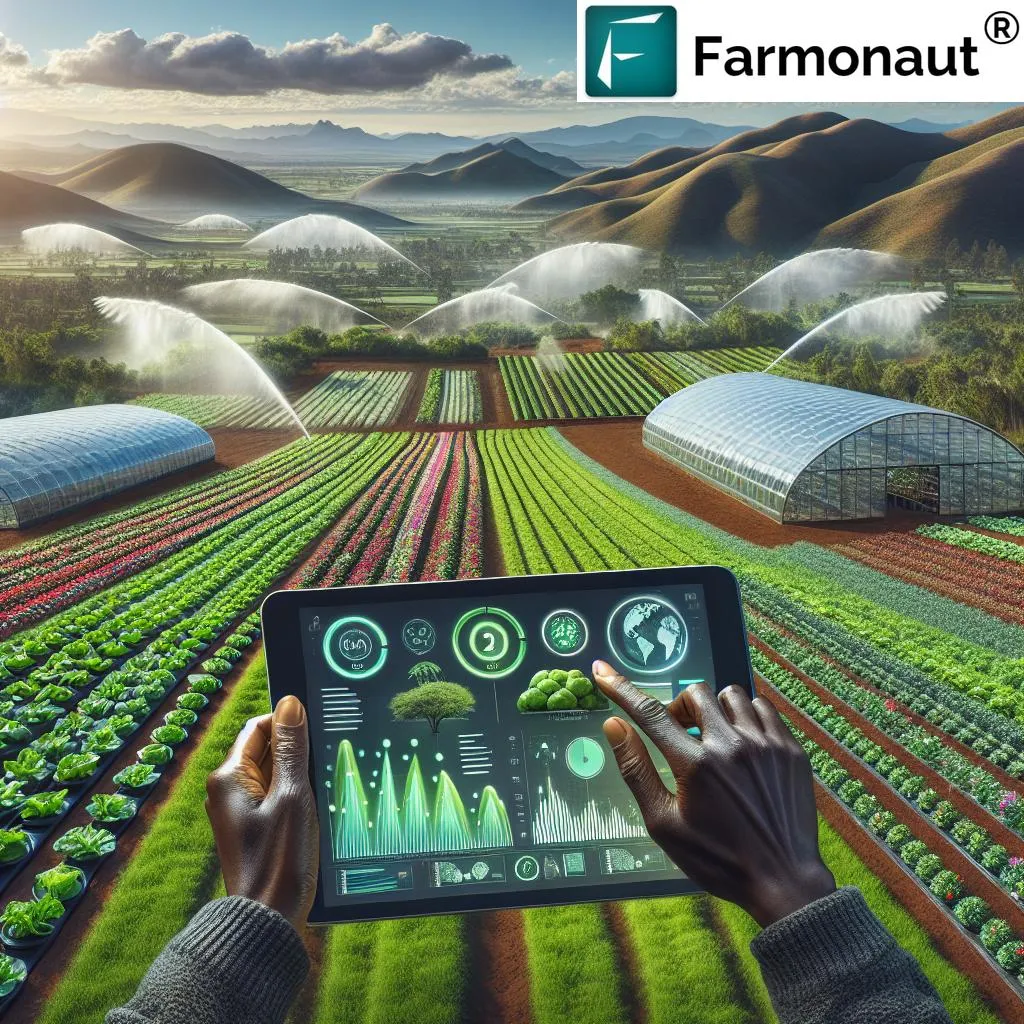
In the heart of Nigeria, a researcher is uncovering how artificial intelligence (AI) could revolutionize agriculture, offering a lifeline to farmers battling climate change and food insecurity. Adewale Isaac Olutumise, from the Department of Agricultural Economics at Adekunle Ajasin University, has led a comprehensive review of AI’s economic impact on agriculture, with a keen focus on Sub-Saharan Africa. His work, published in the journal *Discover Agriculture* (which translates to *Explore Agriculture* in English), reveals a compelling narrative of technological promise and economic transformation.
Olutumise’s study, a synthesis of over 60 peer-reviewed articles and institutional reports, paints a picture of AI as a powerful catalyst for change in the agricultural sector. “AI technologies, from predictive analytics to smart irrigation, are demonstrating a consistent pattern of impact,” Olutumise explains. His research shows that AI-driven interventions can boost crop yields by 12% to 45%, slash input costs by up to 25%, and streamline supply chains, making farming more efficient and profitable.
The economic implications are profound. AI is not just about enhancing productivity; it’s about reallocating labor, integrating rural economies into broader markets, and fostering sustainability. “AI contributes to labor reallocation and market integration in rural areas,” Olutumise notes, highlighting how technology can reshape rural livelihoods. However, the path is not without obstacles. Infrastructure gaps, digital literacy challenges, and policy vacuums pose significant barriers to scalable adoption.
For the energy sector, the implications are equally compelling. As agriculture becomes more efficient, the demand for energy solutions tailored to smart farming practices could surge. From powering AI-driven irrigation systems to supporting data centers for predictive analytics, the energy sector has a unique opportunity to innovate and collaborate with agritech investors. “This review bridges technological applications with economic development frameworks,” Olutumise says, emphasizing the interdisciplinary nature of his work.
The study introduces a novel approach by using a triadic framework to synthesize economic outcomes and comparative effect-size analysis to quantify AI’s impact. This method provides a structured lens through which policymakers, agritech investors, and development stakeholders can navigate the complexities of AI integration in agriculture.
Olutumise’s recommendations are clear: invest in localized AI solutions, bolster rural digital infrastructure, and create policy environments that foster inclusive technology diffusion. His work contributes to the growing field of digital agricultural economics, offering evidence-based guidance for a sector on the cusp of transformation.
As the world grapples with climate change and food insecurity, Olutumise’s research shines a light on the potential of AI to drive agricultural productivity, sustainability, and rural economic resilience. For the energy sector, this is more than just a technological shift; it’s a call to innovate and collaborate, ensuring that the power behind AI-driven agriculture is both sustainable and scalable. In the words of Olutumise, “This study articulates pathways through which AI enhances technical efficiency, environmental resilience, and rural economic transformation.” The future of agriculture is here, and it’s powered by intelligence—both artificial and human.