
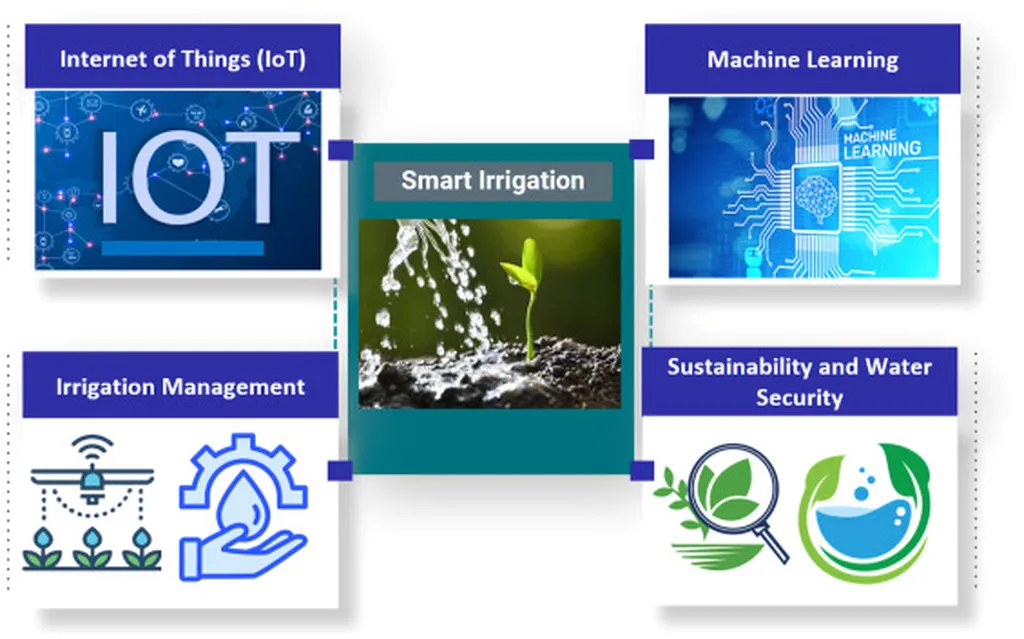
In the sun-scorched landscapes of semi-arid regions, where water is a precious commodity, understanding evaporation rates is crucial for industries that rely on it. A recent study published in *Applied Water Science* (translated from French) offers a novel approach to estimating pan evaporation coefficients, potentially revolutionizing water management strategies in these climatically challenging areas. The research, led by Mohammed Achite from the Faculty of Nature and Life Sciences at Hassiba Benbouali University of Chlef, leverages machine learning models to provide more accurate and efficient predictions.
Achite’s work focuses on the semi-arid climate conditions, where traditional methods of estimating evaporation often fall short due to the unique environmental factors at play. “In semi-arid regions, the dynamics of water evaporation are influenced by a complex interplay of temperature, humidity, wind speed, and solar radiation,” Achite explains. “Our study aims to capture these nuances more effectively using advanced machine learning techniques.”
The implications for the energy sector are significant. Water is a critical resource for many energy production processes, from cooling thermal power plants to hydraulic fracturing in oil and gas extraction. Accurate estimation of evaporation rates can lead to better water management practices, reducing costs and environmental impact. “By optimizing water usage, industries can enhance their operational efficiency and sustainability,” Achite notes. “This is particularly important in regions where water scarcity is a growing concern.”
The study’s findings suggest that machine learning models can outperform traditional methods in predicting pan evaporation coefficients. This could lead to more precise water budgeting and resource allocation, benefiting both industrial operations and local communities. “The potential for this technology to shape future water management strategies is immense,” Achite adds. “It’s not just about improving accuracy; it’s about creating a more resilient and sustainable future for water-dependent industries.”
Published in *Applied Water Science*, the research opens new avenues for exploration in the field of hydrology and water resource management. As industries continue to grapple with the challenges of water scarcity, innovative solutions like Achite’s machine learning models could pave the way for more efficient and sustainable practices. The study not only highlights the importance of advanced technologies in addressing real-world problems but also underscores the need for continued research and development in this critical area.