
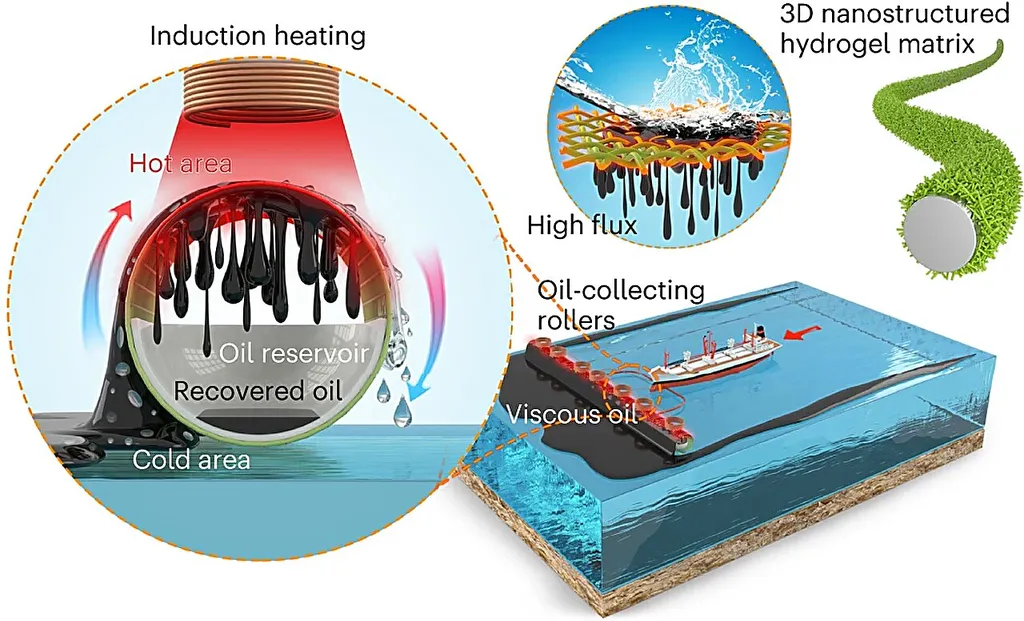
Midhat Kh. Akhtyamov, a researcher at the Far Eastern State University of Railways, has developed a series of innovative devices designed to tackle one of the most persistent environmental challenges of our time: oil spills on water surfaces. In a field where every minute counts and the margin for error is slim, Akhtyamov’s work offers a blend of mobility, precision, and digital integration that could redefine how industries respond to such disasters.
The urgency of this research cannot be overstated. Oil spills, whether from transportation accidents or storage failures, create immediate and long-term ecological damage. They disrupt aquatic ecosystems, threaten biodiversity, and can devastate local economies reliant on fishing or tourism. Traditional cleanup methods often struggle with scalability and efficiency, leaving gaps that allow oil to spread and sink, making recovery exponentially harder. Akhtyamov’s approach addresses these gaps head-on, focusing on real-world applicability and rapid deployment.
One of the standout features of Akhtyamov’s designs is their adaptability. Unlike rigid, large-scale systems that require extensive setup, these devices are mobile and can be fine-tuned to match the specific conditions of a spill. This flexibility is critical in the early stages of a response, where conditions can change rapidly. “The ability to adjust operating parameters on the fly isn’t just a technical advantage—it’s a necessity,” Akhtyamov explains. “In the chaos of an emergency, every second and every adjustment can mean the difference between a contained incident and an environmental catastrophe.”
The integration of digital control systems is another game-changer. These systems allow operators to monitor and adjust the devices remotely, ensuring optimal performance even in hazardous conditions. For industries like oil and gas, where spill risks are ever-present, such technology could significantly reduce response times and improve outcomes. The economic implications are substantial: faster, more effective cleanup means lower fines, reduced reputational damage, and quicker restoration of operations.
Akhtyamov’s solutions have already proven their worth in real-world scenarios in Russia’s Far Eastern region. During actual spill incidents, these devices demonstrated their ability to minimize environmental and economic damage. The use of advanced sorbents further enhanced their effectiveness, allowing for more efficient absorption of oil without harming aquatic life. This practical validation underscores the potential for broader adoption, not just in Russia but globally.
For the energy sector, the commercial impacts are clear. Investing in such technologies could lead to lower liability costs, improved regulatory compliance, and enhanced public trust. Companies could also benefit from reduced downtime and faster recovery of operations after a spill. As environmental regulations tighten and public scrutiny intensifies, having a robust, scalable response system in place isn’t just a best practice—it’s a competitive advantage.
Published in the *RUDN Journal of Ecology and Life Safety* (formerly known as the *RUDN Journal of Ecology and Safety*), Akhtyamov’s research adds to a growing body of knowledge aimed at safeguarding our water resources. The journal’s focus on practical, solution-driven science aligns perfectly with the goals of this work, bridging the gap between theory and real-world application.
Looking ahead, the implications of this research extend beyond immediate spill response. The principles of mobility, digital integration, and adaptability could inspire new approaches to other environmental challenges, from chemical pollution to plastic waste. For industries and regulators alike, the message is clear: innovation isn’t just about preventing disasters—it’s about being prepared to respond when they happen. Akhtyamov’s work is a step in that direction, offering a blueprint for a more resilient and responsive future.