
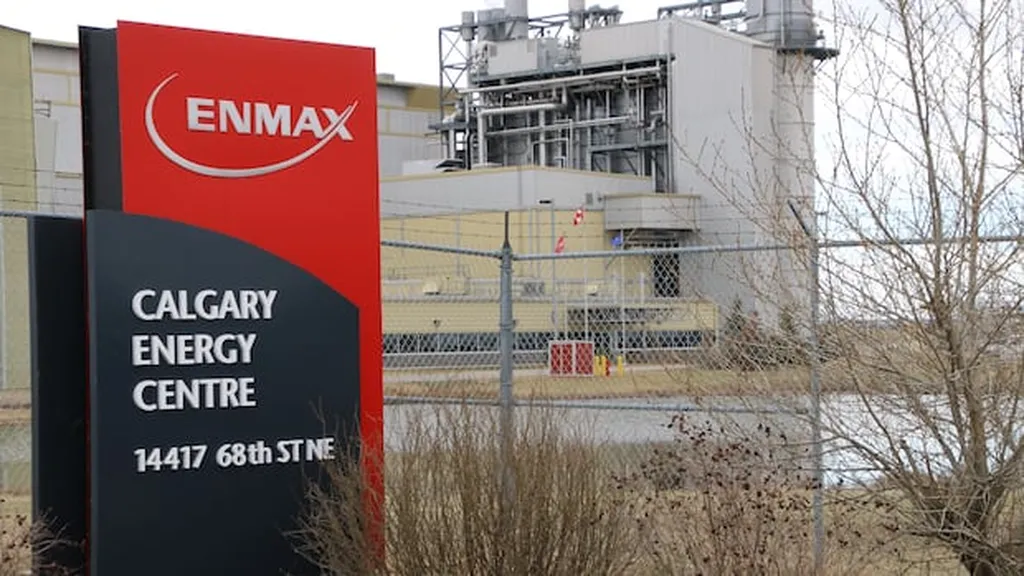
Mayor Jeromy Farkas’s push for a formal review of Enmax’s U.S. unit, Versant Power, has reframed a dormant debate into a live policy question with concrete stakes for Calgary’s finances and infrastructure. The mayor’s proposal includes two distinct paths: testing the market for a potential sale of Versant Power and examining whether to transfer the city’s water utility under Enmax’s umbrella. Neither move is active, but both carry immediate implications for cash flows, governance, and risk allocation that investors and ratepayers will scrutinize the moment formal processes begin.
Enmax has publicly stated its board has not discussed a Versant sale, leaving the door open for exploratory dialogue without preempting outcomes. A formal review, as advocated by Farkas, would require establishing clear criteria, appointing independent advisors, and publishing a valuation framework, not just a market sounding. The exercise would need to quantify the trade-off between immediate capital release and the loss of recurring earnings from a diversified U.S. utility platform. Scenario modelling would compare sale proceeds against the net present value of keeping Versant, factoring in allowed returns, capital expenditure needs, and regulatory exposure in Maine, New Hampshire, and Vermont. Any decision would hinge on whether the proceeds can be reinvested at rates exceeding the asset’s current cash flow yield, adjusted for U.S. regulatory risk and potential tax obligations.
Shifting Calgary’s water utility into Enmax presents a different calculus. Proponents argue centralized oversight could improve procurement discipline, streamline capital planning, and raise reporting standards across both systems. Critics warn of transition costs, cultural friction, and the risk of overleveraging Enmax’s balance sheet during integration. The near-term impact would include systems migration, governance redesign, and staff alignment, with measurable service benchmarks required before any structural change is approved. Regulators will expect ring-fencing provisions to ensure ratepayer funds remain insulated from Enmax’s broader financial strategy, while the company’s credit profile will depend on how integration costs and future capital needs are financed without compromising dividend stability.
Investors are watching dividend sustainability most closely. Enmax currently relies on a mix of regulated Alberta earnings and U.S. utility cash flows to support its payout. A Versant sale would reduce diversity, forcing management to either cut dividends, raise debt, or accelerate growth in regulated or contracted revenue streams. The company has not updated its dividend guidance, but any review will need to address how a sale would affect payout ratios and long-term coverage metrics. Similarly, if the water utility is transferred, the City would need to clarify how its dividends are treated post-integration, whether through adjusted service charges, intercompany dividends, or direct cash transfers.
Governance clarity remains the weakest link in the debate. A credible review process must define decision rights, valuation standards, and disclosure protocols before any recommendations are presented to council. Rating agencies will assess whether proposed changes strengthen or weaken Enmax’s financial resilience, particularly the extent to which ring-fencing protects regulated cash flows from non-regulated activities. The mayor’s call for a full asset review suggests a preference for transparency, but the absence of a formal mandate risks prolonging uncertainty. Without a published timeline, advisor appointments, and a public framework for stakeholder engagement, the process risks becoming politicized rather than fact-driven.
Regulatory signals will be decisive. A Versant sale would trigger multi-state approvals in the U.S., where commissions scrutinize buyer qualifications, rate impacts, and service continuity. Any water utility transfer would require provincial oversight to ensure rate stability, environmental compliance, and alignment with Alberta’s public utility regulations. Delays in either path could erode value or derail timelines, making early regulator engagement essential.
The coming weeks will reveal whether Calgary opts for a narrow financial review or a broader restructuring exercise. What is certain is that the outcome will reshape Enmax’s earnings mix, Calgary’s cash flow profile, and the level of control the city retains over its largest municipal asset. Watch for the first council motion authorizing a formal review, the names of financial and legal advisors appointed, and any preliminary valuation ranges published by Enmax. Those signals will determine whether the debate moves from hypothetical to executable—and who ultimately bears the risk of change.