
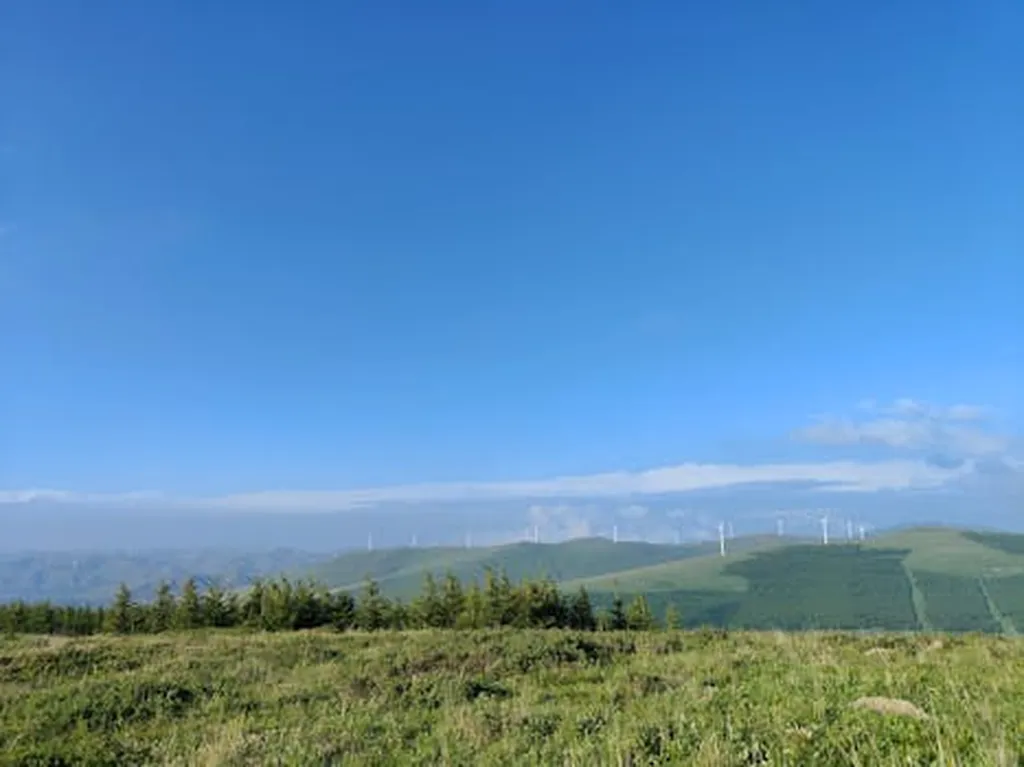
In the rolling hills and bustling plains of Hebei Province, a quiet revolution is reshaping how we value nature’s invisible hand. Over the past decade, researchers led by Xuran Zhang from Yanshan University have mapped the ebb and flow of ecosystem service value (ESV)—a metric that translates forests, rivers, and grasslands into economic terms. Their findings, published in *Frontiers in Environmental Science*, reveal not just ecological trends but also a roadmap for industries, governments, and investors navigating China’s green transition.
Hebei’s ESV tells a story of resilience. Between 2014 and 2023, the province’s total ecosystem value followed a dramatic three-act arc: a decline in the early years, a rebound mid-decade, and a recalibration in recent times. “This isn’t just random fluctuation,” Zhang notes. “It reflects deliberate policy interventions—ecological restoration projects, reforestation drives, and stricter land-use controls—kicking in at critical moments.” For energy companies eyeing Hebei’s vast wind and solar potential, the data offers a critical insight: sustainable land management isn’t just an environmental mandate; it’s an economic one. Areas with high ESV, particularly the mountainous north, often overlap with prime renewable energy zones, where biodiversity and clean energy infrastructure must coexist.
The spatial patterns uncovered by the study are equally telling. Hebei’s ESV is highest in the north—where rugged terrain and dense forests dominate—and lowest in the south’s urbanized plains. “Think of it as a natural gradient,” Zhang explains. “The mountains act like ecological banks, storing value in the form of carbon sequestration, water purification, and soil stability.” Meanwhile, the low-lying south, home to Hebei’s industrial heartland, shows the scars of rapid development. Yet even here, change is afoot. Between 2017 and 2023, pockets of growth emerged in central transitional zones, hinting at spillover effects where ecological restoration and economic activity are beginning to align.
For the energy sector, the implications are clear. Water supply—a provisioning service—has been a persistent drag on ESV, particularly in water-stressed regions. “This isn’t just about scarcity; it’s about cost,” says Zhang. “Industries dependent on water, from thermal power plants to data centers, face rising operational risks.” The study suggests that improving water governance—through conservation, recycling, and smart infrastructure—could unlock billions in avoided costs and new revenue streams. Meanwhile, the dominance of regulating and supporting services (like flood control and pollination) underscores the hidden value of “nature’s infrastructure.” Investing in these ecosystems could yield higher returns than traditional gray infrastructure, with longer lifespans and lower maintenance.
The research also introduces a note of caution. Sensitivity analysis confirmed the robustness of the ESV estimates, but the study’s stage-dependent fluctuations—peaks and troughs in value change rates—highlight the fragility of these gains. “Ecological recovery isn’t linear,” Zhang warns. “It requires sustained investment and adaptive management.” For policymakers and businesses alike, the takeaway is that ESV isn’t a static ledger but a dynamic asset, one that demands real-time monitoring and agile responses.
As Hebei Province charts its path toward ecological civilization, the study’s findings offer more than academic insight. They provide a blueprint for harmonizing economic growth with environmental stewardship—a balance that energy companies, in particular, can no longer afford to ignore. In a world where carbon footprints and water footprints are increasingly scrutinized, Hebei’s story is a reminder: the most valuable resources aren’t always the ones we drill, dam, or burn. Sometimes, they’re the ones we protect.