
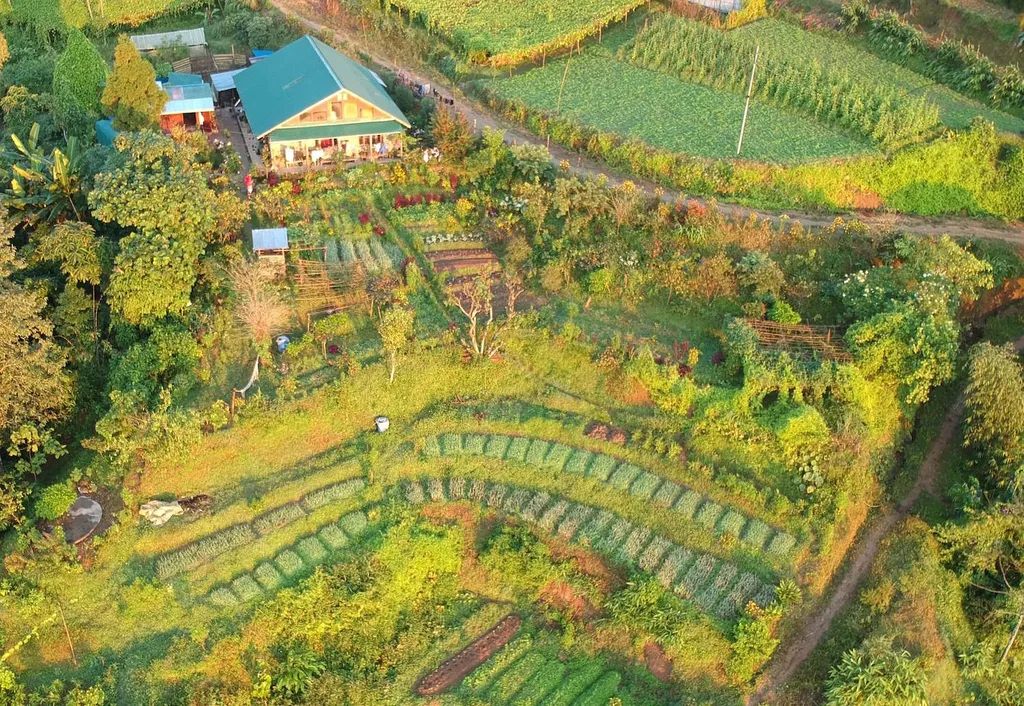
Nepal’s farmers are quietly redefining agriculture—not with the latest high-tech inputs, but by reviving age-old practices that work with nature rather than against it. According to a new study led by Joshi Bal Krishna of Nepal’s National Genebank, nearly half of the country’s farming households are already practicing agroecology on a third of its agricultural land. The findings, published in *Natural Resources and Sustainable Development* (*Prakritik Sāmagrī ra Tathaṭhāpī Vikās*), suggest that these methods could not only preserve genetic diversity but also reshape commercial agriculture, with potential ripple effects for energy, logistics, and rural economies.
Krishna, whose team used the ROSE methodology—Review, Observation, Survey, and Experience—to document these practices, argues that agroecology isn’t just about sustainability; it’s about resilience. “We’re not talking about turning back the clock,” he says. “We’re talking about moving forward by understanding how nature has already optimized these systems over generations.” His research highlights how mixed cropping, circular farming, and participatory breeding are improving yields while reducing reliance on synthetic inputs—a shift that could ease pressure on energy-intensive supply chains.
One of the most striking revelations is the scale of adoption: 80% of Nepal’s agricultural genetic resources are already managed agroecologically. Community genebanks and agro-gene sanctuaries are playing a crucial role in preserving locally adapted varieties, which could prove vital as climate change accelerates. But the commercial implications extend beyond farming. For energy sectors, this could mean reduced demand for fossil-fuel-based fertilizers and pesticides, while decentralized, nature-positive agriculture may lower transportation costs and stabilize rural energy demand.
The study also introduces key indicators like “ecological yield” and “eco-friendliness” to measure success—not just in bushels per acre, but in ecosystem health. As global supply chains face scrutiny over their environmental footprint, Nepal’s model offers a low-energy alternative that prioritizes biodiversity and soil health. Whether it scales beyond Nepal’s hills and valleys remains to be seen, but the data suggests that the future of agriculture may not lie in bigger machines or synthetic boosts, but in working *with* the land, not against it.