
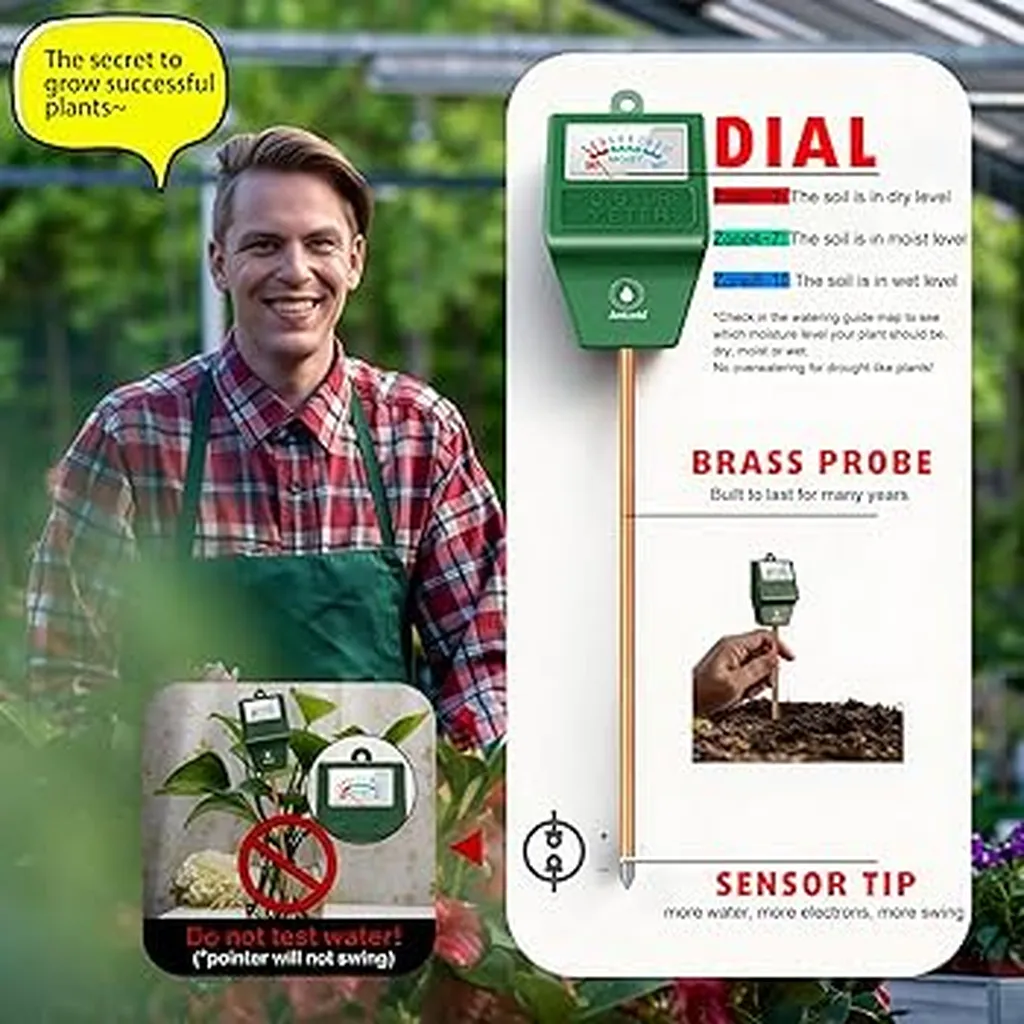
A soil probe that costs less than a coffee can uncover the hidden cause of your plant’s decline. Every year, gardeners spend hundreds on apps and gadgets that promise to eliminate guesswork, only to realize that the real problem wasn’t a lack of data—it was knowing what to do with it. The difference between a tool that becomes part of your routine and one that ends up in the garage often comes down to whether it solves a problem you actually have. Not the one the marketing team decided you needed.
The soil pH and moisture probe sits in the quiet middle ground between analog and smart. For $15 to $35, it delivers immediate answers without an app, subscription, or dead batteries. Press it into the soil and read the dial. That’s it. For gardeners who’ve watched tomatoes split or basil bolt without explanation, the probe offers clarity. It’s the rare gadget that doesn’t promise revolution; it simply removes the mystery. Most “smart” devices overcomplicate the act of growing. A Bluetooth soil sensor might tell you your clay soil is dry, but so will your fingertip. The probe, however, also checks pH and light levels in one motion—something even the most attentive gardener might overlook. Logan Hailey of Epic Gardening calls out the waste of spending $150 on a sensor that duplicates what you could feel, but the probe sidesteps that trap by being inexpensive and direct.
Then there’s the hygrometer and thermometer combo, a tool that quietly reshapes how you understand your garden’s environment. Most gardeners fixate on daytime highs, but nighttime conditions dictate survival. A combined unit stores minimum and maximum readings while you sleep, revealing the true temperature swings in your greenhouse or cold frame. Garden Culture Magazine highlights its value in early spring, when a four-degree difference between forecast and reality can mean the difference between a thriving seedling and a frost-killed transplant. High nighttime humidity also silently invites mildew, a problem that starts before the first sign appears. This isn’t about chasing precision for its own sake; it’s about knowing what your plants actually endure when you’re not looking.
Smart irrigation controllers don’t just automate watering—they correct the human error that comes with manual schedules. Overwatering one section while underwatering another is standard practice when you’re relying on memory. A smart controller pulls local weather data and adjusts in real time, shutting off during rain or freezing temperatures. For multi-zone gardens, the savings in water and time add up quickly. The upfront cost is offset within a season, not over decades. The value isn’t in the app’s interface; it’s in the discipline it imposes on your watering habits.
Plant identification apps, by contrast, deliver outsized utility for almost no cost. Modern photo-based apps can identify species, pests, and diseases in seconds. For the moment you’re staring at a wilting leaf and have no idea what’s wrong, this tool saves hours of forum-scrolling and guesswork. The return on investment isn’t just high—it’s immediate. You don’t need a subscription, a battery, or even a stable internet connection. The app works because it answers a question that traditional learning can’t provide fast enough.
A home weather station strips away the guesswork of regional forecasts by giving you hyper-local data at ground level. Regional weather apps smooth over the microclimates that define a garden’s success or failure. Mark Turner, a photographer and gardener quoted by Dwell, emphasizes the value of tracking actual conditions in his vegetable garden over time. In March, when a slight temperature drop can derail an entire planting schedule, the difference between forecast and reality becomes critical. This isn’t about replacing the National Weather Service; it’s about knowing the weather in your backyard, not the one 20 miles away.
Composting in small spaces has long been a compromise between convenience and results. The Lomi countertop composter changes that equation by accepting meat, dairy, and cooked scraps—materials that traditional bins reject. Amanda MacArthur at Food Gardening Network describes how the device altered her approach to food waste, turning it into compost overnight. The result is a nutrient-rich amendment ready to use immediately, not after six months of waiting. For urban and suburban gardeners, this isn’t just a gadget; it’s a shift in how they view waste and resource use.
Robot lawn mowers aren’t for everyone, but for the right lawn, they make sense. They operate more efficiently than manual mowing, reduce compaction, and free up weekend time. Jeremy Yamaguchi, CEO of Lawn Love, told Dwell that robotic mowers help lawns “last longer” and require less replanting over time. The caveat is clear: they thrive on flat, obstacle-free terrain. Cottage gardens