
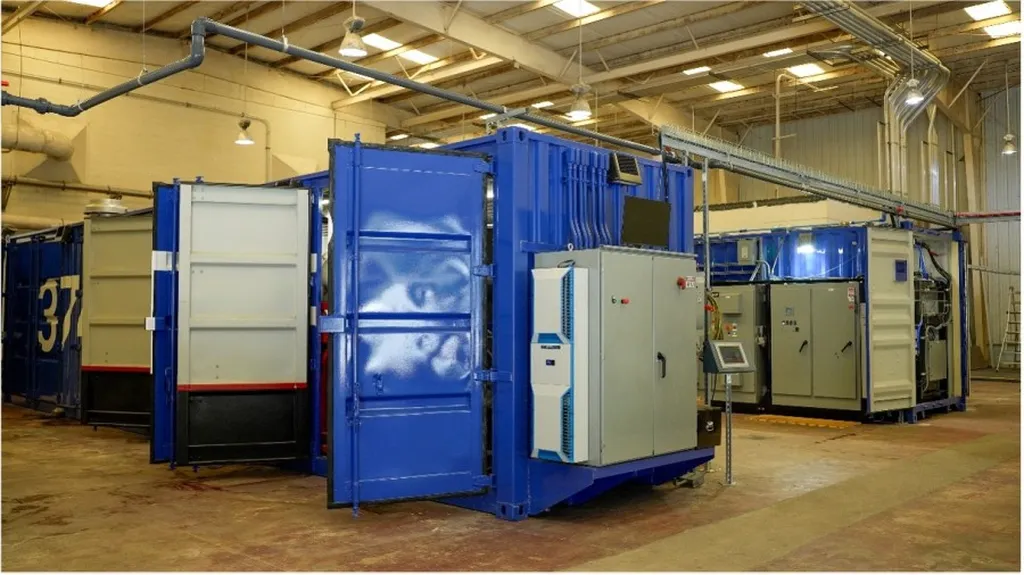
Brad Meyers isn’t just describing a product when he says the new mobile AirSCWO system “goes to them”—he’s announcing a shift in how the hazardous waste sector thinks about destruction technology. Until now, facilities that generate PFAS-laced biosolids, AFFF sludges, or spent granular activated carbon have faced a binary choice: ship the material off-site at significant cost and risk, or accept partial treatment that leaves the forever chemicals intact. The mobile AirSCWO system, now in its final commissioning phase at 374Water’s Orlando facility, removes that choice entirely. By parking a supercritical water oxidation unit directly at the St. Cloud Nutrient, Energy, and Water Recovery Facility this April, the company will process undigested and post-thermal hydrolysis biosolids on-site, destroying PFAS at >99.95% efficiency while eliminating the need to truck concentrated contaminants downstate—or across state lines.
What makes the design compelling is its refusal to compromise on flexibility. The same unit that will handle PFAS-laden slurries in Minnesota can be redeployed to industrial sites where AFFF takeback programs create sudden spikes in hazardous volume, or to government remediation projects where transporting waste introduces security and liability concerns. The system’s mobility comes from a chassis engineered for rapid highway transit and on-site assembly in under a week, a capability that turns what was once a years-long permitting and construction cycle into a six-month pilot program.
St. Cloud’s pilot, running through September 2026, will be the proving ground not only for PFAS destruction but for 374Water’s broader Waste Destruction Services model. The company has already secured fixed-site contracts in Orlando and elsewhere, but the mobile platform addresses the long tail of sites that cannot accept a permanent installation—municipal lagoons, military depots, or brownfields where utilities lack capital for dedicated infrastructure. Early market signals suggest demand will cluster around PFAS remediation and Department of Defense AFFF stockpiles, where regulatory pressure is accelerating and on-site destruction reduces downstream litigation exposure.
Yet the move also raises unanswered questions. If the pilot demonstrates consistent >99.95% destruction across multiple biosolid states and GAC matrices, will insurers adjust premiums for facilities that adopt on-site destruction versus those that continue to ship? How will state environmental agencies reconcile mobile treatment with existing manifests and hazardous waste storage rules? And, critically, can 374Water scale its manufacturing capacity to meet the surge in orders that could follow a strong pilot performance?
The answers will shape more than one company’s trajectory. If the St. Cloud deployment validates the economics—transport savings, reduced liability, and immediate discharge compliance—utilities and industrial operators may begin to view mobile supercritical oxidation not as a niche solution but as a default strategy for persistent organic pollutants. That would mark the moment when “bringing the technology to the waste” stops being a press release line and becomes the industry’s next operating model.