
In the heart of China’s Huang-Huai-Hai Plain, where waxy maize is a staple crop, farmers face a growing challenge: increasingly erratic rainfall patterns fueled by global warming. For Yanyan Zhang, a researcher at the Institute of Farmland Irrigation in Xinxiang, Henan, the stakes couldn’t be higher. Over two years of field trials, Zhang and her team uncovered a promising tool to help farmers protect their crops—and their livelihoods—from the ravages of waterlogging.
Waterlogging isn’t just a nuisance; it’s a yield killer. In 2019–2020, Zhang’s team found that just 10 days of waterlogging during the tasseling stage slashed the fresh ear yield of popular waxy maize varieties SKN1 and SKN602 by nearly 18%. “The impact is immediate and devastating,” Zhang notes. “Flooded fields mean stunted roots, weakened stems, and lost harvests—directly threatening food security and farm incomes.”
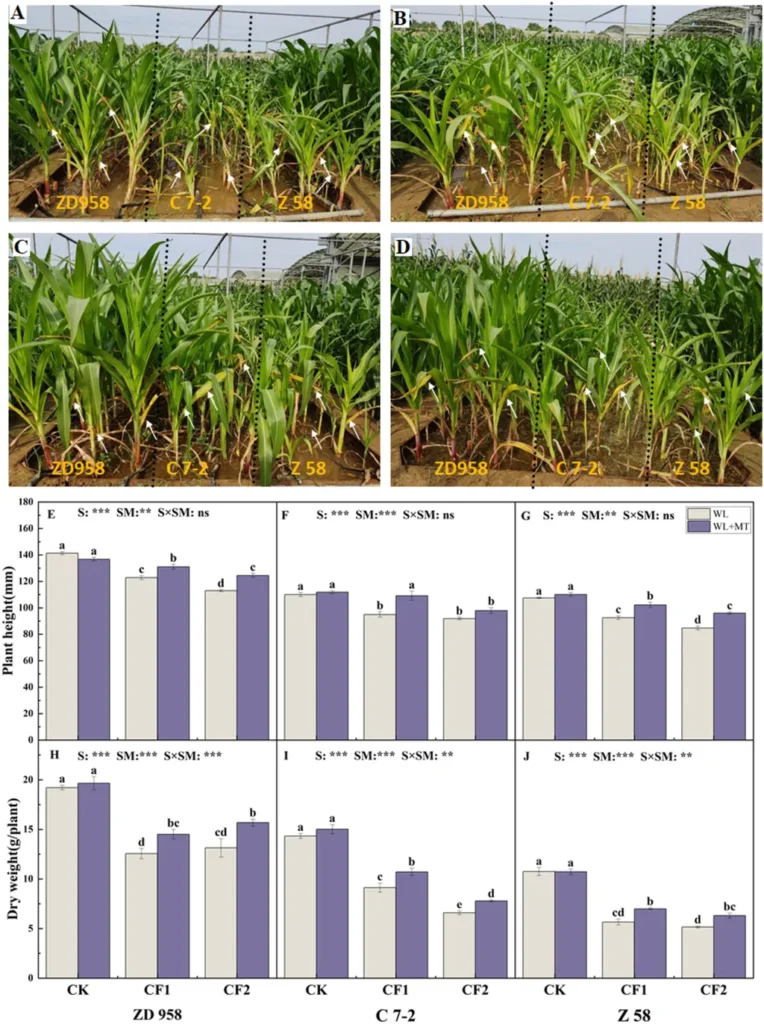
But the story doesn’t end with loss. In 2022, Zhang’s team tested a novel intervention: melatonin, a compound already familiar to sleep researchers, but here applied as a plant growth regulator. The results were striking. Under 8 days of waterlogging, melatonin boosted fresh ear yield by 8.2%. “We weren’t just slowing the damage—we were reversing it,” Zhang says. “That’s the kind of resilience farmers need in a changing climate.”
The science behind the success lies in melatonin’s ability to fine-tune plant responses. Under moderate waterlogging (2–6 days), melatonin encouraged the growth of fine roots—those critical threads that absorb water and nutrients—while strengthening stems to withstand prolonged stress. Dry matter, the plant’s building blocks, was redirected more efficiently to the ears, the part farmers harvest. “It’s like giving the plant a strategic map during a crisis,” Zhang explains. “Instead of wasting energy on survival, it focuses on producing yield.”
For the energy and water sectors, this research isn’t just about crops—it’s about infrastructure. As extreme weather events become more frequent, the pressure on drainage systems, irrigation networks, and flood defenses will only grow. Waxy maize is a major crop in one of China’s most agriculturally intensive regions, and its vulnerability to waterlogging reflects broader challenges in water management. If melatonin can help crops endure flooded fields, could it also inform how we design or upgrade water systems to handle similar stresses? Could insights from plant resilience inspire smarter, more adaptive water infrastructure?
Published in *Agricultural Water Management* (Chinese: 《农业水管理》), Zhang’s work adds a new dimension to the toolkit for climate-smart agriculture. It suggests that sometimes, the solutions to big problems come from unexpected places—like a hormone best known for regulating human sleep cycles. For farmers, it’s a glimmer of hope; for engineers and policymakers, it’s a reminder that nature’s adaptations might hold the key to building a more resilient future.
As Zhang puts it: “We’re not just fighting waterlogging—we’re learning to work with it.” And in a world where weather extremes are the new normal, that kind of collaboration might be the most sustainable strategy of all.