
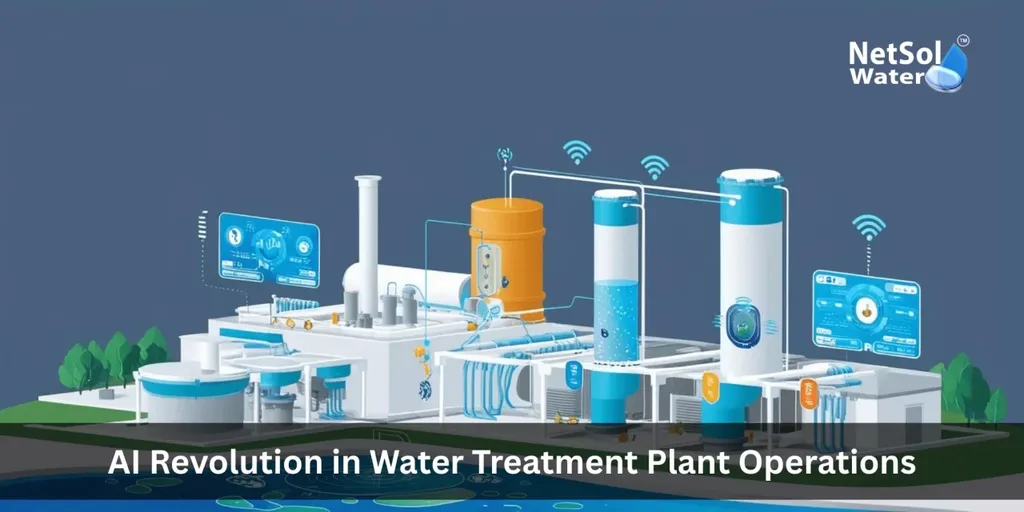
In the quiet hum of a water purification plant, where every drop undergoes rigorous scrutiny before reaching homes, a quiet revolution is underway. Said Salloum, a researcher at Horizon University College’s School of Computing, and his team have developed a simulation system that could redefine how these critical facilities predict water quality. The stakes are high: ensuring safe drinking water isn’t just about compliance—it’s about safeguarding public health and optimizing operational efficiency in an industry where margins are tight and margins of error are nonexistent.
Traditional methods of assessing water potability rely on historical data and reactive monitoring, often leaving gaps where contaminants might slip through. But Salloum’s approach flips the script by harnessing the power of machine learning and deep learning to predict water quality in real time. “We’re not just reacting to problems; we’re anticipating them,” Salloum explains. “This system learns from patterns in the data that humans might miss, turning raw information into actionable insights.”
The study, published in *Applied Water Science* (translated from *Wissenschaft des Wassers*), tested a suite of algorithms—from classic Logistic Regression to cutting-edge CNN (Convolutional Neural Networks) and LSTM (Long Short-Term Memory) models. The results were striking: CNN models achieved a perfect AUC (Area Under the Curve) score of 1.00, though Salloum cautions this could indicate overfitting, a common pitfall in machine learning where models memorize data rather than generalize. Still, even with that caveat, the implications are profound. BI-LSTM (Bidirectional Long Short-Term Memory) and BI-GRU (Bidirectional Gated Recurrent Unit) models also performed exceptionally well, suggesting they could reliably capture sequential patterns in water quality data—patterns that might reveal early warnings of contamination or inefficiencies in treatment processes.
For the energy sector, which often intersects with water treatment through shared infrastructure (think desalination plants or cooling systems), this research offers a glimpse into a future where predictive analytics could drive down costs and energy consumption. Imagine a desalination plant using deep learning to adjust filtration processes in real time, reducing energy waste while ensuring water safety. Or a municipal treatment facility that predicts pipe corrosion before it happens, averting costly leaks and downtime. The commercial potential is vast: lower operational costs, fewer emergency interventions, and a more resilient water supply chain.
Yet, the journey isn’t without challenges. Implementing these models requires robust data infrastructure, skilled personnel, and a willingness to trust algorithms over traditional methods. Salloum’s team acknowledges these hurdles, emphasizing that while deep learning models show promise, they must be validated rigorously to ensure reliability. “This isn’t about replacing human expertise,” Salloum notes. “It’s about augmenting it. The best outcomes will come from collaboration between data scientists and water treatment professionals.”
As the water industry grapples with aging infrastructure, climate change, and rising demand, tools like Salloum’s simulation system could be game-changers. The next step? Scaling these models beyond lab conditions and integrating them into existing plant operations. If successful, we might soon see a world where water purification plants don’t just react to problems—they predict and prevent them, ensuring every drop meets the highest standards of safety and efficiency.