
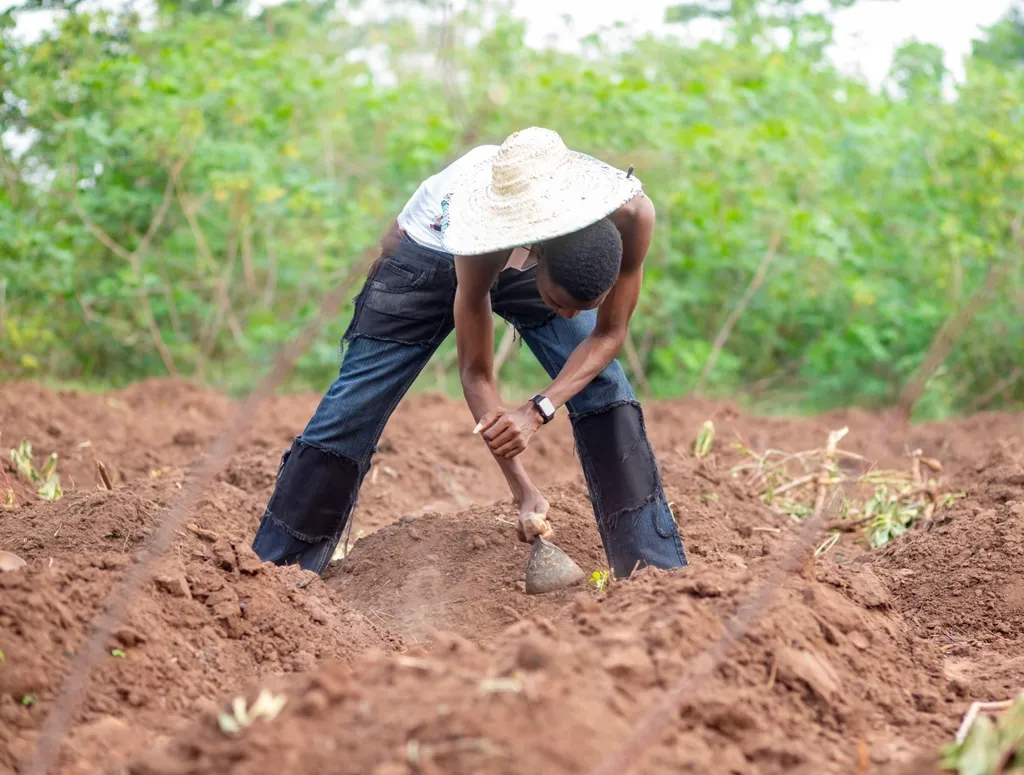
In the highlands of northern Ethiopia, where ancient terraces carve the landscape and the air hums with the rhythm of rural life, a quiet revolution is unfolding—not in the form of new machinery or energy grids, but in the soil beneath farmers’ feet. A recent study led by Mandefro Sisay from Wollo University’s Department of Natural Resource Management has revealed that the Gerado watershed holds a significant, yet often overlooked, climate asset: nearly 95 gigagrams of soil organic carbon (SOC) in just the top 30 centimeters of soil. That’s equivalent to locking away 348 gigagrams of CO₂—more than the annual emissions of a small European country.
Sisay and his team analyzed 72 soil samples across four land-use types—forest, grazing land, cropland, and degraded areas—at three depths, comparing midland and highland zones. Their findings challenge conventional assumptions about where carbon is best stored. Contrary to expectations, grazing lands emerged as the top carbon holders, storing 43.3 tonnes per hectare, followed by forests at 33.6 tonnes. Croplands lagged far behind, and degraded areas showed the lowest values. The pattern was clear: vegetation cover and organic inputs matter more than altitude alone.
“What we’re seeing is that sustainable grazing practices and well-managed forests aren’t just good for biodiversity—they’re powerful tools for climate mitigation,” Sisay said in an interview. “The soil remembers. Every blade of grass, every fallen leaf, every bit of manure adds up over time.”
Perhaps most surprisingly, midland areas stored more carbon than highlands—32 tonnes per hectare compared to 25.4—likely due to better vegetation cover and lower erosion rates. This suggests that targeted reforestation and soil conservation in the highlands could yield outsized climate benefits.
For energy and carbon markets, this research opens a new frontier. Soil carbon sequestration is increasingly recognized in voluntary carbon markets, where landowners can earn credits by enhancing carbon storage. The Gerado watershed’s potential—if scaled across Ethiopia’s 11 million hectares of highland and midland soils—could represent a multi-million-tonne CO₂ removal opportunity. That translates to real commercial value: carbon credits, compliance offsets, and corporate net-zero strategies.
But the implications go beyond credits. As global climate policies tighten and companies face rising carbon prices, investing in soil health could become a low-cost, high-impact lever for decarbonization. Technologies like remote sensing, digital soil mapping, and precision land management are already being paired with traditional practices to monitor and enhance SOC.
Still, challenges remain. Overgrazing, deforestation, and intensive farming threaten to reverse these gains. Sisay emphasizes the need for long-term monitoring and community-led conservation. “We can’t just plant trees and walk away,” he noted. “We need systems that reward farmers for keeping carbon in the ground—and that means stable policies, fair markets, and technical support.”
Published in *Discover Environment* (የአካባቢ ልማት ጋዜጣ in Amharic), the study is a reminder that some of the most effective climate solutions aren’t high-tech—they’re rooted in the earth, nurtured by generations, and waiting to be scaled. For energy leaders eyeing net-zero pathways, the message is clear: look down. The ground beneath us may hold the key to a cooler future.