
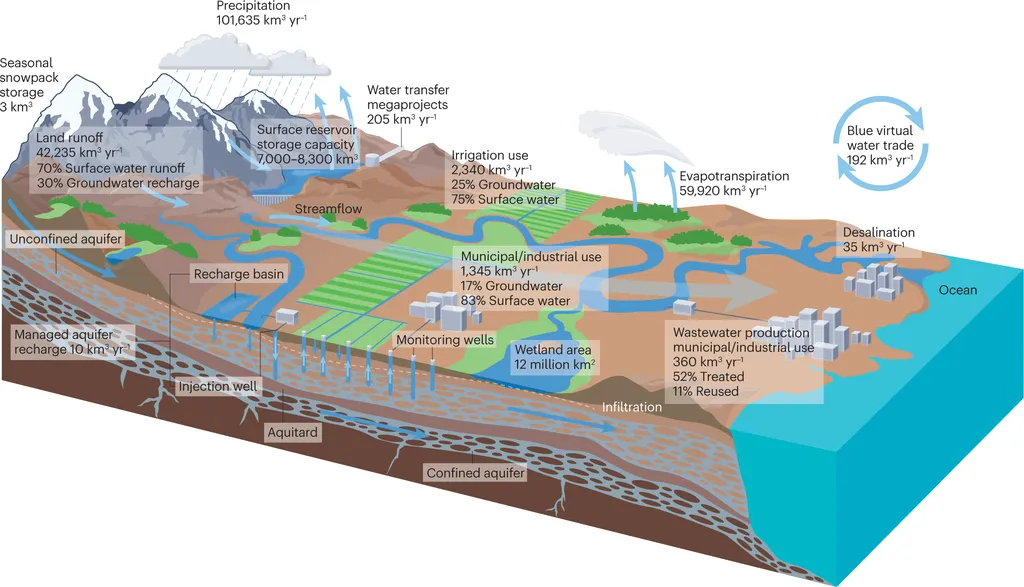
Pedro Mauricio Acosta-Castellanos, a civil engineer at Universidad Santo Tomás in Tunja, Colombia, and his team have spent the last two years sifting through mountains of research on water ecosystems—only to find a troubling imbalance. Their systematic review, published in *Frontiers in Water*, reveals that while forests and wetlands are getting attention, aquifers and river systems are being left behind. “We’re not just missing the boat,” Acosta-Castellanos warns. “We’re sailing in circles while some critical water systems drift out of sight.”
The study, which analyzed 40 peer-reviewed papers, shows that conservation strategies like reforestation and wetland restoration dominate the conversation. But when it comes to tracking progress against SDG 6.6—part of the UN’s Sustainable Development Goals focused on protecting water-related ecosystems—many efforts fall short. “We found that only a handful of studies actually measure water quality or use clear indicators,” Acosta-Castellanos explains. “Without that data, how can we know if we’re succeeding?”
For industries like energy, where water is both a resource and a risk, this gap matters. Hydropower plants, thermal cooling systems, and even renewable energy projects depend on stable water supplies. If aquifers aren’t monitored or rivers aren’t restored, operational risks rise—and so do costs. The review suggests that without better tracking and governance, water-dependent sectors could face stranded assets or regulatory shocks.
Acosta-Castellanos and his team argue that the solution lies in integrated planning and smarter monitoring. Technologies like remote sensing and real-time water quality sensors could bridge the data gap, but adoption remains uneven. “We need to move from fragmented efforts to coordinated action,” he says. “Otherwise, we’ll keep reacting to crises instead of preventing them.”
The implications are clear: for businesses, this research is a wake-up call. Those who invest in robust water monitoring and ecosystem restoration now may avoid future disruptions—and even discover new opportunities in sustainable water management. The question isn’t whether water ecosystems will shape the future of energy, but whether the industry will lead the charge or get left behind.