
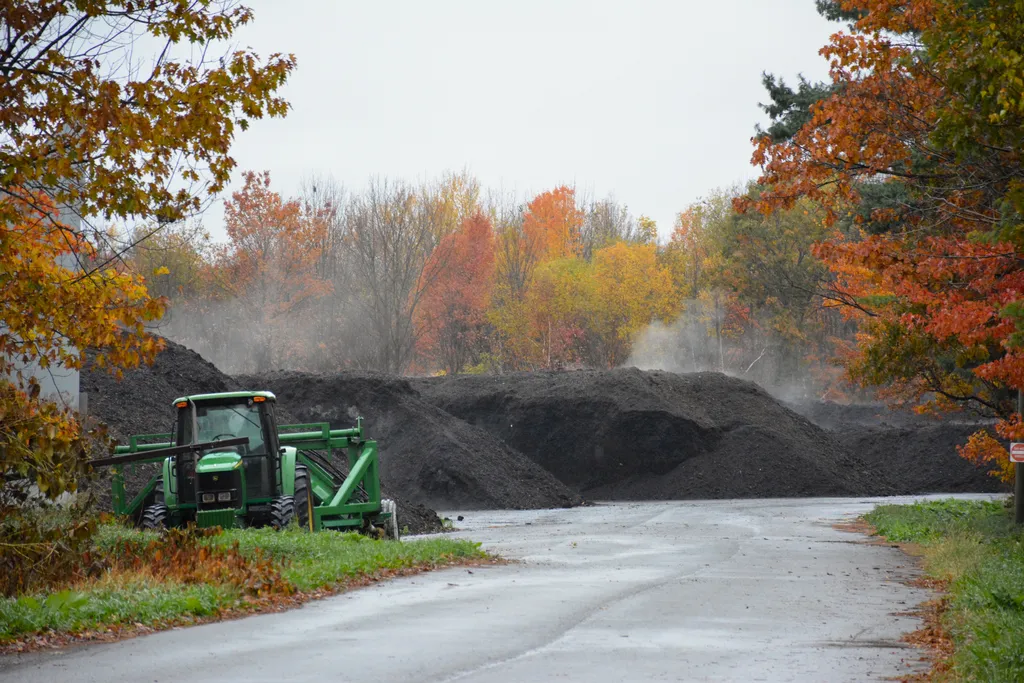
Maine’s urgency to address PFAS-contaminated sewage sludge is forcing the state into a series of infrastructure pivots, some of which are now on the verge of operational reality. The first biosolids dryer at WM’s Crossroads Landfill, originally scheduled for late 2025, is now penciled in for the second quarter of 2026, giving the state a short runway to ease pressure on its dwindling landfill capacity. With the Juniper Ridge Landfill expansion stalled in court and capacity expected to run out by 2028, the dryer offers a closed-loop alternative: sludge is dewatered onsite, leachate and dryer condensate are treated in an existing foam fractionation system, and the cleaned water heads to a nearby wastewater plant whose effluent returns as feedstock. If it scales to 73,000 tons a year, the dryer could absorb 83% of Maine’s municipally generated biosolids, but it does not remove PFAS—it simply concentrates the problem into a smaller, drier volume.
That volume still needs disposal, which is why the state is also weighing Aries Clean Technologies’ gasification-oxidation plant. The facility, which uses high-temperature treatment to break down PFAS and shrink biosolids mass, mirrors a New Jersey installation that opened in 2024. Permit review is underway, with public comments already highlighting concerns over odor, traffic and localized air quality. “With any new technology tied to a waste stream, controversy and concern are inevitable,” said Susanne Miller, director of Maine DEP’s bureau of remediation and waste management. “We have to run the full permitting gauntlet before we can decide whether the application meets our standards.” Meanwhile, the Portland Water District is exploring its own path—evaluating anaerobic digestion, pyrolysis and supercritical water oxidation to cut landfill reliance. York Sewer District, for instance, is eyeing a 2028 pilot using supercritical water oxidation to destroy PFAS and cut sludge volume.
The legislative backdrop is just as active. Maine banned land application of sludge in 2022, and its PFAS product phase-out laws now extend to artificial turf and outdoor gear by 2029, with most product categories covered by 2032. Landfill operators have been subject to new PFAS leachate testing rules since September, requiring annual reporting to DEP. Yet Miller emphasizes that source control remains the linchpin. “We can build all the treatment infrastructure we want, but if we keep letting PFAS into the system at the front end, we’re just chasing our tails.”
Across the border, Maryland is taking a regulatory step forward with SB 719, which would set enforceable limits on PFAS in land-applied biosolids starting in 2027. The bill prohibits land application if PFOA and PFOS exceed 50 parts per billion and mandates source tracking and mitigation plans. Thomas Yoo, chief of Maryland’s biosolids division, notes that about 56% of the state’s 600,000 wet tons of sewage sludge is shipped out of state, mainly to Virginia and Pennsylvania. Maryland has halted new land-application permits and terminated those from out-of-state generators that failed to provide PFAS data. All wastewater plants supplying land-applied biosolids must now sample for PFOS and PFOA, with roughly 50 generators submitting data.
Neighboring Virginia has moved in parallel, passing bills in March that would regulate PFAS levels in biosolids and phase out fertilizer use by 2027 if thresholds are exceeded. Both states are waiting for EPA’s final risk assessment, released in draft form earlier this year, which suggests farmers using sludge face potential exposure risks while consumers eating food grown on such sites may face lower ones. The draft also flags PFAS leaching risks during land application, landfilling, and incineration. Until EPA finalizes guidance, Maryland will rely on its own enforceable limits and source tracking to manage the flow of contamination.
The contrast between Maine’s infrastructure sprint and Maryland’s regulatory tightening underscores a shared reality: the sector is caught between shrinking disposal options and the slow grind of federal clarity. In Maine, the question is whether new technologies can outpace landfill exhaustion; in Maryland, it’s whether state-level enforcement can preempt broader contamination before EPA acts. Both approaches reveal the same tension—how to contain a contaminant that doesn’t degrade, while the clock on landfill space ticks louder every year.