
In the heart of southwestern China, the Chengdu-Chongqing region—home to over 100 million people and a critical economic hub—is racing against the clock. Climate change isn’t a distant threat here; it’s reshaping water supplies, straining health systems, and testing the resilience of cities that have long thrived in the shadow of the Himalayas. Now, a new study by Qi Liao from the Urban Vocational College of Sichuan is offering the first detailed look at how these two powerhouse cities are adapting—and where they still need to improve.
Liao’s research, published in *Frontiers in Environmental Science* (《Frontiers in Environmental Science》), builds one of the most granular assessments yet of urban climate adaptation capacity, tracking Chengdu and Chongqing from 2017 to 2023. Unlike typical provincial-level studies, this work drills down into municipal systems, revealing what’s working—and what’s not—in real time. “We’re seeing adaptive capacity improve, but not evenly,” Liao says. “Some sectors are racing ahead while others lag behind, creating real vulnerabilities.”
The findings are a wake-up call for policymakers and investors alike. Water resources, human health, infrastructure, and disaster prevention emerged as the pillars of adaptive strength. But within those categories, certain indicators stood out: green coverage rate (how much of the city is covered in trees and parks), cultivated land area (critical for food security), and health technician availability (the number of doctors and nurses per capita). These aren’t just environmental metrics—they’re economic ones.
Consider green space. Cities like Chengdu have invested heavily in urban forests and riverfront parks, not just for aesthetics but for cooling, flood control, and air purification. These investments pay dividends in energy efficiency too. Cooler cities mean less demand for air conditioning, reducing power consumption during heatwaves—a direct link to the energy sector. Liao notes, “Green infrastructure isn’t just about adaptation; it’s a hedge against rising energy costs.”
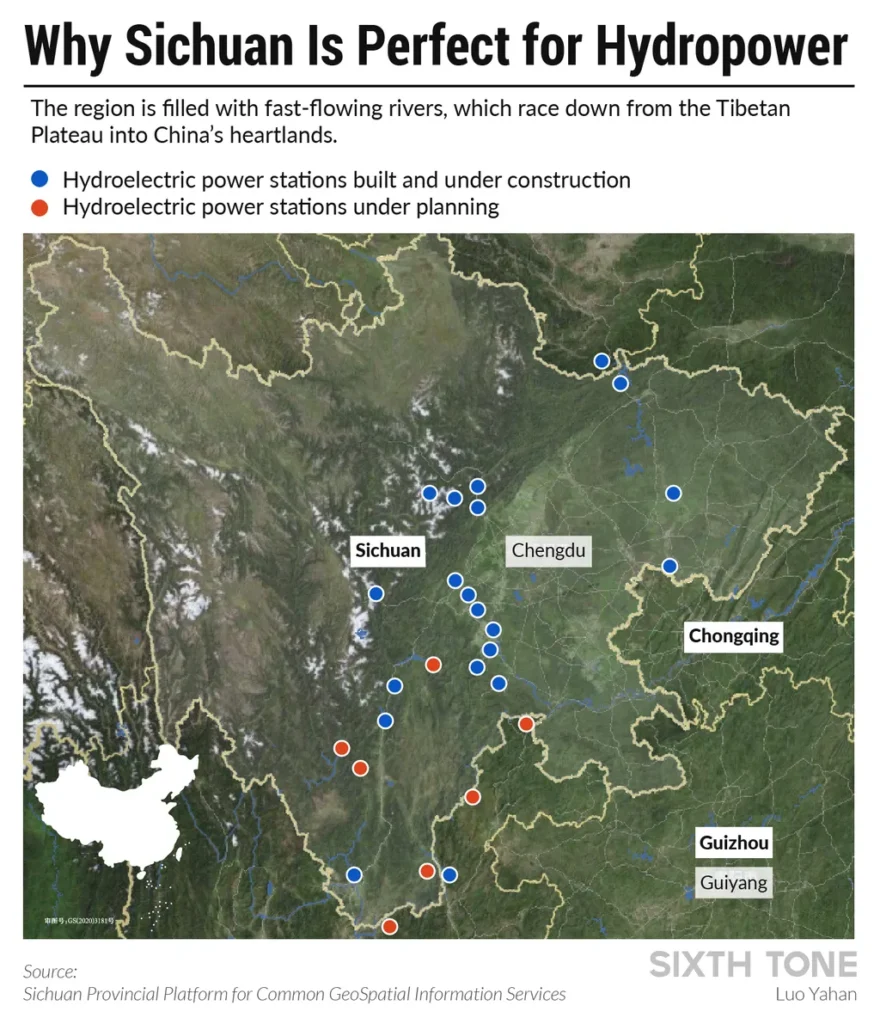
Water management is another flashpoint. The region’s rivers and reservoirs are under pressure from shifting rainfall patterns and glacial melt. Yet the study shows that cities investing in smart water storage, wastewater recycling, and leak detection systems are better positioned to weather droughts and floods. For energy companies operating in the region—especially hydropower operators and thermal plants—this could mean more stable water supplies for cooling and generation, reducing operational risks.
Health systems are the third critical node. As heatwaves intensify, hospitals face surges in heatstroke cases. The study highlights a growing shortage of health technicians in rural areas, a gap that could cascade into broader economic disruptions. “A healthy workforce is the backbone of climate resilience,” Liao says. “Without it, cities can’t function—and neither can their economies.”
The research also points to a strategic pivot: from purely technological fixes to stronger institutional frameworks. Chengdu and Chongqing are increasingly coordinating adaptation plans, sharing data, and aligning budgets. This regional coordination isn’t just about avoiding duplication—it’s about creating economies of scale for green infrastructure, renewable energy integration, and disaster response systems.
For the energy sector, the implications are clear. Companies that embed climate resilience into their long-term planning—through water-efficient cooling systems, renewable-powered microgrids, and employee health programs—will be better insulated against climate shocks. Those that don’t may face rising costs, regulatory risks, and operational disruptions.
As Liao’s work shows, the future of climate adaptation isn’t just about building higher seawalls or planting more trees. It’s about redesigning urban systems to be flexible, integrated, and forward-looking. And in a region as dynamic as Chengdu-Chongqing, that kind of transformation could redefine both resilience and prosperity for decades to come.