
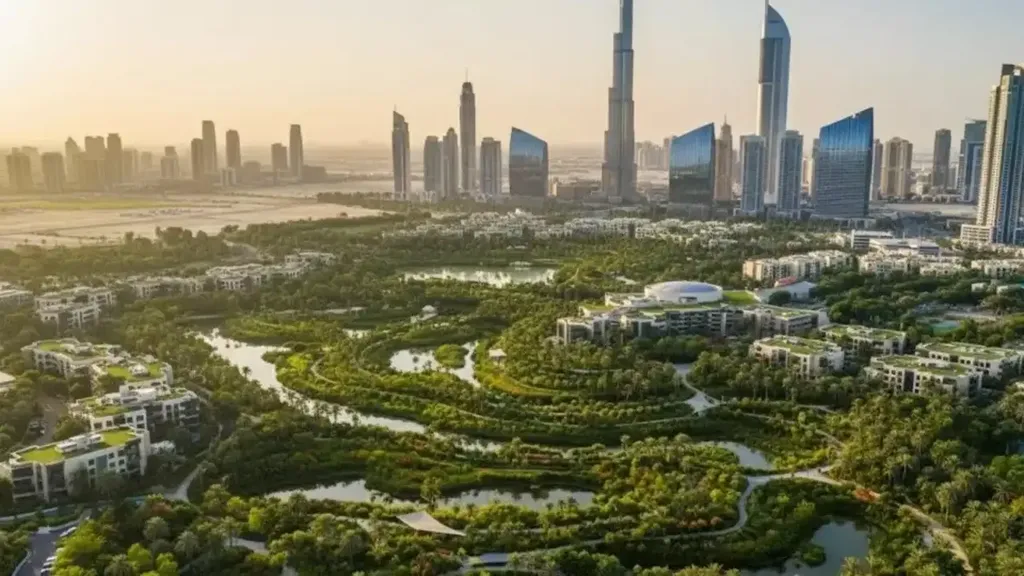
Alaa Badawi, an architect and researcher at the Emirates Center for Happiness Research at the UAE University, has turned the spotlight on a pressing challenge: how to make cities in hot, arid regions like the United Arab Emirates more resilient to climate change. Badawi’s study, published in *Frontiers in Sustainable Cities* (previously known as *Frontiers in Sustainable Cities* and *Frontiers in Sustainable Cities*), explores the Sponge City concept—an innovative urban design approach that blends green and blue infrastructure to manage water, reduce flood risks, and adapt to extreme weather. But Badawi’s work goes further: it asks whether this model, which has gained traction in places like China, can realistically work in the UAE’s harsh climate, where water scarcity and extreme heat dominate.
The Sponge City approach isn’t just about aesthetics—it’s about survival. By integrating features like permeable pavements, wetlands, and community gardens into urban planning, cities can absorb and reuse rainwater, reduce runoff, and even lower temperatures through natural cooling. Badawi’s research highlights a critical gap, however: most Sponge City applications have been studied in temperate or tropical climates, leaving arid regions like the UAE without a clear roadmap. “The challenge isn’t just about technology—it’s about adapting it to our environment,” Badawi notes. “In the UAE, we need solutions that work with our extreme heat and limited water resources.”
One of the study’s key insights is the untapped potential of meso-scale interventions—neighborhood-level projects like community gardens that can double as stormwater management systems. These aren’t just pretty spaces; they’re functional tools. Badawi’s framework suggests linking these gardens to recycled water systems and water tanks, creating a closed-loop cycle where every drop counts. For the energy sector, this could mean reduced reliance on energy-intensive desalination and air conditioning. “If we can capture and reuse water at the neighborhood level, we’re not just saving water—we’re cutting energy costs,” Badawi explains.
The commercial implications are significant. For developers and municipalities, adopting Sponge City principles could mean lower infrastructure costs, reduced flood damage, and even increased property values in climate-resilient neighborhoods. Energy companies, too, stand to benefit. Less strain on desalination plants and cooling systems translates to lower operational costs and a smaller carbon footprint. “This isn’t just about sustainability—it’s about smart economics,” Badawi argues. “The UAE is already a leader in green building certifications. Now, we have a chance to lead in climate adaptation.”
Yet challenges remain. Soil conditions, maintenance, and community engagement are all hurdles in arid environments. Badawi’s work doesn’t just identify these obstacles—it proposes solutions, from selecting drought-resistant plants to designing irrigation systems that minimize evaporation. The study’s practical framework, tailored for the UAE, could serve as a blueprint for other hot-arid regions, from Saudi Arabia to Qatar.
As climate change intensifies, the pressure to innovate grows. Badawi’s research suggests that the future of urban resilience might not lie in bigger pipes or more concrete, but in working *with* nature. For the energy sector, that could mean rethinking how cities are built—and who pays for it. The question now is whether policymakers and developers will take the leap.