
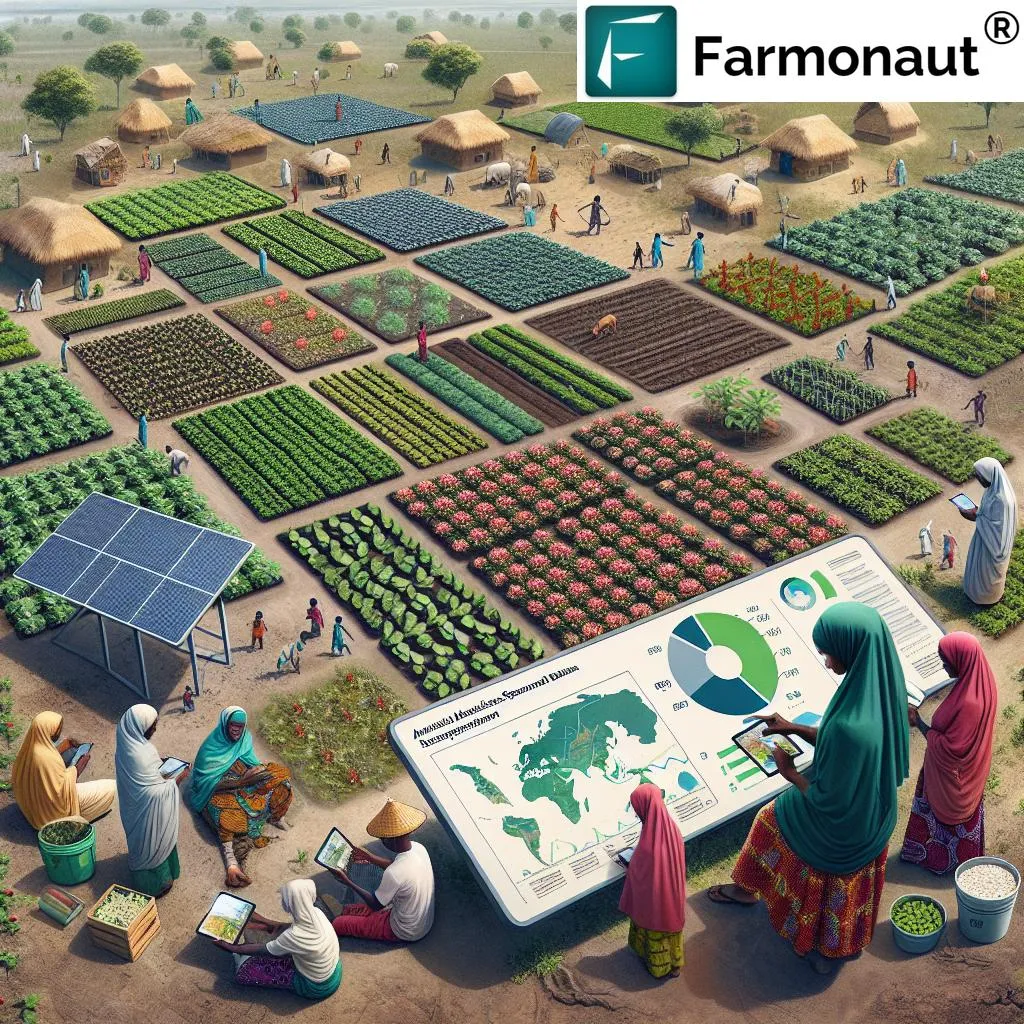
In the heart of Nigeria’s agricultural landscape, a quiet revolution is unfolding—one that could redefine how smallholder farmers, especially women, adapt to climate change. A new study by Ashagwu Ojang Okadi of the University of Nigeria, published in *Discover Sustainability*, reveals a compelling link between digital financial services (DFS) and climate resilience in farming, with stark gender disparities shaping who benefits—and who doesn’t.
The research, based on a survey of 600 farmers across Nigeria’s six geopolitical zones, found that while 68% of male farmers use DFS, only 51% of female farmers do. Okadi’s team used advanced statistical models to dig deeper, uncovering key drivers of adoption. Education, farm income, access to extension services, and mobile phone ownership all boosted DFS uptake, but gender remained a decisive factor—women were 28% less likely to adopt these tools than men.
“This isn’t just about access to technology,” Okadi noted. “It’s about who gets to use it—and who gets left behind.”
The study’s most striking finding? Farmers who used DFS were significantly more likely to adopt climate adaptation strategies like improved seeds and irrigation. Digital credit and savings were particularly influential, suggesting that financial tools could be as vital as seeds or tools in building resilience. Digital insurance, however, lagged behind—used by fewer than 6% of farmers and showing no meaningful impact.
For the energy and utilities sector, this research isn’t just academic—it’s a market signal. As climate pressures intensify, farmers with better financial tools can make smarter investments in water management, drought-resistant crops, and renewable energy for irrigation. Women, who make up a significant portion of Nigeria’s agricultural workforce, represent an untapped opportunity. Expanding mobile access and digital literacy among female farmers could unlock new demand for financial services—and in turn, for energy solutions that power those tools.
The implications are clear: gender-inclusive digital finance isn’t just fair—it’s strategic. For energy providers, agribusinesses, and policymakers, the message is to invest in connectivity, training, and products tailored to women’s needs. The future of climate-resilient agriculture may well be written in code, but it must be written for everyone.