
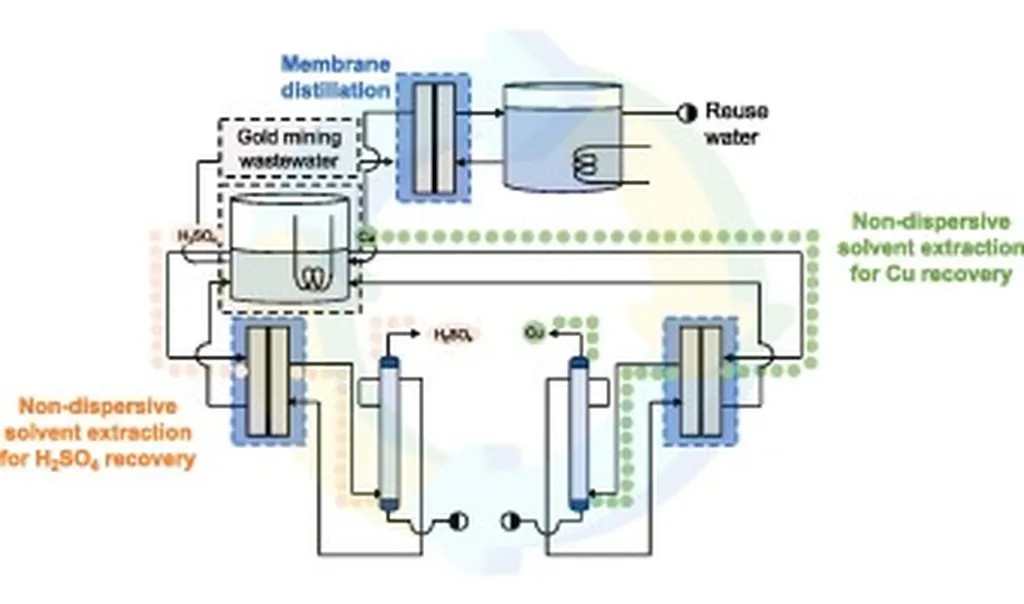
The way we think about wastewater is changing—not just as something to be disposed of, but as a valuable resource in an era of growing scarcity. A new review published in *npj Clean Water* by Mahesh Ganesapillai and the Mass Transfer Research Group at Vellore Institute of Technology is challenging conventional approaches by framing wastewater as a cornerstone of circular economy strategies.
Ganesapillai argues that the linear model of “flush and forget” is no longer sustainable. “We’re sitting on a goldmine of recoverable resources every time we turn on a tap,” he explains. “Water, energy, nutrients—these aren’t waste products; they’re inputs to a new kind of infrastructure.” The paper systematically evaluates how wastewater treatment systems can be redesigned not just to clean water, but to extract value at each stage: water for reuse, energy from biogas, nutrients like phosphorus and nitrogen for fertilizers, and even trace metals for industrial applications.
What makes this review particularly compelling is its focus on the *systems-level* integration of these recovery processes. Ganesapillai and his team use the “resource-stack model” and “treatment-train design space” to map out how different technologies—anaerobic digestion, membrane filtration, nutrient capture systems—can work together in a continuous loop. This isn’t just about incremental improvements; it’s about reimagining wastewater treatment plants as resource recovery facilities that could operate with net-zero energy or even become energy-positive hubs.
For the energy sector, the implications are significant. Wastewater is already the third-largest source of methane emissions in many countries, but it’s also a major untapped source of biogas. By optimizing anaerobic digestion and integrating it with other energy recovery systems, utilities could turn treatment plants into decentralized power generators. “Imagine a city where every wastewater facility is a mini power plant,” Ganesapillai suggests. “That’s not just sustainable—it’s transformative.”
The paper also doesn’t shy away from the challenges. Regulatory hurdles, high upfront costs, and public skepticism about reusing treated wastewater are all barriers. But the review suggests that with aligned policy frameworks—like incentives for nutrient trading or carbon credits for energy recovery—the economics could shift dramatically.
As freshwater becomes scarcer and climate resilience grows more urgent, the circular wastewater model isn’t just an environmental ideal—it’s a commercial imperative. The research published in *npj Clean Water* (清洁水) points to a future where what we flush today could power our cities tomorrow.