
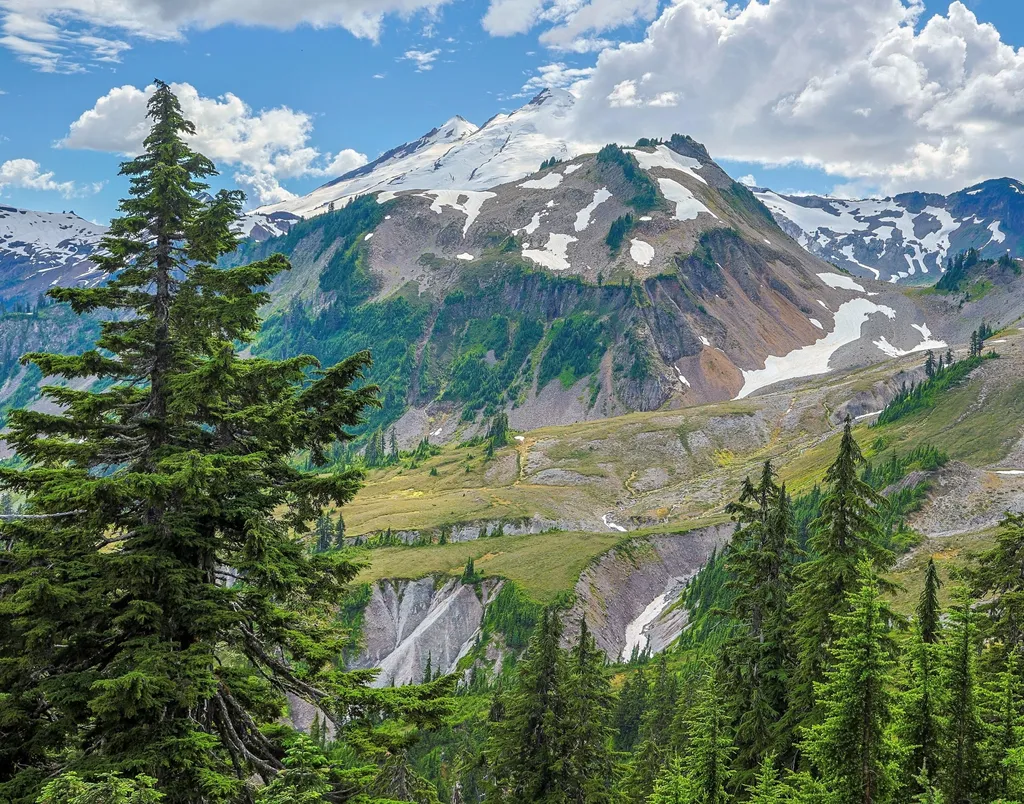
Vincent Haagmans and his team at the WSL Institute for Snow and Avalanche Research SLF in Davos, Switzerland, have peeled back another layer of the intricate relationship between forests and snow in the central European Alps. Their findings, published in Hydrology and Earth System Sciences, reveal that montane forests—often seen as mere backdrops to alpine scenery—play a far more nuanced role in water storage than previously understood. For industries reliant on seasonal snowmelt, such as hydropower and water utilities, these insights could reshape how they plan for an era of shifting snow dynamics.
Over eight years of modeling, Haagmans and colleagues found that forests account for 20% to 30% of total snow water storage in midwinter across the Alps. But the influence of trees on snow isn’t uniform—it depends on elevation, slope direction (aspect), region, and even the year. “We often assume forests reduce snow storage by blocking snowfall or intercepting snow on branches,” Haagmans explains. “But our results show that while peak snow water equivalent (SWE) may drop under forest cover, the snow that does accumulate tends to melt later, especially on south-facing slopes.”
This delayed melt can be a double-edged sword for energy producers. In regions like the Swiss Alps, where hydropower dams rely on predictable seasonal runoff, a later snow disappearance could smooth out peak flow periods, potentially improving reservoir management during late spring and early summer. However, the study also highlights how sensitive these dynamics are to variability in weather and climate. In snow-scarce years, the relative impact of forests becomes more pronounced, sometimes even reversing expected trends.
“What we’re seeing is that the interaction between forest structure, topography, and weather is far more complex than we’ve accounted for in the past,” Haagmans notes. This complexity is only expected to grow as climate change drives more frequent forest disturbances—such as bark beetle outbreaks or wildfires—and accelerates snow storage decline. For energy companies, this means future hydrological models will need to integrate forest dynamics more explicitly to avoid miscalculating water availability.
The implications extend beyond hydropower. Water utilities managing alpine catchments, agricultural planners, and even winter tourism operators could benefit from these findings. As Haagmans’ team emphasizes, the days of treating forests as a static variable in snow models are over. The future of water resource management in mountainous regions may hinge on understanding how trees, terrain, and climate conspire to shape the snowpack—one of nature’s most critical seasonal water towers.