
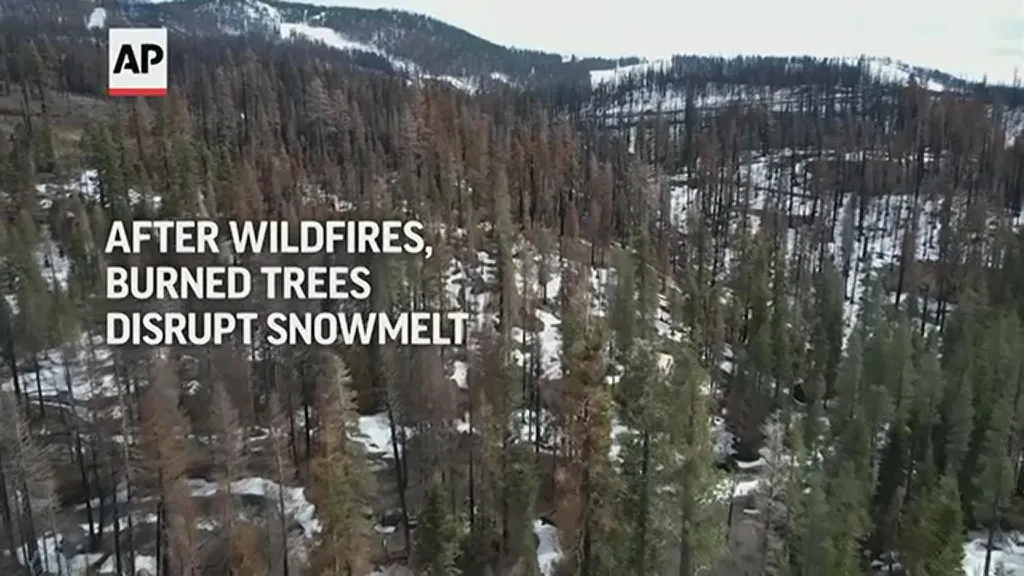
The western Oregon Cascades, a critical water source for the Pacific Northwest, are facing a growing challenge: forest fires are making snowpack more vulnerable to rapid melting during midwinter rain-on-snow events. According to new research published in *Environmental Research Communications* (translated from *Communications de Recherche Environnementale*), these combined effects could reshape how water managers and energy producers prepare for floods and water storage in a warming climate.
Lead author Sage C. Ebel, from Portland State University’s Department of Environmental Science and Management, and his team found that burned forest areas experienced double the midwinter snowmelt compared to unburned sites in 2023 and 2024. Their data, collected from snow monitoring and micrometeorological stations across an elevational gradient, revealed that rain-on-snow events triggered significantly more snowmelt in burned areas—particularly at mid elevations, where melt accounted for 26% more of the total annual melt than in unburned forests.
“These findings highlight a critical vulnerability in our snowpack systems,” Ebel said. “The energy dynamics are shifting, and the snowpacks in burned forests have far less capacity to buffer against rain-on-snow events.”
The study points to longwave radiation as a key driver of this accelerated melt, especially at lower and mid elevations. With climate change increasing the frequency of these events, water managers now face a tough balancing act: preparing for downstream flooding while ensuring reliable water storage for hydropower and municipal supply.
For energy producers relying on snowmelt-fed reservoirs, this research underscores the need for adaptive strategies. Hydropower operators, in particular, may need to revisit flood control protocols and reservoir management to account for more erratic midwinter runoff. The findings suggest that traditional assumptions about snowpack resilience may no longer hold in fire-prone landscapes.
As wildfires and extreme weather events intensify, the study serves as a reminder that the interplay between forest health, snow dynamics, and water security is becoming increasingly complex. For industries dependent on predictable water flows, the message is clear: the status quo is no longer enough.