
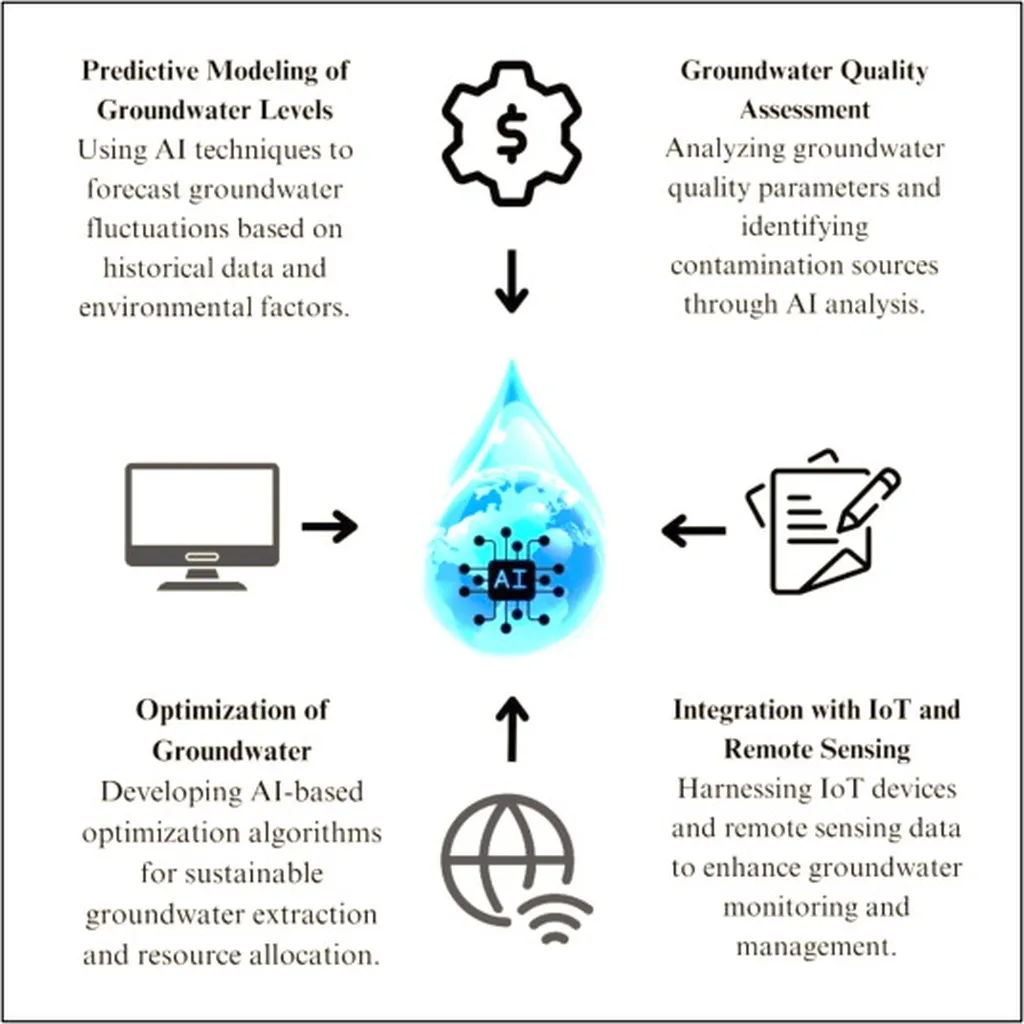
Groundwater, the vast and hidden reservoir beneath our feet, sustains life across the planet—yet remains one of the most elusive and difficult natural systems to understand. Dr. Rudy Rossetto, a researcher at Scuola Superiore Sant’Anna in Pisa, and lead author of a groundbreaking study published in *Acque Sotterranee* (Underground Waters), believes artificial intelligence could be the key to unlocking its secrets.
“Groundwater systems are incredibly complex,” Rossetto explains. “We often rely on just a handful of monitoring wells, scattered across vast areas, to tell us what’s happening deep underground. That’s like trying to understand the weather using only a few scattered thermometers.” The challenge is compounded by the high cost and time required to run traditional hydrological models, which simulate how water moves through soil and rock layers.
But AI is changing the game. By integrating machine learning with existing hydrological data—such as geophysical surveys, historical water levels, and climate records—researchers can now predict groundwater behavior with greater speed and accuracy. “AI doesn’t replace physics,” Rossetto notes. “Instead, it helps us process vast amounts of data quickly, identify patterns we’d miss, and make better decisions about water use—especially in regions under stress.”
For industries like energy, where groundwater plays a critical role in geothermal energy, mining, and even oil and gas extraction, this could mean more reliable forecasts of water availability, reduced operational risks, and smarter resource planning. For example, in geothermal projects, understanding groundwater flow can help prevent thermal short-circuiting, where heated water is drawn back too quickly, reducing efficiency. AI-driven models could simulate these scenarios in real time, allowing operators to adjust extraction strategies before problems arise.
The implications extend beyond extraction. In agriculture, where irrigation relies heavily on groundwater, AI could help farmers anticipate droughts or optimize pumping schedules to avoid over-extraction. In urban areas, it could improve flood risk modeling by predicting how groundwater levels interact with surface water during heavy rainfall.
What makes this research stand out is its practical focus. Unlike theoretical studies that dazzle with algorithms but offer little real-world application, Rossetto and his team are working to integrate AI into existing groundwater management frameworks. Their work suggests a future where water managers, energy companies, and policymakers can make decisions based not just on scattered data, but on a comprehensive, AI-enhanced understanding of the subsurface.
Published in *Acque Sotterranee*—a journal dedicated to the science of underground waters—the study is part of a growing shift toward data-driven hydrology. As sensors become cheaper and AI tools more accessible, the next decade could see groundwater management move from guesswork to precision.
Rossetto’s vision is clear: “We’re not just predicting the future of water. We’re helping shape it.”