
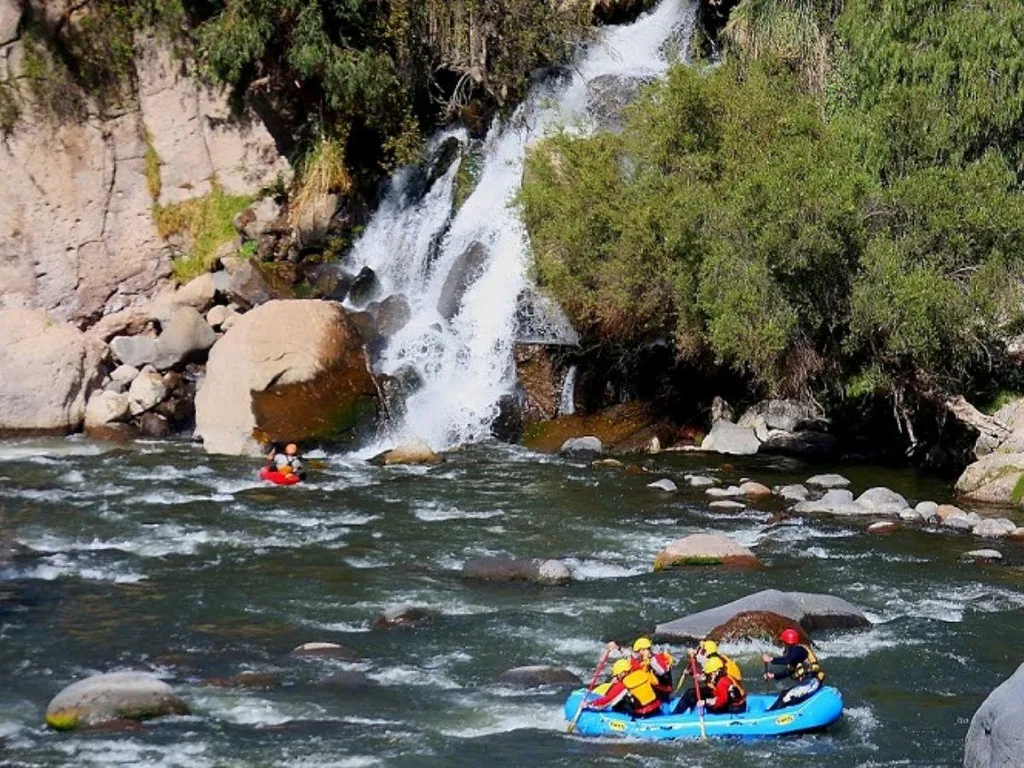
The Chili River meanders through Arequipa, Peru’s second-largest city, its banks lined with colonial architecture and sprawling informal settlements. For most residents, it’s a familiar sight—sometimes a backdrop, sometimes a nuisance. But for Berly Cardenas-Pillco, a researcher whose work has just been published in *Cidades, Comunidades e Território* (Cities, Communities and Territory), the river is something far more valuable: a living blue-green infrastructure brimming with cultural ecosystem services that could reshape urban development, tourism, and even energy planning.
Cardenas-Pillco’s study, conducted with both experts and the general public, reveals a striking disconnect between how people value the river and how they engage with it. While 43% of residents see its scenic beauty as a top cultural benefit, only 30% actually use it for recreation like photography or hiking. Experts, on the other hand, point to deeper, less tangible values—heritage, spirituality, and research potential—areas where public participation lags.
“There’s a real opportunity here to turn perception into participation,” Cardenas-Pillco noted in an interview. “If we can align how people experience the river with how experts envision its role in urban life, we could unlock new economic and environmental synergies.”
One of the most compelling findings is the spatial divide in how different groups value the river. Residents overwhelmingly associate the most cultural benefits with the Intraurban section—where scenic beauty and educational value are highest. Experts, however, see the North as prime for ecotourism, the Center for cultural and landscape heritage, and the South for research and education. This mismatch isn’t just academic; it has real implications for infrastructure investment, policy design, and even energy sector planning.
Consider hydropower. Urban rivers like the Chili are often overlooked in energy discussions, which typically focus on large dams or remote watersheds. But if cities recognize the river’s role in supporting recreation, tourism, and community well-being, could that justify investments in cleaner, decentralized energy systems—like micro-hydro or floating solar—that coexist with ecological and cultural goals?
The study also highlights critical challenges: 62% of respondents cited water pollution as a major issue, while 33% pointed to weak land-use regulation. These aren’t just environmental concerns—they’re barriers to economic growth. Polluted rivers deter tourism, reduce property values, and limit recreational industries. Conversely, a revitalized urban river could become a catalyst for green tourism, local businesses, and even renewable energy projects that rely on consistent water flow.
Cardenas-Pillco’s work suggests that future urban planning must move beyond technical fixes and embrace the intangible—culture, perception, and community values—as core components of sustainable infrastructure. For energy planners, this means rethinking how rivers are integrated into cityscapes. Could a riverfront become a corridor for both leisure and low-impact energy generation? Could cultural ecosystem services be monetized to fund conservation and innovation?
The answers aren’t simple, but the research makes one thing clear: the value of urban rivers isn’t just ecological or economic—it’s deeply human. And in a world racing toward climate adaptation, that might be the most compelling case of all.