
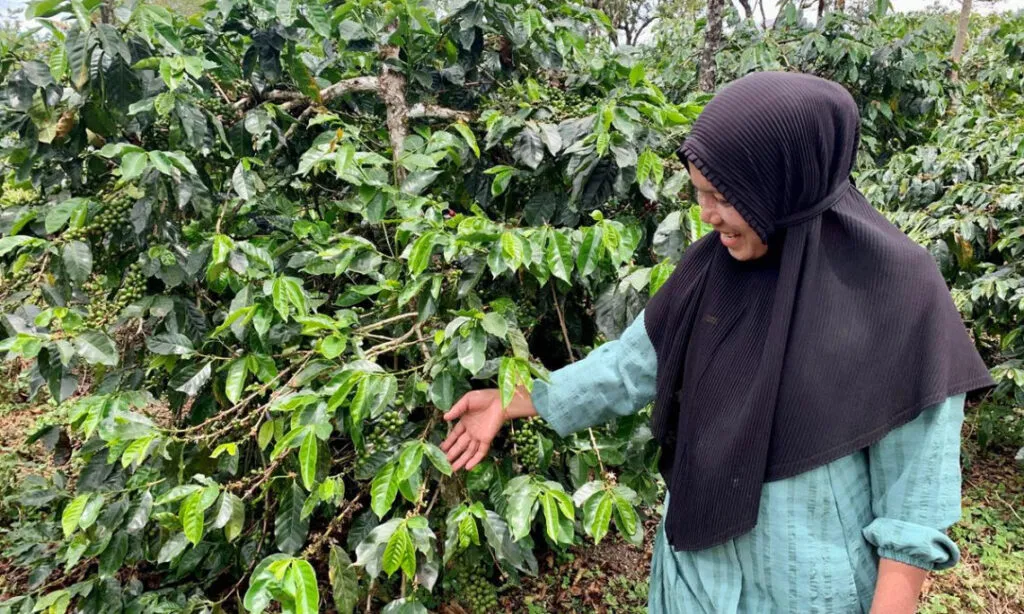
In the lush upstream reaches of the Sekampung watershed in Lampung, Indonesia, a quiet revolution is unfolding—not with bulldozers or concrete, but with coffee plants and community resolve. A new study led by Fitriani from the Economics and Business Department at Politeknik Negeri Lampung reveals how the Social Forestry Program is reshaping land stewardship in one of Southeast Asia’s most critical watersheds. The findings don’t just matter to farmers; they could ripple through the energy sector, shaping how water security and soil health are managed for generations.
The research, published in the *Journal of Degraded and Mining Lands Management* (known in Indonesian as *Jurnal Pengelolaan Lahan Kering dan Pertambangan*), tracked 125 participants in the Social Forestry Program across diverse social, economic, and ecological settings. What emerges is a nuanced picture of how policy can catalyze change—not by dictating solutions, but by empowering communities to adapt conservation practices to their own land.
Fitriani and her team found that the program has done more than just plant trees. It has fostered social transformation, strengthening community participation and institutional support. Farmers are shifting from monoculture to diversified, conservation-based land use, integrating biological measures like reforestation and agroforestry with mechanical techniques such as terracing. “The Social Forestry Program isn’t just about planting trees,” Fitriani notes. “It’s about rebuilding trust, knowledge, and capacity—so that communities can sustainably manage the land they depend on.”
But the real insight comes from the numbers. Using logistic regression, the study identified key factors influencing whether farmers adopt soil conservation: the age of their coffee plants, their own age, family size, land area, education level, and farming experience. Younger farmers with larger families and more education were more likely to embrace conservation—suggesting that education and access to information are powerful levers for change.
Why does this matter beyond the farm gate? Upstream watershed health is the silent backbone of energy infrastructure. Hydropower dams, thermal power plants, and even agricultural irrigation rely on stable water flow and sediment control. Soil degradation and deforestation upstream lead to siltation, reduced reservoir capacity, and increased maintenance costs for energy operators. By supporting smallholder adoption of conservation practices, programs like Social Forestry can reduce erosion, improve water retention, and stabilize long-term water supply—critical for both rural livelihoods and energy security.
The study’s model, Fitriani says, offers “high-quality empirical evidence” that can guide policymakers and investors. “If we want resilient watersheds,” she argues, “we need policies that don’t just fund conservation, but that also invest in education, land tenure security, and local institutions.”
As climate variability intensifies and pressure on natural resources grows, the lessons from Sekampung may point the way forward. The Social Forestry Program shows that when communities are given the tools and trust to manage their land sustainably, the benefits flow far beyond the forest edge—into the turbines, the pipelines, and the homes that depend on clean water.