
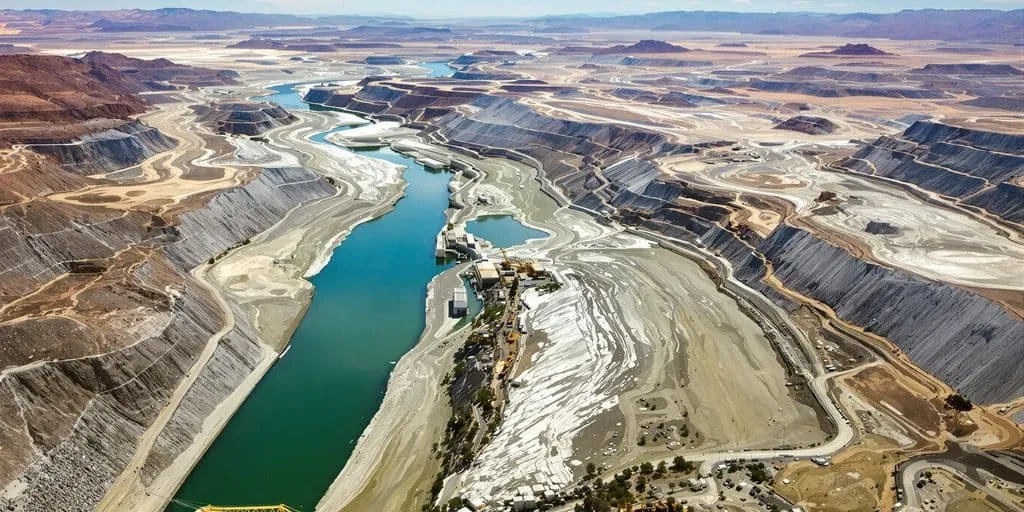
In the high-stakes world of water resource management, a groundbreaking research initiative led by Zhang Zong-liang of Power China Kunming Engineering Corporation Limited is rewriting the playbook for handling one of nature’s most unpredictable hazards: barrier dams. These natural blockages, formed by landslides or debris flows, can unleash catastrophic flooding if they fail—but they also represent untapped potential for water storage, irrigation, and hydropower. The National Key R&D Program of China’s project, “Research and development of guarantee technologies and equipments for dangerous situation disposal and utilization of barrier dams,” is bridging this gap by turning hazard into opportunity.
The research team, spanning institutions like Nanjing Hydraulic Research Institute and Tsinghua University, is tackling long-standing challenges in barrier dam safety. “Traditional approaches often focus only on immediate risk mitigation,” explains He Ning from Nanjing Hydraulic Research Institute. “But we’re looking at the full lifecycle—how these dams evolve over time, how they can be safely managed for decades, and how their water resources can be harnessed without compromising safety.”
Their work zeroes in on three critical areas: understanding the mechanics of dam failure, developing durable monitoring technologies, and designing integrated treatment systems. For energy and infrastructure sectors, this translates to actionable insights for projects in earthquake-prone regions or mountainous terrains where barrier dams are common. “By predicting long-term behaviors, we can avoid costly over-engineering while ensuring resilience,” adds Zhou Yan-zhang, also from Nanjing Hydraulic Research Institute.
Commercially, the implications are substantial. Hydropower developers, for instance, could repurpose stabilized barrier dams for small-scale generation, turning a once-feared hazard into a revenue stream. Similarly, agricultural regions could benefit from improved irrigation reliability. “The goal isn’t just to eliminate risk—it’s to create value from it,” notes Wang Huan-ling of Hohai University.
Published in *Yantu gongcheng xuebao* (Journal of Rock and Soil Engineering), the research underscores China’s push to blend disaster resilience with sustainable development. As climate change intensifies landslide risks, such innovations could redefine how industries coexist with natural systems—proving that even the most dangerous dams can be transformed into assets.