
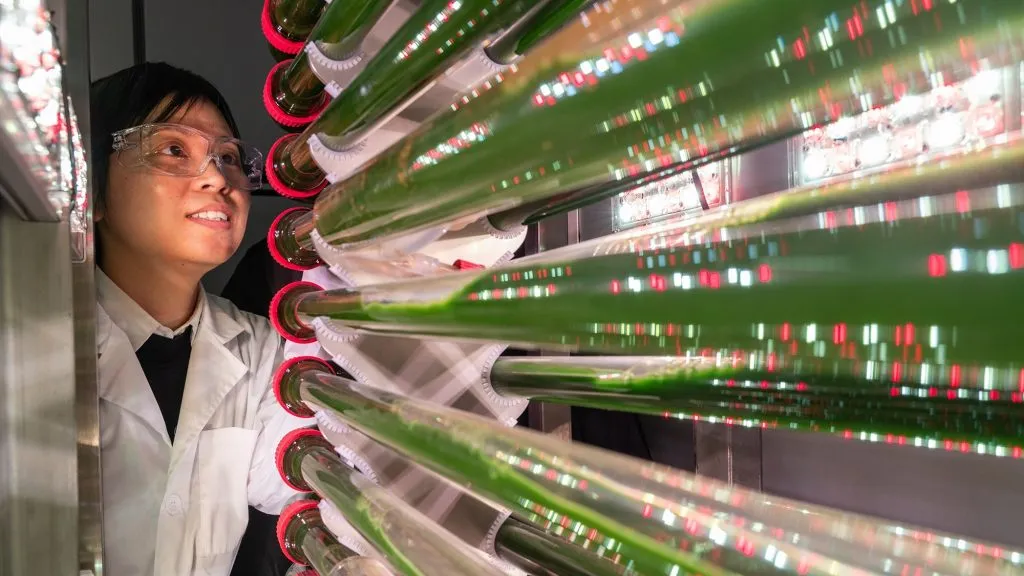
In a lab at The American University in Cairo, Shimaa Husien and her team have turned a common seaweed nuisance into a high-performance tool for cleaning industrial wastewater. The seaweed in question, Ulva fasciata—often dismissed as a smelly, green tide clogging coastal areas—was transformed into a valuable extract called UFBE. When combined with polyvinyl alcohol (PVA), a widely used polymer, it formed dual-format membranes: one a fine web of nanofibers, the other a smooth film. Both were engineered not just to filter, but to interact with contaminants at a molecular level.
“What surprised us,” Husien says, “was how sensitive these membranes are, even when the wastewater is relatively clean.” The team tested their innovation on aged oilfield wastewater—a notoriously tricky medium with low pollutant concentrations but stubborn residues like oil, salts, and hardness ions. The results were striking: nearly complete removal of oil, an 82% drop in cloudiness (turbidity), and significant reductions in water hardness and scaling potential—factors that shorten the life of pipes and equipment in energy operations.
For the oil and gas sector, where water recycling is both an environmental and economic priority, this could be a game-changer. Traditional filtration membranes often struggle with low-concentration contaminants, requiring costly pre-treatment or frequent replacement. But these bio-based membranes, derived from algal waste, show high selectivity and sensitivity—meaning they can catch trace pollutants without clogging quickly. That translates to longer operational cycles, lower chemical use, and smaller footprints.
The membranes were fabricated using green electrospinning and solvent-casting, both water-based processes, avoiding harsh solvents. Characterization confirmed not only their filtration efficiency but also improved thermal and mechanical stability—key for real-world durability. The research team used a Box-Behnken experimental design to optimize fiber uniformity, a method that balances precision with practical scalability.
While still in the lab phase, the implications for the “blue economy”—sustainable use of ocean resources—are clear. Turning algal blooms into functional materials addresses two challenges at once: environmental cleanup and resource recovery. For energy companies facing tightening regulations on produced water discharge and reuse, this innovation offers a pathway to compliance and cost savings.
Published in *Applied Water Science* (in Arabic: مجلة العلوم المائية التطبيقية), the study by Husien and her team at AUC’s Department of Chemistry signals a shift toward nature-inspired, circular solutions in water treatment. As industries seek to decouple growth from environmental harm, turning seaweed waste into high-tech membranes may soon be more than a lab curiosity—it could be part of the next generation of industrial water systems.