
Farmers worldwide are facing a triple threat: soils losing their fertility, water becoming scarce, and weather swinging between drought and flood. For Kiran Keshyagol at Manipal Institute of Technology, the answer isn’t in bigger machines or more chemicals, but in rebuilding the land itself. In a new synthesis published in *Discover Sustainability*, Keshyagol and colleagues show how integrated farming bundles—combining soil health, water efficiency, and crop diversity—can lift yields, cut costs, and lock away carbon at the same time.
“What we’re seeing is that single fixes don’t travel well across regions,” Keshyagol says. “A cover crop that works in Karnataka may fail in Kansas if you don’t also adjust your irrigation timing.” The team combed through peer-reviewed studies and found that stacking practices—conservation tillage, terracing, biochar, and sensor-guided irrigation—delivers compound benefits. Soil organic carbon rises by about a quarter, water-use efficiency jumps by roughly a third, and yields climb by almost 30% compared with conventional monoculture.
For energy companies eyeing water and land footprints, these findings carry commercial weight. A desalination plant that once supplied a thirsty farm may need fewer litres once soil biology and mulches cut runoff by 15–40%. Power utilities siting new biomass boilers can target fields where green-manure rotations already boost residue yields, reducing feedstock logistics. Even grid planners can model how widespread adoption of hydrogel soil additives might shave peak irrigation loads during heat waves, smoothing demand curves and lowering marginal generation costs.
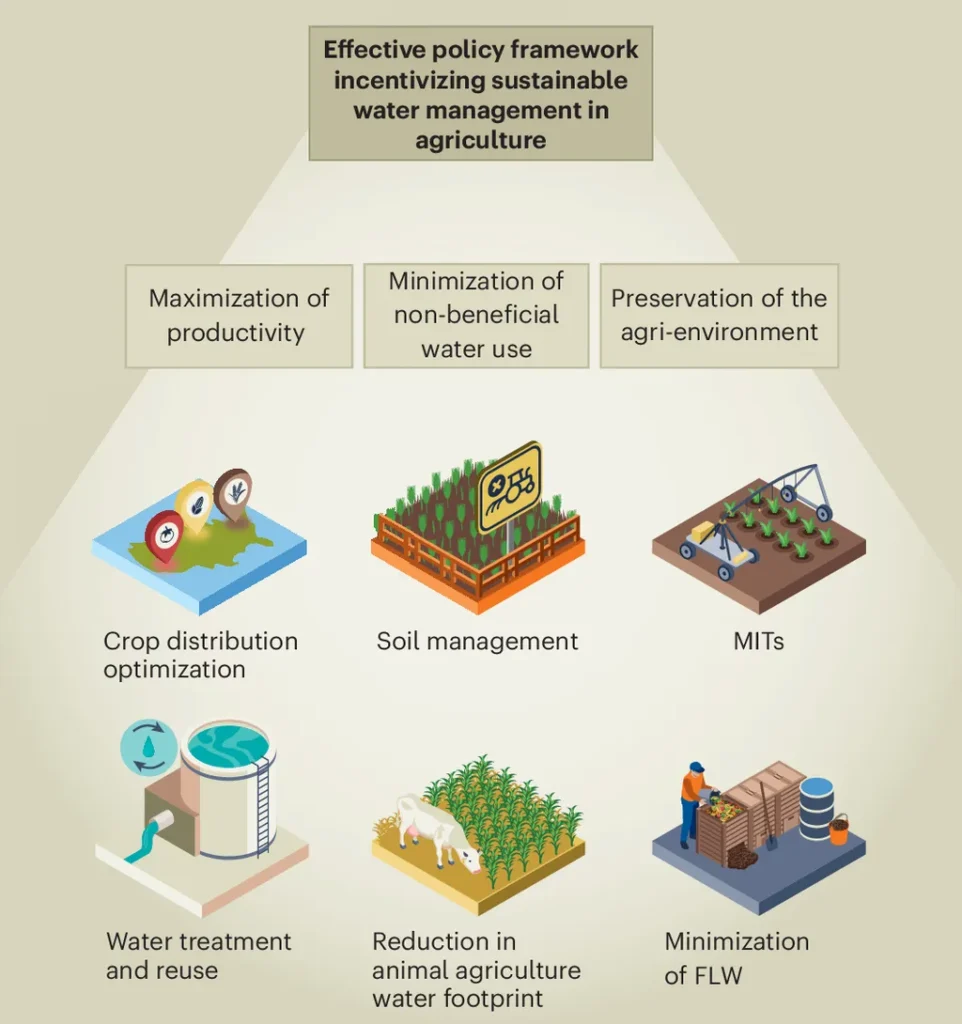
The catch, Keshyagol cautions, is upfront capital and know-how. “Farmers often tell us the first year is an investment year, not a profit year,” he notes. That gap is where agri-tech startups and energy utilities could step in—offering leasing programs for no-till drills or pay-per-yield insurance tied to soil-carbon metrics. Policy signals will matter too; targeted subsidies that reward SOC gains (measured annually via remote sensing) can tilt the economics faster than blanket water pricing alone.
As climate shocks intensify, the study suggests that the most climate-resilient farms will be those that treat soil, water, and crops as one living system. For energy planners, that systems view could translate into lower water abstraction permits, fewer crop-based biofuel supply chain risks, and even new revenue streams from verified carbon credits. The future of farming may not be high-tech alone, but high-coordination—linking the field to the grid through data, incentives, and integrated design.