
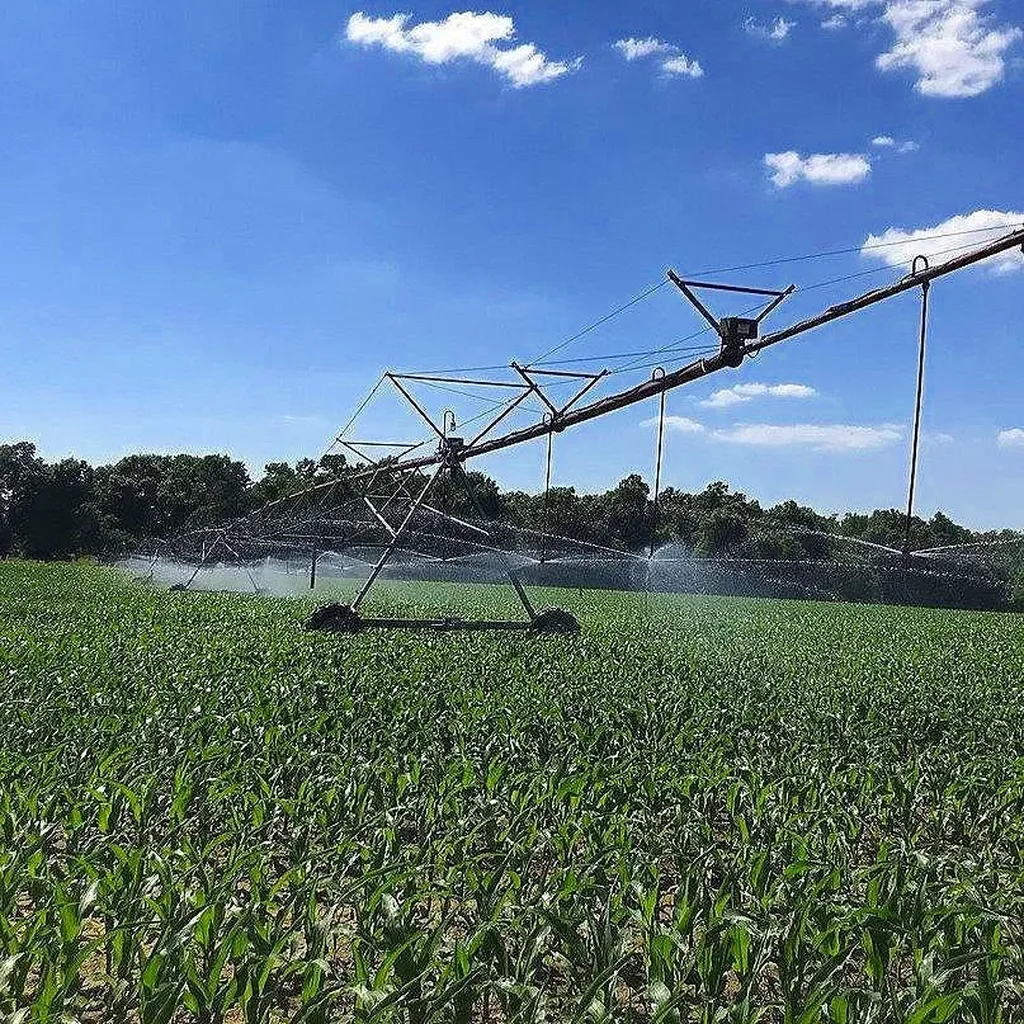
Mandeep Singh, a researcher at Punjab Agricultural University’s Department of Agronomy, has spent the last two decades sifting through 266 studies to uncover how precision fertigation—where water and nutrients are delivered with surgical precision—could reshape agriculture. His findings, published in *Applied Water Science* (translated from the original title *Angewandte Wasserwissenschaft*), suggest that this approach isn’t just about boosting yields; it’s about doing more with less in an era where every drop of water and every gram of fertilizer counts.
Precision fertigation integrates real-time data, smart sensors, and adaptive irrigation techniques to tailor nutrient and water delivery to the exact needs of crops. Singh’s synthesis reveals staggering improvements: IoT-based sensors alone can slash water use by up to 64% while increasing yields by 12–35%. For energy-intensive sectors like large-scale farming or greenhouse operations, this translates to lower electricity bills for pumping water and reduced reliance on fossil-fuel-derived fertilizers—a double win for both the balance sheet and the environment.
“Farmers aren’t just growing more; they’re growing smarter,” Singh notes. “The key is in the calibration—getting the right amount of water and nutrients at the right time, not just more of them.” His work highlights technologies like time-domain reflectometry (TDR), which can improve water efficiency by 40–56%, and GreenSeeker, which enhances nutrient use efficiency by 20–45%. These aren’t minor tweaks; they’re systemic shifts that could redefine how agribusinesses allocate resources.
Yet, the path forward isn’t without hurdles. High upfront costs for sensors, data management challenges, and cybersecurity risks pose real barriers, particularly for smallholder farmers. Singh’s review underscores the need for policy frameworks that make these tools accessible—perhaps through subsidies or cooperative models—while also addressing the technical gaps that prevent seamless integration.
For the energy sector, the implications are profound. As precision fertigation reduces water and fertilizer waste, it also cuts the carbon footprint tied to their production and distribution. Imagine a future where farms operate like data centers—highly optimized, energy-efficient, and responsive to real-time conditions. That future isn’t far off, and Singh’s research is a roadmap.
The question now is whether the industry can bridge the gap between potential and practice. With the right investments in infrastructure and training, precision fertigation could become the backbone of climate-smart agriculture, proving that sometimes, the most sustainable solutions are also the most efficient.