
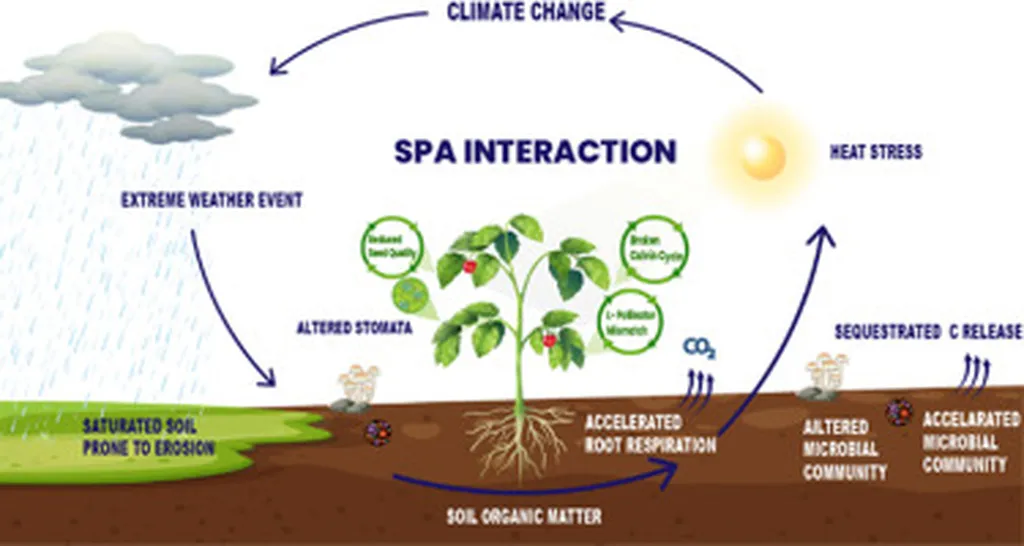
The ground beneath our feet is shifting—not just metaphorically, but literally. A sweeping new review published in *Applied and Environmental Soil Science* (known in some circles as *Ciência Ambiental e do Solo Aplicada*) reveals how climate change is quietly rewriting the rules of soil health, with direct consequences for farmers, land managers, and even energy producers who rely on stable landscapes for infrastructure and resource extraction.
Led by Sintayehu Eshetu Abebaw of the Department of Forestry, the study synthesizes data from 282 peer-reviewed papers over 25 years and paints a sobering picture: rising temperatures, erratic rainfall, and more frequent droughts are degrading soils faster than previously thought. “We’re seeing soil organic carbon stocks decline by 8% to 15% in many regions,” says Abebaw. “That’s not just a loss of fertility—it’s a loss of resilience. And in places like the Sahel or the U.S. Southwest, it’s happening twice as fast.”
The commercial stakes are significant. For the energy sector—especially oil, gas, and renewable energy projects that depend on land stability for pipelines, wind farms, and solar arrays—soil degradation translates into higher maintenance costs, increased risk of erosion around infrastructure, and potential liabilities from unstable foundations. A 25% jump in soil erosion in high-rainfall zones, as documented in the study, could mean more frequent dredging of access roads, higher sediment loads in water used for drilling, and greater vulnerability to landslides near critical infrastructure.
The review also highlights a counterintuitive twist: higher CO₂ levels may boost root growth by 10% to 25%, offering a partial buffer against carbon loss. But as Abebaw notes, “That’s not a free pass. It’s a temporary offset. The real story is in how we manage what’s already there.”
The findings point to a future where soil monitoring becomes as routine—and as strategically important—as weather forecasting. Land managers may soon need to adopt “climate-smart” practices not just for agriculture, but for energy infrastructure as well. Conservation tillage, agroforestry buffers around facilities, and organic soil amendments could become standard risk-mitigation tools, especially in regions facing rapid climate shifts.
As the energy industry increasingly looks to decarbonize, its relationship with the land is changing. No longer can soil be treated as a static foundation—it’s a dynamic system under pressure. The research from Abebaw and colleagues suggests that understanding and managing soil health isn’t just an environmental concern anymore. It’s a commercial imperative.