
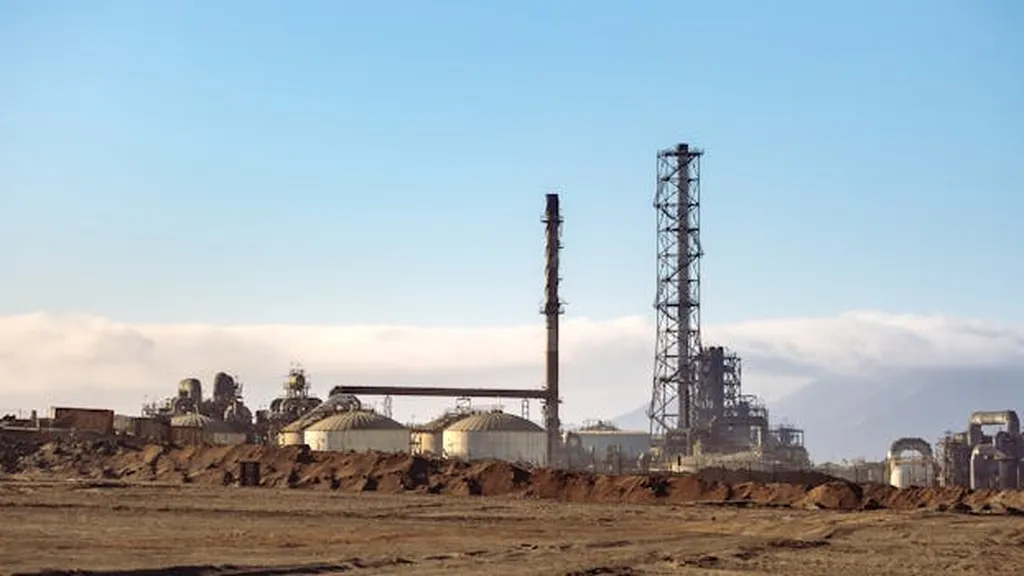
Geoff Trukenbrod’s take on the deal is direct: the $500 million injection from Ara Partners is a balance-sheet weapon, not a subsidy. Sedron’s plan is simple—own the plant, run it, and sell fertilizer, electricity and irrigation water to customers that already pay for waste disposal. The model is capital-intensive—$100 million to $200 million per facility—but once online, each site can generate revenue from multiple streams. “The Ara investment is largely designed to provide us with the equity on our own balance sheet to scale up production of additional projects and plants across the country,” Trukenbrod said. In plain terms, Ara’s cash replaces the need for repeated project finance or municipal bonds, accelerating expansion without waiting for new grants or tax credits.
The facilities themselves are industrial orchestras of efficiency. Biosolids enter the plant at roughly 15 percent solids; the rest is water vapor that exits through an energy-recovery loop. What remains is fed into a biomass boiler, producing power that covers the dryer’s demand and leaves a surplus for sale. Crucially, the high-temperature process also cracks PFAS chains, a capability that municipal operators increasingly demand as regulatory scrutiny tightens on “forever chemicals.” Sedron’s thermal dryer is not the only PFAS-destructive technology in the market, but its ability to couple destruction with on-site power generation lowers the total cost of compliance.
On the agricultural front, the company is tackling dairy waste where it is most concentrated. In Indiana, Sedron’s systems currently process manure from a 20,000-cow operation, stripping out water for irrigation and separating the solids into two fertilizers: a granular product for row crops and a concentrated liquid nitrogen stream for specialty produce. The alternative—open lagoons—is a financial and environmental liability. Methane escapes, nutrients leach, and farmers face fines when runoff triggers algal blooms downstream. “Our treatment process is more affordable and replaces the use of manure lagoons to store the waste until it can be applied to fields as a liquid,” the company states. The math is persuasive: farmers pay for disposal; Sedron sells fertilizer and water, turning an expense line into a revenue stream.
The South Florida regional project, breaking ground this month and scheduled to start in 2028, is the first multi-municipality deployment. Serving two million people, the facility will demonstrate whether Sedron’s integrated model can scale beyond single farms or cities. If successful, it sets a template for other regions where aging treatment plants need upgrades and rural dairies need solutions. The company’s ambition is to open at least two new sites annually for the next five years, then reassess.
Stanley Janicki frames the business in the language of value creation rather than charity. “Imagine having a bakery, and you get paid to get flour, and you get paid for your cookies,” he said. “It’s a phenomenal business model, not that biosolids are cookies.” The metaphor underscores a shift in the sector: environmental infrastructure no longer needs to be a cost center. Revenues can flow from waste streams that were once liabilities. Yet the model’s viability hinges on two conditions—Sedron must keep the plants running at near-full capacity, and it must sell fertilizer and power at prices that remain competitive with synthetic alternatives and grid electricity.
Cory Steffek of Ara Partners puts the broader stakes in clearer terms: “Our focus is on positioning Sedron as the leader in circular waste management—converting waste into carbon negative commodities faster, more cost effectively, and with greater energy efficiency than any other solution available.” The phrase “carbon negative commodities” is deliberate. By combusting biosolids and manure that would otherwise decay anaerobically—releasing methane—Sedron’s plants avoid greenhouse gas emissions while producing energy and fertilizer. The claim invites scrutiny, but the company points to lifecycle assessments showing net-negative emissions when credits for displaced synthetic fertilizer and grid electricity are included.
Janicki’s closing remark hints at a strategic tension: “As the world today is retreating somewhat from climate efforts, it’s exciting to be in a business that is positioned for exceptional growth and solving environmental problems while creating valuable products.” The comment reflects the reality that policy support is uneven, yet private capital is increasingly willing to finance solutions that pencil out on their own. Sedron’s path forward depends on executing at industrial scale, proving that its circular model can outperform legacy systems on both cost and environmental metrics. If it succeeds, the company won’t just be another wastewater startup; it will have redefined what it means to turn waste into wealth.