
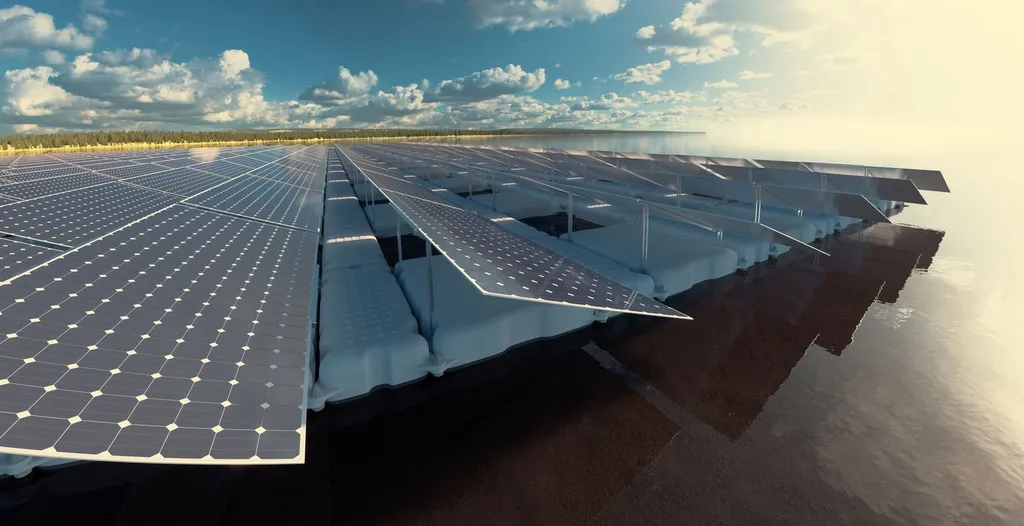
In the race to decarbonize global energy systems, floating renewable energy (FRE) technologies are emerging as a game-changer—one that could redefine how we generate power without sacrificing land, biodiversity, or economic viability. A new study by Mirza Baber Baig, a researcher affiliated with Guangxi University and Nanning University in China, offers a groundbreaking comparative analysis of three key FRE systems: floating photovoltaics (FPV), floating offshore wind turbines (FOWT), and marine-based energy systems like tidal and wave power. Published in *Energy Strategy Reviews* (formerly known as *能源战略评论*), the research provides the most comprehensive assessment to date of their technical maturity, cost, and scalability—data that could guide policymakers and investors shaping the next decade of energy infrastructure.
Baig’s analysis doesn’t just catalog technologies; it ranks them by commercial readiness and long-term potential. “FPV is currently the frontrunner,” he notes, “because it combines proven solar technology with minimal environmental disruption and scalability.” Unlike ground-mounted solar farms, FPV systems can be deployed on reservoirs, lakes, and even coastal waters, reducing land-use conflicts and evaporation losses—a dual benefit for water-stressed regions. The study finds FPV delivering the lowest levelized cost of energy (LCOE) among FRE options, making it an attractive near-term investment for utilities seeking rapid decarbonization without high technological risk.
Floating offshore wind, however, represents the sector’s future heavyweight. While still grappling with mooring stability and maintenance in harsh marine environments, FOWTs hold immense promise for large-scale deployment. “The challenge isn’t just engineering—it’s economics,” says Baig. “We need better anchoring systems and autonomous inspection tools to cut operational costs.” Early adopters like Norway and the UK are already piloting floating wind farms, betting on their ability to tap deeper offshore wind resources where fixed-bottom turbines can’t reach.
Marine energy—tidal and wave systems—remains the wildcard. Despite decades of research, these technologies are still constrained by high costs and technical immaturity. Baig’s review underscores their long-term potential but warns that without breakthroughs in materials and power conversion efficiency, they are unlikely to scale meaningfully before 2035. That hasn’t deterred innovators: companies like Orbital Marine Power and CorPower Ocean continue testing next-generation wave devices, banking on hybrid systems that could one day pair with FPV or wind to create stable, baseload-capable offshore power plants.
What makes this research particularly compelling is its emphasis on hybrid systems—combinations of solar, wind, and marine energy co-located on the same floating platforms. Such configurations could smooth out intermittency, stabilize energy output, and reduce transmission costs by locating generation closer to demand centers. “The future isn’t about choosing one technology,” Baig argues. “It’s about integrating them intelligently.”
For energy executives and investors, the implications are clear: FPV is ready for prime time today, floating wind is the next frontier, and marine energy remains a high-risk, high-reward bet. As global pressure mounts to meet net-zero targets, the race to deploy FRE systems will shape not just the energy mix, but the geopolitics of power. With clearer cost benchmarks and performance data now available, the industry has a roadmap—one that could make floating renewables a cornerstone of the global energy transition.