
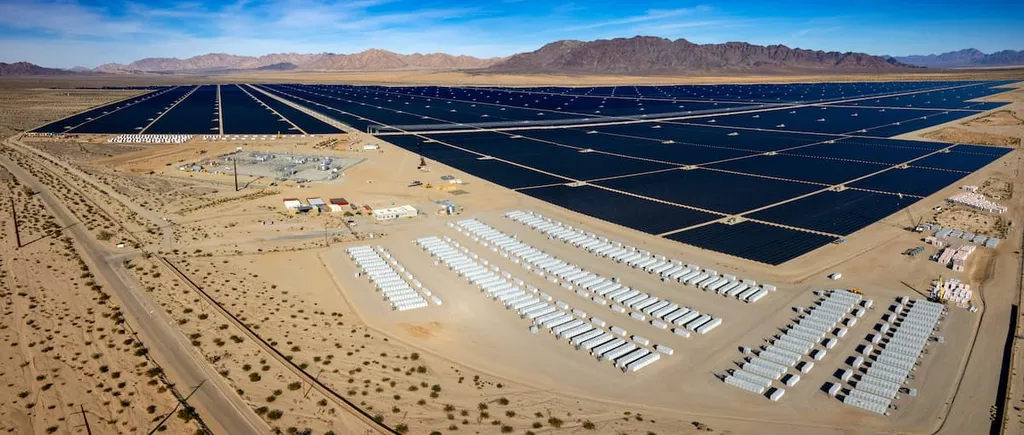
The idea of powering a large hotel entirely with solar, wind, and ocean waves might sound like a futuristic fantasy—something out of a sci-fi novel where renewable energy flows as freely as seawater. But for Mohsen Fathi, a researcher at Iran University of Science and Technology, it’s not just possible; it’s a commercially viable pathway to slashing carbon emissions and energy costs in coastal regions.
Fathi and his team have designed a hybrid renewable energy system (HRES) that integrates photovoltaic panels, vertical-axis wind turbines, and oscillating water column wave energy converters, all working in unison with a hydrogen-based energy storage system. The system was modeled and optimized using TRNSYS software, a sophisticated tool for dynamic energy simulation, and fine-tuned through a multi-objective genetic algorithm to balance cost, reliability, and environmental impact.
What makes this study groundbreaking is its real-world application: a large hotel on Kish Island, Iran. Unlike many theoretical models, this one was built for a high-energy consumer—a building that operates year-round with fluctuating demands for lighting, cooling, and guest services. “We wanted to show that near-zero energy performance isn’t just for small-scale or low-demand buildings,” Fathi said. “It can be achieved in large commercial facilities that are critical to local economies, especially in coastal and island regions where grid reliability is often a challenge.”
The results are compelling. The optimized system—comprising 500 solar panels, 13 vertical-axis wind turbines, and 35 wave energy converters—delivers a CO₂ emission of just 84.45 tons per year. That’s an 81% reduction compared to relying solely on the grid. The system also maintains a loss of power supply probability (LPSP) of 0.179, meaning it remains reliable even during variable weather conditions. Most strikingly, the operational cost rate is 472 EUR per hour—a figure that, while still significant, represents a major step toward energy independence and long-term financial stability.
For energy investors, developers, and hotel operators, this isn’t just about sustainability—it’s about resilience. Coastal regions, especially islands, often face high energy costs due to reliance on imported fuels and vulnerable grid infrastructure. A self-sustaining system like this could stabilize energy budgets, reduce exposure to fossil fuel price volatility, and attract eco-conscious travelers willing to pay a premium for truly green operations.
“This isn’t just about cutting emissions,” Fathi noted. “It’s about creating a scalable model that hotel chains, resorts, and even coastal cities can adopt to secure their energy future.”
Published in *Energy Strategy Reviews*, the study offers a blueprint for integrating diverse renewable sources into a single, resilient system. While hydrogen storage remains a key enabler, the real innovation lies in the synergy between technologies—solar providing daytime power, wind complementing it during peak demand, and waves offering a consistent, predictable energy source in coastal zones.
As climate pressures grow and energy costs rise, the commercial implications are hard to ignore. Hotels and resorts are increasingly under scrutiny for their environmental footprint, and guests are voting with their wallets. Systems like the one Fathi has modeled could become a standard—not just for luxury properties, but for any large-scale building in coastal areas.
The question now isn’t whether this can be done. It’s how quickly it can be scaled.