
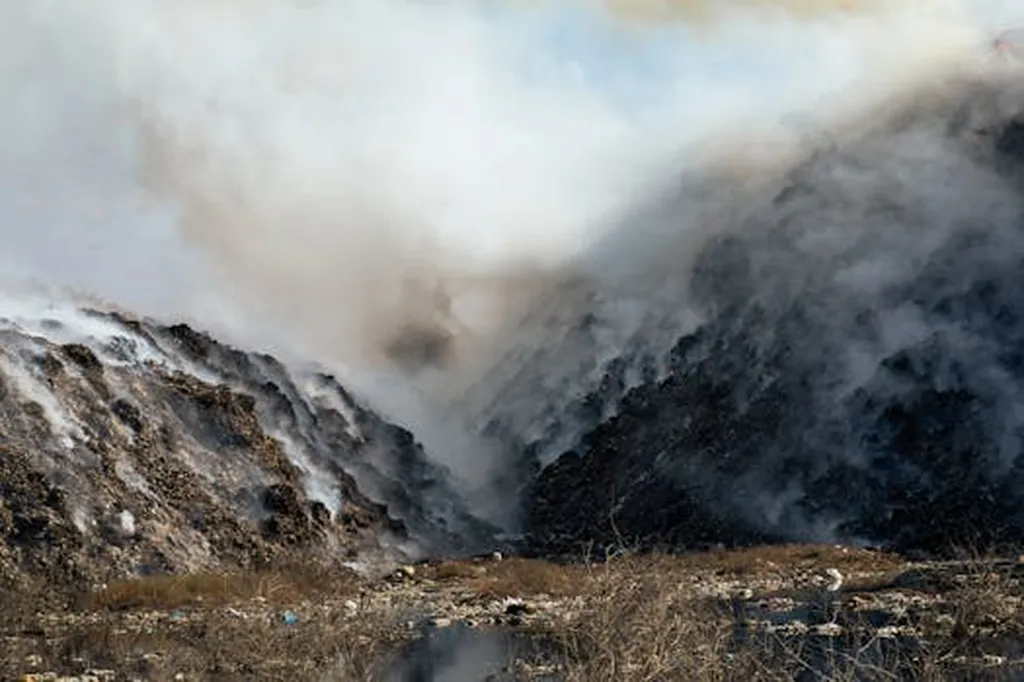
The first commercial deployment of Full Circle Lithium’s FCL-X™ in a major U.S. waste management operation marks more than just a product launch—it signals the beginning of a necessary shift in how the industry handles lithium-ion battery (LIB) fires. The waste sector has been playing an expensive game of catch-up, scrambling to contain fires that burn hotter, reignite unpredictably, and release toxic fumes, all while traditional suppression methods fail to address the root cause: thermal runaway. The timing couldn’t be worse. North American waste facilities are logging thousands of LIB-related fires annually, with incidents surging from weekly occurrences to full-blown operational threats. In Edmonton alone, a single lithium-ion battery fire caused $2.5 million in damage and burned at temperatures exceeding 2,000°C. These aren’t just financial setbacks—they’re environmental and safety crises that demand a specialized response.
FCL-X™ steps into this void not as a stopgap but as a targeted solution. Unlike water or soil smothering, which struggle against the self-sustaining chemical reactions of thermal runaway, FCL-X™ is formulated to neutralize the reaction at its core. That capability is what waste operators have been missing, and it positions FCL at the center of an emerging market where urgency meets opportunity. The company isn’t just selling a fire suppressant; it’s selling risk reduction, regulatory compliance, and operational continuity—all critical for facilities grappling with rising insurance costs and tightening environmental standards.
“Waste operators are facing a growing and costly threat with no effective solution, until now,” said Carlos Vicens, CEO. His statement underscores a harsh truth: the waste industry has been operating with tools ill-suited for a crisis it didn’t create but can no longer ignore. As electrification accelerates—fueled by e-bikes, power tools, and discarded electronics—the volume of LIBs entering the waste stream will only increase. Prevention alone won’t suffice when detection remains nearly impossible in mixed waste streams moving at industrial speeds. That’s why solutions like FCL-X™, designed to work within existing firefighting protocols while addressing the unique chemistry of LIB fires, are gaining traction.
The commercial sale to a major waste operator validates the commercial viability of this approach. It also exposes a broader industry question: Are waste management companies equipped to handle the next phase of the lithium economy, or will they remain reactive, relying on outdated methods until another catastrophic fire forces change? The market opportunity is clear—analysts estimate a multi-billion-dollar need for LIB fire mitigation solutions, with thousands of facilities across the U.S. and Canada urgently seeking scalable defenses.
Yet the path forward isn’t without challenges. FCL is a startup in a space dominated by larger, better-capitalized competitors. Ramping up production, securing feedstock, and proving long-term efficacy in real-world conditions will test the company’s resolve. Regulatory hurdles and safety certifications add another layer of complexity. But the waste industry’s pain points—financial losses, environmental liabilities, and worker safety—are too acute to ignore. The first sale isn’t just a milestone for FCL; it’s a signal to the entire sector that the era of improvisation in LIB fire response is ending. The question now is whether others will follow before the next crisis erupts.