
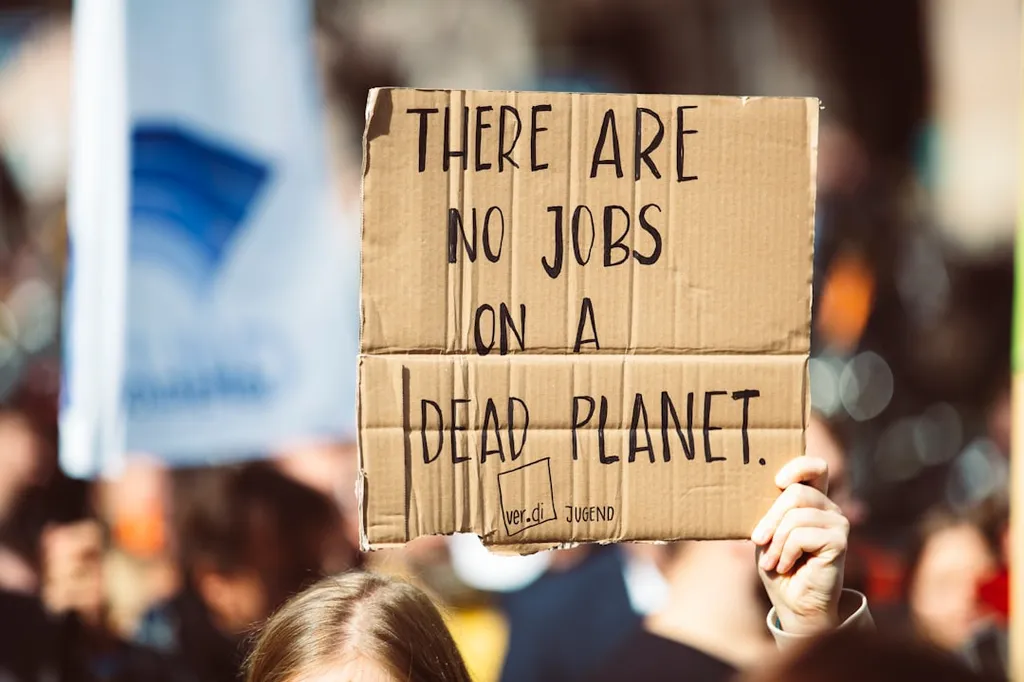
The shift toward climate-change mitigation isn’t just altering corporate environmental policies—it’s redefining the very structure of the global workforce. Nearly half of employers worldwide anticipate fundamental changes to their operations by 2030, according to the World Economic Forum’s 2025 *Future of Jobs Report*. This isn’t a niche shift confined to sustainability departments; it’s a systemic transformation reshaping industries, job roles, and career trajectories. The net result? A projected 78 million new jobs globally, many of them high-paying and far removed from the traditional image of environmental work.
The demand for green skills is outpacing supply at an alarming rate. LinkedIn’s 2025 *Global Green Skills Report* reveals that hiring for green roles is accelerating nearly twice as fast as the availability of workers equipped with those skills. The imbalance is stark: workers with green expertise are now being hired at a rate 46.6% above the economy-wide average. Even more striking, over half of all green jobs are going to employees in positions that historically wouldn’t have required sustainability credentials. The message is clear: sustainability is no longer a bolt-on responsibility but a core competency across sectors.
A new analysis by *Resume Genius*, which cross-referenced O*NET’s green occupation framework with U.S. Bureau of Labor Statistics data, highlights where this convergence of purpose and pay is most pronounced. The rankings—based on median annual pay, projected growth through 2034, and total employment—reveal a hierarchy of opportunity that defies conventional green career paths. At the top sits architectural and engineering managers, commanding a median salary of $167,740 with 3.8% projected growth. These professionals don’t just oversee technical teams; they design the energy-efficient buildings, renewable systems, and sustainable infrastructure that will define the built environment of the future.
Natural sciences managers follow closely, earning a median of $161,180 annually with 3.7% growth. Their role—directing scientific research in areas like environmental monitoring and clean technology—reflects the premium placed on leadership in sustainability-driven fields. Construction managers, meanwhile, are benefiting from the surge in green retrofits and energy-efficient building projects, with a median salary of $106,980 and an 8.7% growth rate that outpaces many higher-paying roles. Their work bridges the gap between sustainability goals and on-the-ground execution, a balance that’s becoming increasingly lucrative.
Industrial engineers occupy a unique position, blending sustainability impact with operational efficiency. With a median salary of $101,140 and 11% projected growth, they’re tasked with cutting waste and reducing resource consumption—core objectives in any green transition. Operations research analysts, who model and solve complex business problems, represent one of the fastest-growing green roles, with a 22% projected increase in demand and a median salary of $91,290. Their work is critical for organizations aiming to shrink their environmental footprint while optimizing performance.
Urban and regional planners, often overlooked in green career discussions, wield significant influence over long-term sustainability at the local level. Their median salary of $83,720 reflects the specialized expertise required, from land-use policy to transportation planning, though the field’s smaller size limits overall employment volume. Logisticians, by contrast, are experiencing explosive demand, with a 17% projected growth rate and a median salary of $80,880. Their role in streamlining supply chains for efficiency and waste reduction makes them indispensable in a low-carbon economy.
Environmental scientists and specialists—long the face of green careers—still play a vital role, earning a median of $80,060 with 4.4% growth. Landscape architects, too, are finding new relevance, designing outdoor spaces that prioritize water conservation and biodiversity, though their field remains niche. Compliance officers round out the list, ensuring organizations meet evolving environmental regulations and ESG reporting standards. Their median salary of $78,420 and steady 3% growth underscore how sustainability is reshaping corporate governance itself.
The data reveals three dominant themes. First, management roles dominate the highest-paying green jobs, with salaries exceeding $160,000 for leadership positions in engineering and natural sciences. Second, growth rates tell a different story than pay alone. Operations research analysts and logisticians, while not topping the salary list, are projected to grow at 22% and 17% respectively, signaling where the long-term opportunities are consolidating. Third, the green economy isn’t creating entirely new job titles; it’s transforming existing ones. As Eva Chan, career expert at *Resume Genius*, notes: *”The best opportunities aren’t