
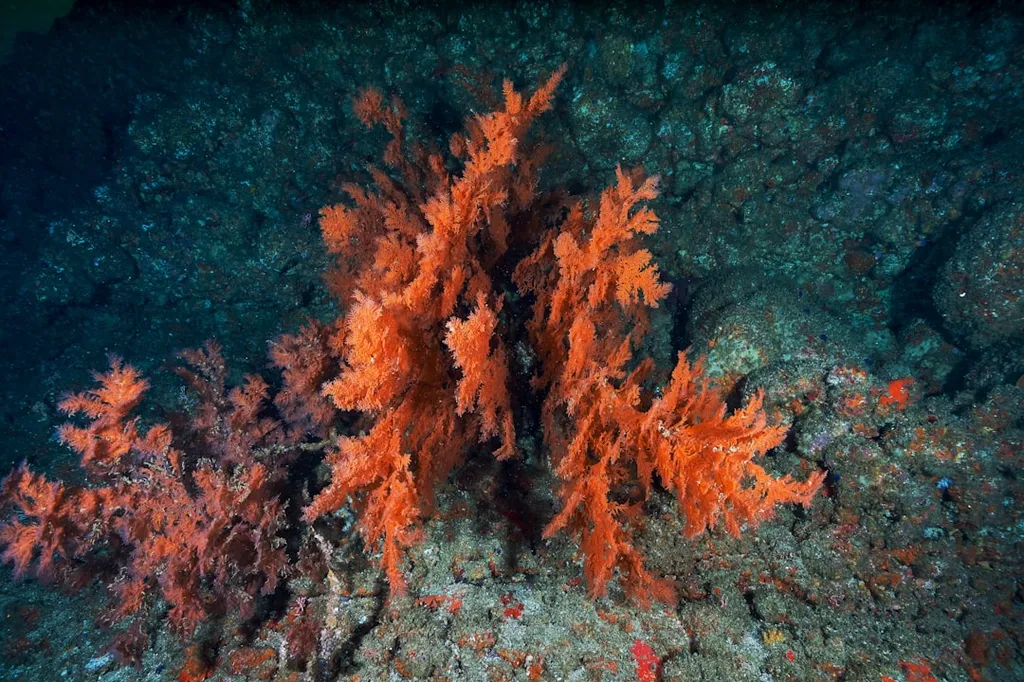
Off the rugged coast of Vesterålen in northern Norway, where the continental shelf plunges into the Arctic deep, scientists have uncovered a hidden world—one where methane seeps, cold-water corals, and microbial life interact in ways that could reshape our understanding of deep-sea ecosystems and even energy exploration.
Led by C. Argentino of the Department of Geosciences at UiT The Arctic University of Norway in Tromsø, a multidisciplinary team has just published groundbreaking findings in *Biogeosciences* about seafloor chemosynthetic habitats tied to cold-water corals. Their work reveals how methane-charged sediments, carbonate formations, and dynamic microbial communities create the conditions for these slow-growing, long-lived corals to thrive—even in the harsh, high-energy environment of the Norwegian Sea.
“What we’re seeing is a finely tuned system where methane seepage isn’t just a byproduct—it’s a foundation,” explains Argentino. “The presence of microbial mats, carbonate crusts, and sharp geochemical gradients suggests that methane oxidation is actively shaping the habitat, and that in turn supports the corals.”
The team combined sediment core analysis, pore fluid chemistry, and high-resolution seafloor mapping to show that microbial mats—white patches a few tens of centimeters across—are concentrated along the edges of methane-derived carbonate formations. These mats sit atop shallow sulfate-methane transition zones, often as little as 5 cm below the surface, where anaerobic oxidation of methane (AOM) is actively occurring. The process produces highly depleted carbon isotopes, recorded not only in the sediments but even in the shells of foraminifera, tiny single-celled organisms that act as living chemical archives.
But the discovery that caught the team by surprise was a macroscopic white biofilm found within a sediment core. Its presence coincided with a dramatic drop in δ13C values—reaching as low as −43.4‰—indicating a strong methane influence. Genetic analysis of the top 10 cm of sediment showed a dramatic shift in microbial communities: Proteobacteria dominated near the surface, but deeper down, Halobacterota took over, including lineages linked to ANME-1b anaerobic methanotrophs—microbes that specialize in consuming methane.
“This biofilm isn’t just a curiosity—it’s a signature of active methane processing,” says Argentino. “It tells us that even within a few centimeters, the sediment can host radically different microbial ecosystems, all driven by methane flow.”
The findings have implications that reach beyond pure science. The Vesterålen region is known for its cold-water coral reefs, which are protected under Norway’s marine conservation framework. These corals depend on stable substrates, food supply from currents, and—apparently—subsurface methane dynamics. Understanding how seepage influences coral distribution could help regulators and industry assess the environmental risks of offshore energy activities, including potential drilling or pipeline laying near sensitive habitats.
Moreover, the team produced detailed orthomosaics and habitat maps—tools that will enable long-term monitoring of these ecosystems as climate change and human activities alter the seafloor. With Arctic waters warming and methane release from sediments potentially increasing, such baseline data are critical.
For the energy sector, this research underscores a paradox: while methane is a target for extraction, it also sustains deep-sea ecosystems that may be vulnerable to disturbance. Companies operating in the Norwegian Sea must now consider not just the geotechnical risks of drilling near seeps, but also the ecological role methane plays in maintaining biodiversity hotspots like cold-water coral gardens.
As Argentino reflects: “We’re not just mapping the seafloor—we’re uncovering the invisible threads that connect energy, microbes, and corals. That changes how we think about responsible ocean use.”
Published in *Biogeosciences* (Biogeowissenschaften), this study offers a rare glimpse into the hidden metabolism of the deep ocean—and a reminder that beneath the waves, life thrives in ways we’re only beginning to understand.