
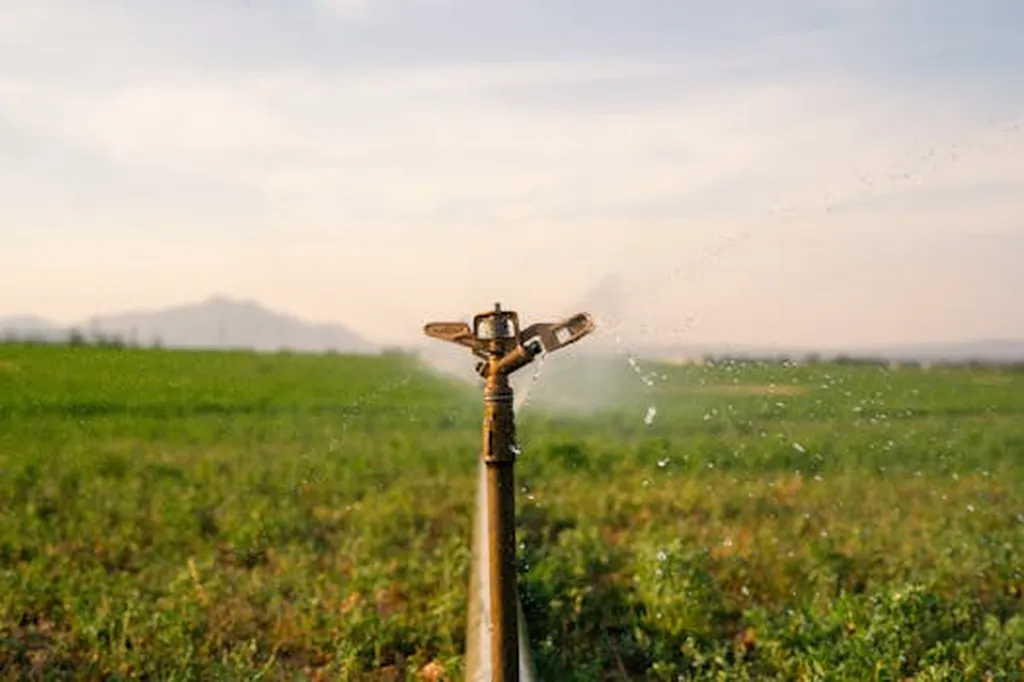
In the arid expanse of China’s Ebinur Lake Basin, where the sun bakes the earth and water is scarcer than gold, a quiet revolution in irrigation has unfolded over the last two decades. Farmers have swapped furrow irrigation for precision drip systems, a change touted as a lifeline for water-stressed landscapes. Yet, as a groundbreaking study led by Jing Liu of Tianjin University reveals, these technological leaps haven’t delivered the expected water savings—instead, they’ve been swallowed by the very expansion they were meant to enable.
“Our findings show that while irrigation efficiency improved, the basin’s total water use still surged by 43%,” Liu explains. “The culprit? A staggering 116% growth in irrigated area.” The study, published in *Agricultural Water Management* (translated from *Nóngyè Shuǐlǐ Guǎnlǐ*), dismantles the assumption that smarter irrigation alone can curb water demand. Instead, it exposes a paradox: efficiency gains are often negated by the relentless march of agricultural expansion, leaving lakes parched and groundwater levels plummeting.
The research team reconstructed 21 years of irrigation schedules using multisource remote-sensing data and a two-stage optimized SM2RAIN algorithm, then coupled it with the SWAT+ gwflow model. By calibrating against real-world metrics—lake inflow, groundwater levels, and terrestrial water storage anomalies—they could isolate the hydrological fingerprints of technological progress versus area expansion. The verdict? Efficiency alone reduced water use by 8% and boosted lake inflow by 7%, but expansion wiped out these gains, increasing water use by 13% and shrinking lake inflow by 10%.
For energy and infrastructure planners, this isn’t just an academic footnote—it’s a cautionary tale. In arid regions, water-saving technologies are often marketed as sustainability silver bullets, but their real-world impact hinges on curbing land-use expansion. As Liu notes, “The hydrological attribution framework we’ve built offers a practical tool to evaluate the net effects of agricultural water-saving policies.” For sectors reliant on water—from power generation to mining—the study underscores a critical insight: efficiency must be paired with strict land-use controls to avoid trading one crisis for another.
The Ebinur Lake Basin case isn’t unique. From California’s Central Valley to Australia’s Murray-Darling, regions grappling with water scarcity are discovering that irrigation efficiency alone can’t outrun the thirst of expanding agriculture. The study’s methodology, however, offers a way forward. By quantifying the rebound effect, policymakers and investors can design more realistic water management strategies—ones that don’t just chase technological quick fixes but address the root drivers of demand.
As climate change tightens its grip on water supplies, the stakes couldn’t be higher. The Ebinur Lake Basin’s story is a reminder that in the quest for sustainability, the devil isn’t just in the details—it’s in the trade-offs.