
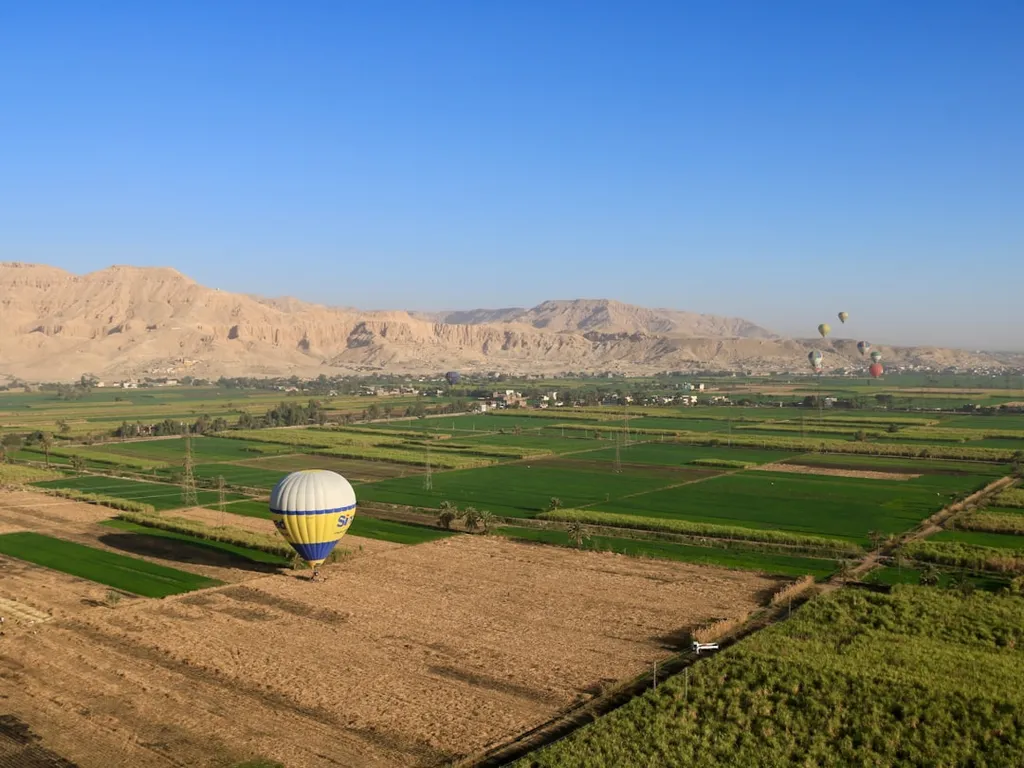
In the arid expanse of Egypt’s New Valley Governorate, where the Nile’s reach fades into the golden dunes, a quiet revolution is unfolding—not in the streets, but in the fields. Dr. Marwa Ashour, a researcher at Ain Shams University’s Faculty of Graduate Studies and Environmental Research, has crunched the numbers on a question that could reshape agriculture in one of Egypt’s most water-stressed regions: *What if farmers grew different crops?*
Using multi-objective linear programming—a mouthful of a term for a powerful analytical tool—Ashour and her team modeled how shifting crop patterns could slash water demand while still turning a profit. The results, published in the *Journal of Environmental Science*, suggest that by reallocating land, labor, and water under tight constraints, New Valley could cut its agricultural water use dramatically, easing pressure on the governorate’s finite groundwater reserves.
“This isn’t about asking farmers to grow less,” Ashour explains. “It’s about growing smarter. We’re talking about crops that deliver better returns per drop of water, aligning economic incentives with environmental limits.”
The study’s first scenario, which prioritized water conservation under minimum cultivated area constraints, achieved a “substantial and noticeable reduction” in water requirements—a critical finding for a region where agriculture guzzles over 80% of available water. By tweaking the mix of high-value, low-water crops like certain vegetables and fodder, the model showed net returns could actually *increase* while slashing demand on the aquifer.
For the energy sector, the implications are clear. Less water demand means less energy spent pumping it from ever-deeper wells. In a country where desalination and deep-well extraction are energy-intensive, this could translate to lower electricity loads for water utilities and reduced operational costs. It also hints at a future where Egypt’s energy planners might factor agricultural water efficiency into national energy strategies—because every megaliter saved in the fields is one that doesn’t need to be generated, treated, or distributed.
“This research gives us a roadmap,” says Ashour. “It shows that sustainability and profitability aren’t opposing goals. They can reinforce each other—if we let the data guide the plow.”
As climate change tightens its grip on the region, such models may become indispensable. New Valley’s groundwater is non-renewable, and once it’s gone, it’s gone. The study doesn’t just offer a crop plan—it offers a lifeline. And for a governorate that feeds Egypt’s ambitions as much as its people, that could be the most valuable yield of all.