
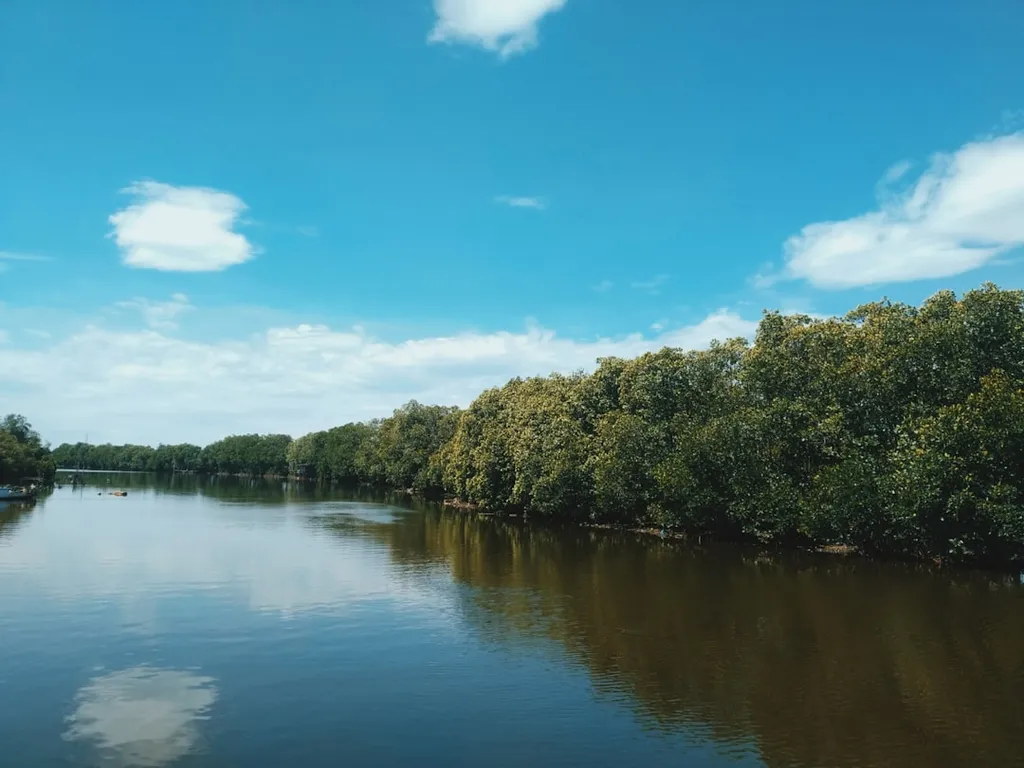
In the coastal stretch of South Sulawesi, Indonesia, where the city of Makassar meets the sea, a quiet revolution is taking shape—not with bulldozers or concrete, but with mangroves. These salt-tolerant trees, often overlooked as mere coastal vegetation, are now being positioned as the backbone of a sustainable economic corridor that could redefine how coastal communities thrive. A new study led by Amal Arfan from Universitas Negeri Makassar, published in *Discover Sustainability*, reveals how an integrated strategy could unlock the triple value of biodiversity protection, food security, and a thriving creative economy—all rooted in the restoration and sustainable use of mangrove ecosystems in the Mamminasata coastal area.
The research comes at a critical moment. While global attention has increasingly focused on blue carbon and coastal resilience, many local initiatives struggle to balance conservation with livelihood needs. Arfan and her team took a different route: they didn’t just study the mangroves—they listened. Through participatory rural appraisal, in-depth interviews, and focus group discussions, they brought together fishermen, women’s groups, local officials, academics, and entrepreneurs. The goal? To co-design strategies that don’t just preserve nature, but actively enhance human well-being.
One of the most striking findings is the potential for mangrove-based food innovation. The study identifies untapped opportunities in processing mangrove fruits into marketable products—think dried fruit snacks, jams, or even fermented beverages—using low-cost technologies like solar dryers and vacuum packaging. “We’re not just talking about conservation,” says Arfan. “We’re talking about creating jobs, empowering women-led microbusinesses, and building a local food industry that’s climate-resilient and globally competitive.”
But the implications go beyond food. The study also highlights eco-tourism as a key driver. Imagine guided kayak tours through mangrove-lined waterways, educational trails that teach visitors about blue carbon, and culinary tours featuring dishes made from mangrove ingredients. These aren’t just feel-good ventures—they’re economic engines. For coastal communities facing declining fish stocks and rising unemployment, eco-tourism and value-added food production could offer stable, diversified income streams.
What makes this research particularly compelling is its methodological rigor. By combining SWOT analysis with the Analytic Hierarchy Process (AHP), the team didn’t just list ideas—they ranked them. The top priorities emerged with strong consensus (Kendall’s W = 0.71) and a consistency ratio well within acceptable limits (CR = 0.06), giving policymakers and investors a clear roadmap. Topping the list: enforcing South Sulawesi’s new provincial regulation on mangrove management, strengthening law enforcement against illegal land conversion, and launching training programs for local entrepreneurs.
For the energy sector, the implications are subtle but significant. Coastal restoration projects often require large-scale infrastructure—think flood barriers, sediment traps, or renewable energy microgrids to power processing facilities. Mangrove-based food and tourism ventures could create demand for off-grid energy solutions, particularly solar-powered drying and packaging units. In remote coastal villages, where grid access is unreliable, decentralized renewable energy could become the backbone of a new green economy.
This isn’t just about planting trees. It’s about cultivating an ecosystem where nature and commerce coexist. As coastal cities expand and climate pressures intensify, the Mamminasata model offers a scalable blueprint—one that turns conservation into capital, and mangroves into a source of both ecological and economic resilience. The study, published in *Discover Sustainability*, doesn’t just describe a vision. It shows how to build it—one stakeholder, one solar dryer, one mangrove-based business at a time.