
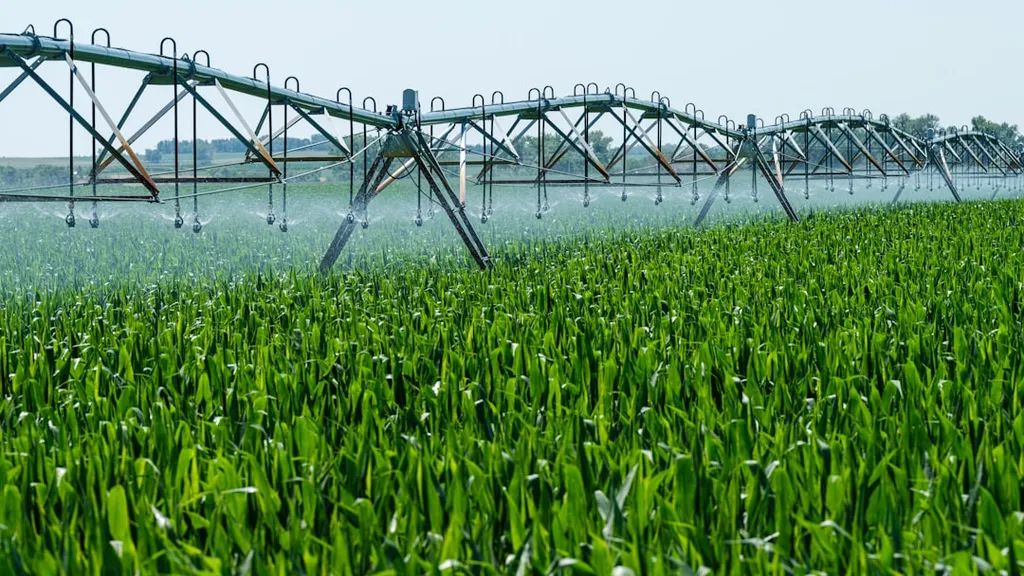
In the semi-arid landscapes of South Africa’s Limpopo Province, smallholder irrigation farmers are caught in a delicate balancing act—one that could determine the future of food security in the region. A new study by Ernest Malatsi, from the University of the Free State’s Department of Sustainable Food Systems and Development, sheds light on the challenges these farmers face, revealing a fragile interplay between land, water, and energy that could either sustain or undermine their livelihoods.
Malatsi’s research, published in *Frontiers in Water* (translated from French as *Frontières de l’Eau*), examines four smallholder irrigation schemes in Vhembe District, using what’s known as the Land-Water-Energy (LWE) nexus. This framework evaluates how well these systems integrate three critical resources—land availability, water access, and energy reliability—to support sustainable agriculture. The findings paint a picture of uneven performance, with scores ranging from moderately unsustainable to moderately sustainable. “These farmers are operating in a zone of functional yet fragile resource integration,” Malatsi explains. “The system works, but barely—any disruption could tip it into unsustainability.”
The study’s Land-Water-Energy Nexus Index (LWENI) highlights stark imbalances. While land tenure provides some stability, water and energy shortages loom large. The spider diagram visualizations in the research starkly illustrate these distortions—land is over-relied upon, while electricity infrastructure and reliable water supply lag behind. The consequences? Reduced production, heightened vulnerability to climate shocks, and a precarious future for food security in the region.
Climate data from 1980 to 2024 adds another layer of concern. Seasonal precipitation is erratic, with only weak linear increases, while maximum temperatures are rising at a rate of 0.04°C per year. This warming trend contributes to increased aridity, as shown by a declining Climate Moisture Index. The correlation between rising temperatures and water availability is striking—though Malatsi cautions that with only four schemes studied, it’s more of a monitoring signal than definitive proof. Still, the trend is unmistakable: a hotter, drier climate is tightening its grip on these irrigation systems.
For the energy sector, the implications are clear. Smallholder irrigation in Vhembe District is heavily dependent on electricity, yet supply is inconsistent. Malatsi suggests that solar-powered systems could be a game-changer, reducing reliance on an unreliable grid while cutting carbon emissions. “Infrastructure rehabilitation and climate-smart practices are not just environmental necessities—they’re economic imperatives,” he says. “The energy sector has a critical role to play in ensuring these farmers can keep the lights on and the water flowing.”
The study’s findings point to a future where integrated planning is non-negotiable. Without coordinated action across land, water, and energy sectors, the resilience of smallholder irrigation—and the food security it underpins—could unravel. For policymakers, investors, and energy providers, the message is urgent: adapt now or face the consequences later.