
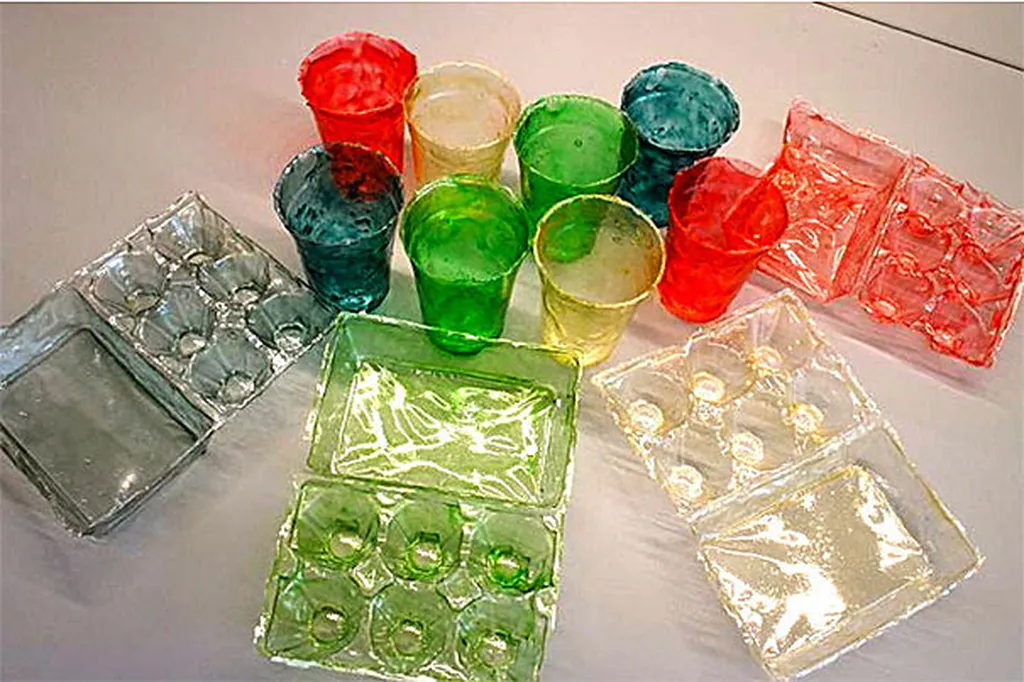
In a lab at Universitas Jambi in Indonesia, researchers are turning what was once waste into something valuable—and potentially transformative for industries grappling with plastic pollution. Nazarudin, a chemical engineer in the Faculty of Science and Technology, and his team have developed a new kind of bioplastic film using cassava starch reinforced with powder made from Jerbung shrimp waste. The innovation isn’t just about making plastic biodegradable; it’s about doing so in a way that could reduce reliance on fossil-based polymers and even support circular economy models in food and packaging sectors.
The study, published in *Science and Technology Indonesia* (formerly *Sains dan Teknologi Indonesia*), explores five different formulations where shrimp waste powder (JSWP) is incrementally increased while glycerol—a common plasticizer—is reduced proportionally. The result is a series of bioplastic films whose properties shift measurably with composition. “We found that higher shrimp waste content not only strengthens the film but also improves its resistance to water,” Nazarudin explains. “That’s crucial for applications where moisture is a challenge, like food packaging or even agricultural mulch films.”
Using advanced characterization tools such as scanning electron microscopy (SEM), Fourier-transform infrared spectroscopy (FTIR), and X-ray diffraction (XRD), the team confirmed that the shrimp waste powder integrates into the starch matrix, replacing some of the glycerol and altering the film’s structure. Thermogravimetric analysis further showed that films with more JSWP retained more mass at high temperatures, suggesting greater thermal stability—a property that could be valuable in industrial settings where materials face heat stress.
For the energy sector, this research opens a door to more sustainable alternatives in areas like pipeline coatings, temporary barriers, or even protective films in renewable energy installations. While traditional plastics persist for centuries, these bioplastics could degrade in months or years under the right conditions, reducing long-term waste management costs and environmental liability.
Yet, not all properties improved across the board. As tensile strength and water resistance rose with higher JSWP content, so did film thickness—and transparency dropped. “It’s a trade-off,” Nazarudin notes. “The strongest film isn’t the clearest, and that matters for consumer-facing products.” Water vapor transmission rate (WVTR) also decreased numerically, though not significantly, hinting that moisture control could be fine-tuned with further formulation adjustments.
What makes this work particularly compelling is its foundation in circularity. Shrimp waste—often discarded by seafood processors—is repurposed as a functional filler, while cassava, a widely cultivated root crop in Indonesia, serves as the primary polymer. This dual use of abundant, renewable resources could help industries move away from petroleum-based inputs, aligning with global sustainability goals.
While the study stops short of declaring a single “best” formulation, it clearly demonstrates that JSWP can enhance cassava starch-based bioplastics. The next step? Unpacking the independent roles of JSWP and glycerol in determining film performance. “We need to understand which component drives the improvements,” says Nazarudin. “Is it the protein in the shrimp shell acting as a natural binder? Or is it the reduction in plasticizer that makes the matrix denser?”
For industries under pressure to decarbonize and reduce waste, such insights could be game-changers. From packaging to protective coatings, the shift toward bio-based, high-performance films is gaining momentum—and research like this one provides the technical backbone to make it happen.