
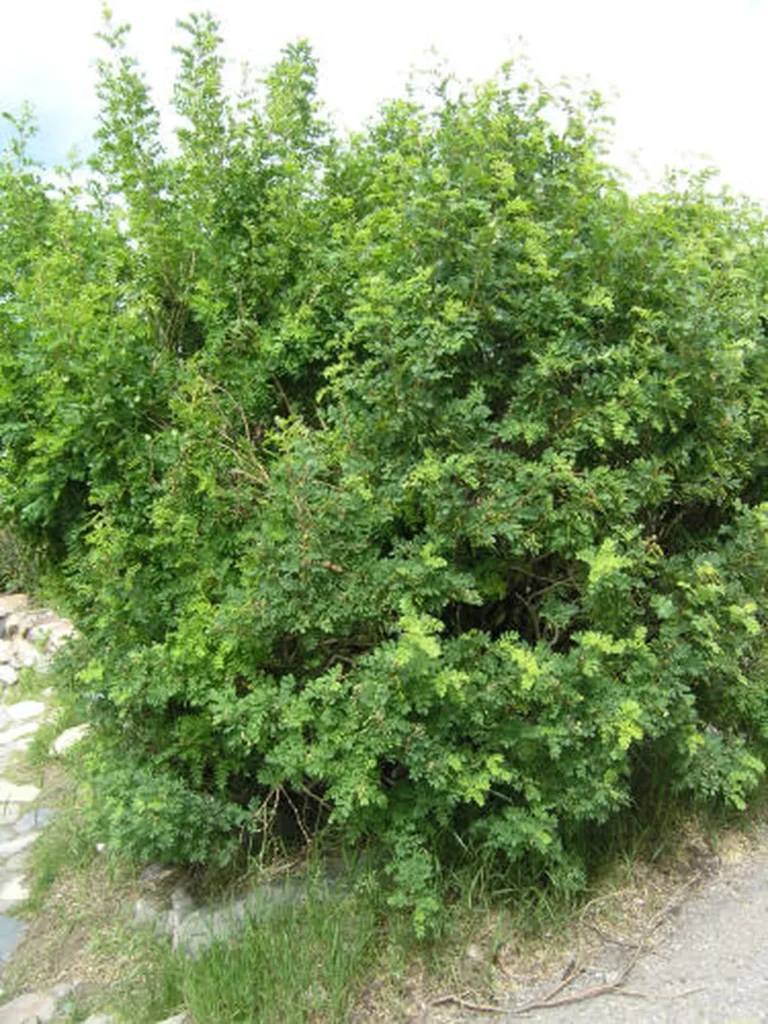
In the arid stretches of China’s Mu Us Desert, where the wind shapes dunes like waves on a frozen sea, a quiet revolution is taking root—not in steel and concrete, but in the resilience of a hardy shrub named Caragana korshinskii. For energy developers eyeing solar farms, wind farms, and pipeline corridors across this semi-arid expanse, the ground beneath their feet is anything but stable. Soil moisture isn’t just a scientific curiosity—it’s a foundation for long-term infrastructure viability. And according to new research led by Shuai He, a hidden dialogue between rain and sand may hold the key to securing that foundation.
He Shuai, whose affiliation is not specified in the study, and his team spent the 2019 growing season tracking rainfall and soil moisture in an artificial Caragana forest planted to stabilize shifting sands. Using soil moisture sensors and automated weather stations, they captured how water moves—or doesn’t—through the upper 110 centimeters of dune soil. Their findings reveal a delicate balance: rainfall isn’t just a random event—it’s a measurable driver of soil hydration, with thresholds that could inform everything from irrigation strategies to erosion control in renewable energy zones.
“Soil moisture in the top 50 centimeters responds almost immediately to rainfall,” He and colleagues note. “But deeper layers tell a different story—one where cumulative rainfall and infiltration patterns become critical.” The data show that a single 46-millimeter storm can fully recharge the 110 cm profile, a revelation for engineers designing drainage systems in water-scarce environments. Smaller storms, however, barely penetrate beyond a few centimeters. A 5 mm rainfall might wet only the top 5 cm; 10 mm reaches 30 cm; 20 mm, up to 50 cm; and only at 30 mm does water begin to reach deeper layers. This isn’t just academic—it’s the difference between surface runoff that erodes foundations and deep infiltration that stabilizes them.
For the energy sector, this research carries commercial weight. Solar and wind farms in deserts rely on stable ground conditions for mounting structures, cable trenching, and access roads. Soil saturation affects bearing capacity, slope stability, and long-term settlement—factors that can delay project commissioning or trigger costly repairs. He’s work suggests that strategic planting of Caragana korshinskii, a native shrub known for its sand-binding roots, could act as a natural water management system. By moderating infiltration and reducing erosion, such vegetation may help maintain soil integrity around critical infrastructure.
The study also highlights the role of rainfall intensity and initial soil moisture. Heavy downpours, even in arid regions, can drive water deeper faster—but only if the soil isn’t already saturated. “Higher rainfall intensity and initial moisture content shorten infiltration time and increase depth,” the authors write. This nuance is vital for predictive modeling in project planning, especially in regions where climate models predict more intense but less frequent rainfall events.
Published in *Shuitu Baochi Yanjiu* (translated as *Soil and Water Conservation Research*), the study underscores a growing recognition that ecological engineering isn’t just about aesthetics or environmental compliance—it’s a risk mitigation strategy. As energy companies expand into deserts and semi-arid zones, integrating such findings into site design could reduce water use, lower maintenance costs, and improve asset longevity.
In a world racing to decarbonize, the Mu Us Desert may seem like an unlikely ally. But beneath its shifting sands, a quiet science is unfolding—one where rain, roots, and resilience converge. For energy developers, that convergence could be the difference between a project that survives the storm and one that crumbles under it.