
In the vast expanse of Inner Mongolia’s Hunshandake Sand Land, a quiet revolution is unfolding—one that could reshape how we think about balancing water use, livestock grazing, and ecological renewal in pastoral regions. At the heart of this transformation is a study led by Rong Hao, whose work delves into the delicate interplay between family-run irrigation forage lands and the restoration of natural grasslands. Published in *Shuitu baochi yanjiu* (translated as *Soil and Water Conservation Research*), the research offers a data-driven roadmap for pastoral communities grappling with land degradation and water scarcity.
The study zeroes in on XilinGuole League, a region where the dual pressures of overgrazing and desertification have long threatened both livelihoods and ecosystems. Rong Hao’s team set out to quantify how small-scale irrigation projects—where families cultivate forage crops to supplement livestock feed—might influence the recovery of surrounding grasslands. The findings suggest a surprising synergy: when managed carefully, these mini-irrigation systems don’t just bolster feed supply; they can also act as catalysts for broader ecological renewal.
“Traditionally, we’ve seen irrigation and natural grasslands as competing interests,” Rong Hao notes. “But our data shows that when forage lands are developed within ecological limits, they can actually create microclimates that support grassland recovery.” The study quantifies this relationship, offering a ratio of forage land area to natural grassland renewal—a metric that pastoral communities and policymakers could use to guide sustainable land use.
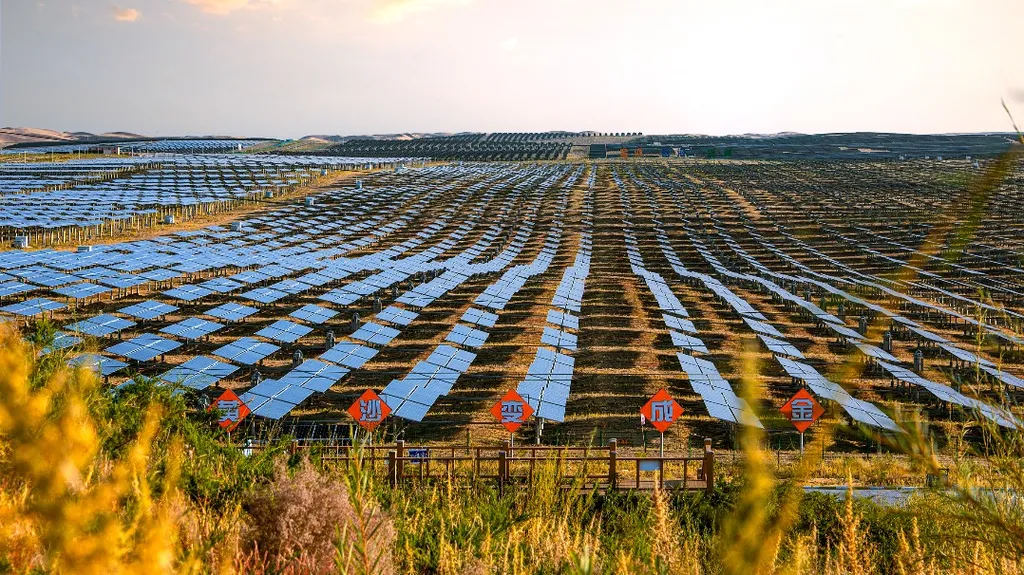
For energy sector stakeholders, the implications are significant. Regions like Inner Mongolia are not just pastoral hubs; they’re also key to China’s renewable energy ambitions, hosting vast wind and solar farms. Land degradation poses a direct threat to these projects—silted waterways can disrupt hydroelectric operations, while unstable soils challenge the stability of solar panel arrays. By integrating Rong Hao’s findings into land management strategies, energy developers could align their infrastructure projects with ecological restoration efforts, creating a dual-purpose approach to land use.
The research also hints at broader commercial opportunities. As global demand for sustainable livestock feed grows, small-scale irrigation systems could emerge as a niche market for agri-tech firms. Meanwhile, the methodology—rooted in coupling ecological principles with quantifiable data—offers a template for similar studies in other arid and semi-arid regions, from the Australian outback to the American West.
What remains to be seen is how quickly these insights can scale beyond the study’s boundaries. Pastoral communities, often resistant to top-down interventions, may need tailored incentives to adopt these practices. Yet the potential payoff—healthier grasslands, more resilient livestock operations, and even synergies with renewable energy projects—makes a compelling case for further exploration. *Shuitu baochi yanjiu* has given the world a new lens through which to view the intersection of water, land, and livelihoods. The question now is whether policymakers and industry leaders will take notice.