
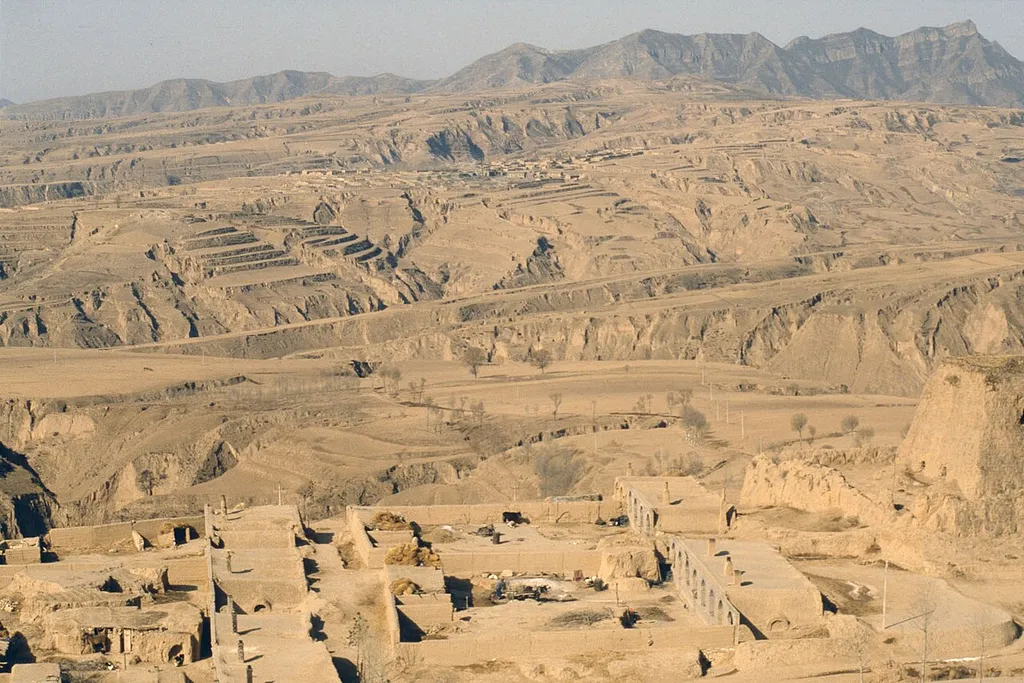
The Loess Plateau, a vast expanse of fragile land stretching across seven provinces in northern China, has long been a battleground against erosion, poverty, and environmental degradation. For decades, its rolling hills of loose, nutrient-poor soil have eroded into deep gullies, choking the Yellow River with sediment and leaving communities in a cycle of low productivity and hardship. But a groundbreaking study by lead author Zhu Xianmo, whose affiliation remains unspecified, now offers a strategic blueprint to reverse this trend—one that could have far-reaching implications not just for agriculture, but for energy and infrastructure development across northern China.
Zhu’s research, published in *Shuitu baochi yanjiu* (translated as *Soil and Water Conservation Research*), argues that the key to unlocking the plateau’s potential lies in a radical shift in water management. “Making all the rainfall penetrate into soil for storage” isn’t just a catchphrase—it’s a strategic imperative, he asserts. The plateau’s deep, porous loess soil can absorb and retain vast amounts of water, but decades of deforestation, overgrazing, and unsustainable farming have stripped it of this natural resilience. By restoring vegetation and adopting land-use practices that prioritize water retention, the study suggests, the region could transform from a source of ecological crisis into a sustainable resource hub.
The urgency is clear. The plateau’s ecological collapse doesn’t just threaten local farmers—it destabilizes the Yellow River basin, a critical artery for China’s water supply and energy infrastructure. Hydropower dams, irrigation systems, and even thermal power plants rely on predictable water flows. Chronic sedimentation from erosion has already forced costly dredging and reduced reservoir capacity. But Zhu’s approach could mitigate these risks by reducing runoff and enhancing groundwater recharge, indirectly supporting energy projects dependent on stable water supplies.
The study’s regionalization model divides the plateau into five distinct zones, each with tailored conservation strategies. From the high-altitude meadows of Qinghai to the densely populated farmlands of Shaanxi, the plan acknowledges that a one-size-fits-all solution won’t work. In some areas, reforestation may be the answer; in others, terracing or rotational grazing could restore balance. The goal is to break the “vicious cycle” of low yields and environmental damage that has plagued the region for generations.
For energy planners, the implications are significant. Northern China’s push for renewable energy—particularly wind and solar—has been hampered by water scarcity and land degradation. But if the Loess Plateau’s degraded lands can be rehabilitated, they could host distributed solar farms or serve as buffers for wind projects, all while improving local livelihoods. The study even hints at economic co-benefits: stabilized soils could reduce dust storms that disrupt power transmission, while restored watersheds might lower cooling costs for thermal plants.
Yet challenges remain. The “five indiscriminations”—unregulated farming, grazing, fuel collection, logging, and herb gathering—are deeply ingrained in local economies. Persuading communities to adopt conservation measures won’t be easy, especially when short-term survival often trumps long-term sustainability. But Zhu’s work suggests that with the right incentives—perhaps tied to China’s carbon neutrality goals or rural revitalization programs—change is possible.
As China races to meet its 2060 carbon neutrality target, the Loess Plateau’s rehabilitation could become a model for balancing development with environmental stewardship. For energy investors, this isn’t just about avoiding risks—it’s about seizing an opportunity to integrate conservation into the region’s economic future. The question now is whether policymakers and local stakeholders will heed the call before the next flood or drought forces their hand.
Published in *Soil and Water Conservation Research*, Zhu’s study may well be the blueprint northern China needs—but only if it’s acted upon with the same urgency as the crises it seeks to solve.