
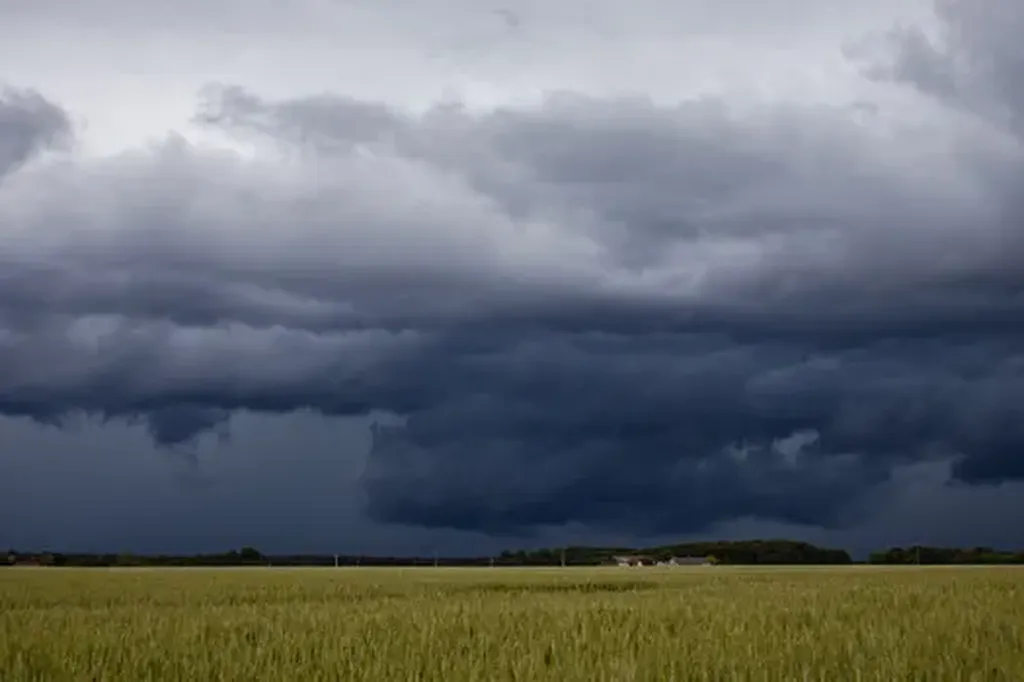
The Loess Plateau in China’s arid northwest has long been a region where agriculture teeters on the edge of water scarcity. For decades, farmers in Longdong—a key winter wheat belt—have relied on the region’s unpredictable rainfall to sustain their crops during the fallow period between harvest and planting. But a new study led by researcher JIA Jianying reveals that the patterns of rain and soil moisture are shifting in ways that could reshape both farming practices and regional water strategies.
Over the past 40 years, precipitation during the fallow period has increased by an average of 14 millimeters per decade, according to data collected from 1981 to 2020. Yet, as JIA points out, this increase isn’t evenly distributed. “The number of rainy days has declined, but the intensity of rainfall has gone up,” JIA explains. “Heavy and moderate rain events are becoming more frequent, which means more water is reaching the soil when it matters most.”
That’s critical because the study, published in *Shuitu baochi yanjiu* (translated as *Soil and Water Conservation Research*), found that soil water storage in the top 1-meter layer of winter wheat fields rose by an average of 9.5 millimeters every 10 days during the fallow season. Over four decades, this has translated into an additional 97 millimeters of stored water—enough to make a meaningful difference in a region where every drop counts.
The research also uncovers a key threshold: at least 175 millimeters of rainfall during the fallow period is needed to trigger significant soil water replenishment. Beyond that, the relationship between rain and stored moisture isn’t linear. “Early-season rainfall tends to evaporate quickly,” JIA notes. “But late-season storms are more likely to be captured in the soil profile, especially when they come as moderate or heavy rain.”
For energy and agricultural sectors watching water security trends, these findings carry weight. Improved soil water storage efficiency—averaging 0.27 over the past 40 years—could reduce the need for irrigation in a region where groundwater is already under pressure. But the study also warns that efficiency drops when soil moisture at harvest is below 45–48% of field capacity. In other words, drier soils at the end of the growing season may paradoxically lead to better water retention during fallow.
What does this mean for the future? As climate patterns evolve, understanding these thresholds could help farmers time planting, adjust crop rotations, or invest in soil conservation measures. For policymakers and energy planners, the data suggests that water-smart agriculture isn’t just about capturing more rain—it’s about managing it differently.
As JIA and colleagues conclude in their study, the insights could guide more efficient use of regional water resources. And in a world where water is increasingly a limiting factor for both food and energy production, that kind of precision could be worth its weight in gold.