
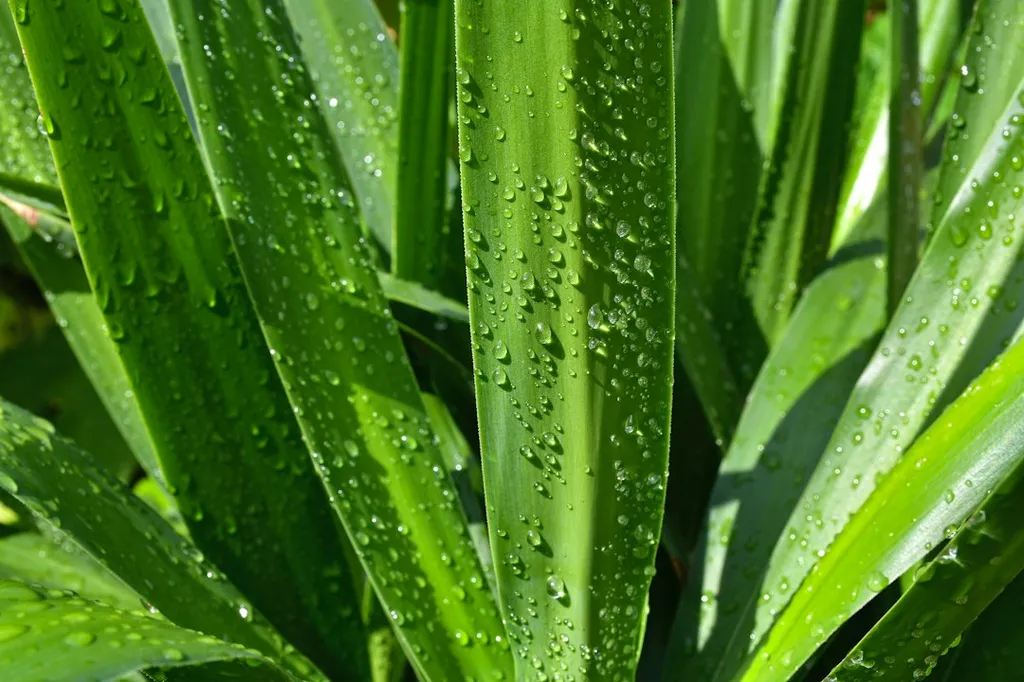
Millenia Anggie Wangsa Putri, a researcher at Indonesia’s Universitas Sebelas Maret, has uncovered a promising pathway to sustainable water management—one that begins with the humble leaves of the Pandanus tectorius, a coastal shrub commonly known as the *screwpine*. In a study published in *Science and Technology Indonesia*, Putri and her team have transformed this renewable biomass into superabsorbent hydrogels capable of holding up to 41 times their weight in water, offering new opportunities for agriculture, drought resilience, and even energy-related water applications.
The process starts with extracting cellulose from Pandanus leaves, a process that aligns with circular economy principles by repurposing agricultural waste. The cellulose is then chemically modified into carboxymethyl cellulose (CMC), a water-soluble polymer widely used in food, pharmaceuticals, and hygiene products. But Putri’s innovation lies in its next step: cross-linking CMC with hydroxyethyl cellulose (HEC) using natural organic acids—citric, fumaric, and malic—as eco-friendly crosslinkers.
“These acids are not only abundant and biodegradable but also safe for soil application,” Putri notes. “This makes the hydrogel suitable for agricultural use without environmental harm.”
The resulting dual-network hydrogel boasts a highly porous structure—visible under scanning electron microscopy—ideal for absorbing and slowly releasing water. Among the formulations tested, the CMC/HEC hydrogel crosslinked with malic acid at 15% concentration delivered the best balance of water absorption (up to 4,163% swelling ratio), stability, and thermal resistance (degrading only above 400°C).
For the energy sector, such materials could play a role in water-intensive operations, such as thermal power plant cooling or hydraulic fracturing, where efficient water retention and controlled release are critical. Unlike synthetic superabsorbents that rely on petroleum-based polymers and generate microplastic concerns, these bio-based hydrogels decompose naturally, reducing long-term environmental liabilities.
Putri’s work also intersects with global sustainability goals. By enhancing soil moisture retention, the hydrogels could help farmers in arid regions reduce irrigation needs—supporting SDG 2 (Zero Hunger) and SDG 6 (Clean Water and Sanitation). In water-scarce power generation hubs, integrating such materials into soil barriers or containment systems could minimize freshwater consumption and wastewater generation.
The study’s findings suggest a scalable model for turning agricultural waste into high-value environmental solutions. With further optimization, these hydrogels could be produced locally in tropical regions rich in Pandanus, creating rural jobs while advancing green chemistry.
As the energy transition accelerates and industries seek to decouple water use from carbon emissions, bio-based hydrogels like those developed by Putri offer a quiet revolution—one leaf at a time.