
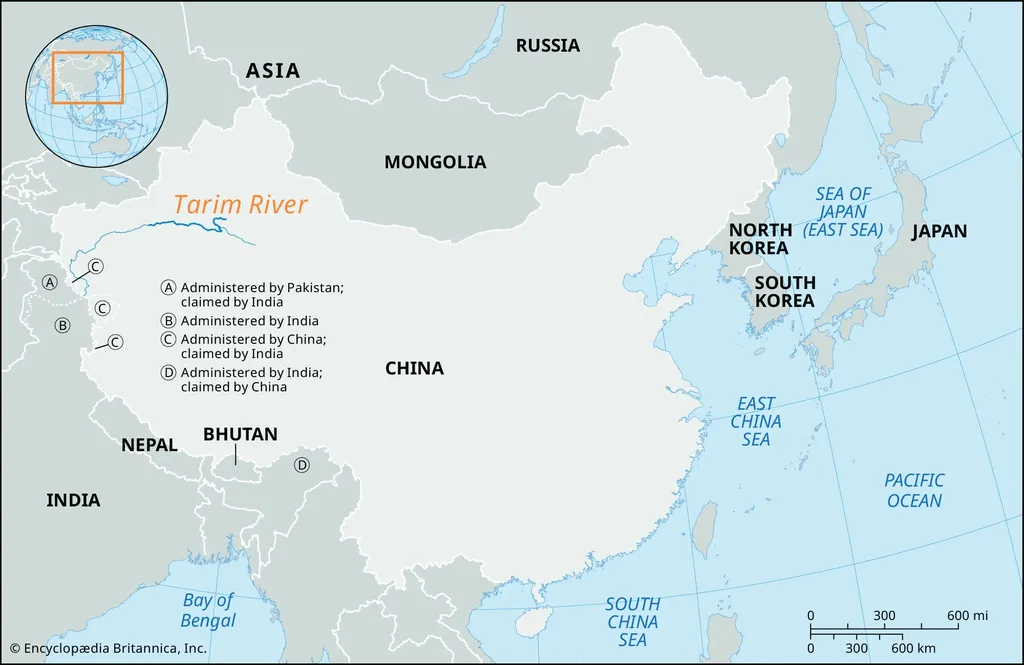
The once-thriving ecosystem of the lower reaches of the Tarim River in China’s arid Xinjiang region is facing an alarming transformation. A new study by researcher Ayxam·Ismayil, affiliated with an unknown institution, reveals how human activities—particularly population growth and agricultural expansion—are accelerating desertification in one of the world’s most fragile environments. The findings, published in the Chinese journal *Soil and Water Conservation Research*, suggest that unsustainable water use upstream is not just an ecological issue but a commercial one, with potential ripple effects for energy and infrastructure projects in the region.
The Tarim Basin, home to vast oil and gas reserves, has long relied on the Tarim River for irrigation and water supply. But as Ayxam·Ismayil’s research shows, the river’s flow has dwindled dramatically in recent decades. “The direct cause of desertification in the lower reaches is the increase in water consumption in the main stream,” the study states, “with reductions in water flow directly tied to the expansion of arable land in the upper and middle basin.” This is no small matter for industries dependent on the river’s resources. With water scarcity intensifying, energy companies operating in the region may face heightened regulatory scrutiny and operational challenges.
The study employs 3S technology (remote sensing, geographic information systems, and global positioning systems) alongside statistical analysis to map the relationship between human activity and environmental degradation. Ayxam·Ismayil found that population growth and farmland expansion are closely linked, with each new resident driving further irrigation demands. “In arid zones like the Tarim Basin,” the paper notes, “population growth doesn’t just increase demand—it reshapes the landscape itself.”
For energy firms, this research underscores a critical reality: water availability is not just an environmental concern but a commercial constraint. As desertification spreads, land degradation could disrupt pipelines, complicate drilling operations, and strain local water supplies. The study suggests that without intervention, the commercial viability of projects in the region may be at risk.
Ayxam·Ismayil’s work, published in *Soil and Water Conservation Research* (*Shuitu baochi yanjiu*), offers a stark reminder that in arid regions, human development and ecological balance are inseparable. For industries operating in such environments, the message is clear: sustainable water management isn’t optional—it’s a business imperative.