
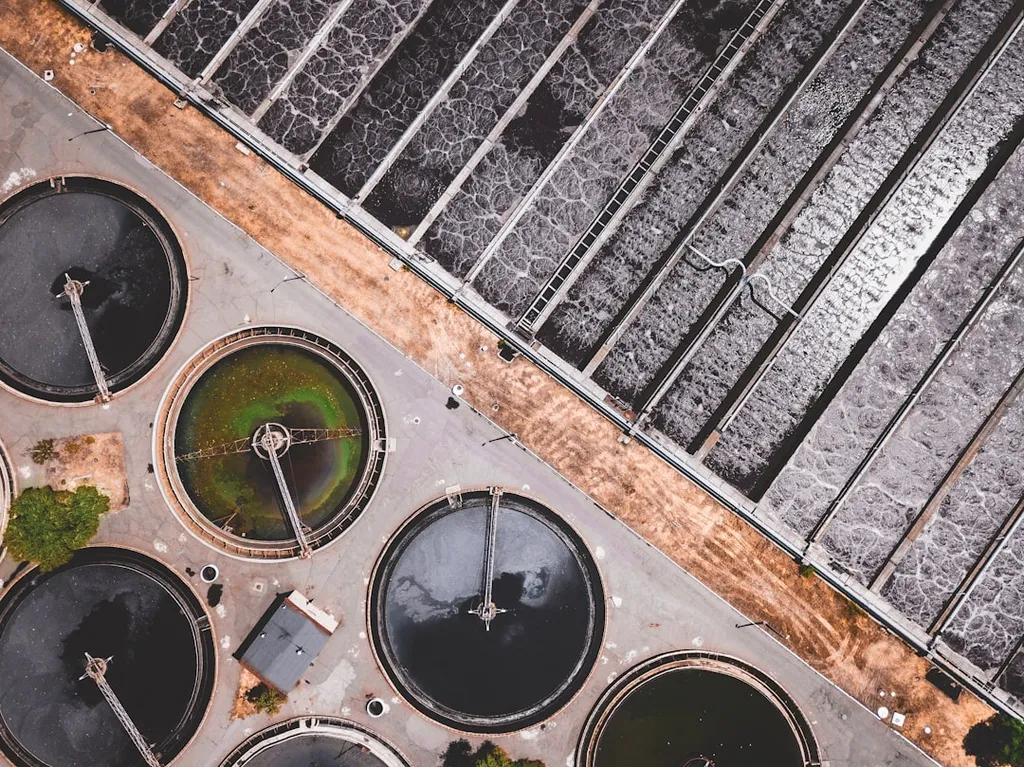
In the shadow of landfills and wastewater treatment plants lies an untapped resource that could redefine sustainability in the energy and materials sectors. A new review published in *EcoMat* by lead author Anwar Ahmad, affiliated with the Water and Environmental Studies Centre at King Faisal University in Al Ahsa, Saudi Arabia, proposes a radical shift: turning wastewater sludge (WWS)—a ubiquitous and often costly waste stream—into a feedstock for polyhydroxyalkanoate (PHA), a next-generation bioplastic.
Wastewater sludge is more than just a byproduct of treatment—it’s a complex cocktail of organic carbon and nutrients, produced globally in staggering volumes. Traditionally, managing this sludge has been an environmental and financial burden, contributing to greenhouse gas emissions through disposal and treatment. But Ahmad’s research suggests a transformative opportunity: by leveraging metabolic engineering and microbial processes, WWS could become the foundation of a circular economy, where waste is not discarded but repurposed.
The science behind this is compelling. PHA, a biodegradable polymer, can be synthesized directly from the volatile fatty acids and nutrients present in sludge-derived media. By introducing engineered microbial strains—such as those with heterologously expressed *phaCAB* genes—researchers can coax mixed microbial cultures into becoming efficient PHA factories. As Ahmad notes, this approach doesn’t just clean water—it recovers value from waste. “Direct PHA synthesis on sludge-derived media is a promising, integrated approach to waste management and sustainable production,” he states. “It transforms WWS from a treatment-focused service into a resource-recovery asset.”
The commercial implications for the energy and materials sectors are significant. Life cycle assessments (LCAs) suggest that while PHA production from WWS currently emits around 1.5–3.5 kg CO₂-equivalent per kg of PHA, this is still markedly lower than the 3.5–6.5 kg CO₂-equivalent emitted by the production of fossil-based plastics they replace. When factoring in avoided disposal emissions and the displacement of conventional plastics, the net climate benefit becomes clear. For industries grappling with decarbonization targets and circular economy mandates, this could be a game-changer.
Yet challenges remain. Scalability, process optimization, and downstream processing are critical hurdles. The review emphasizes the need for further innovation in metabolic engineering, reactor design, and system integration to make this vision commercially viable. But the trajectory is promising. If successfully scaled, WWS-derived PHA could disrupt both the bioplastics market and wastewater management paradigms, offering a dual solution to pollution and resource scarcity.
As the global push for sustainability intensifies, this research underscores a fundamental truth: the future of materials may not lie in extracting new resources, but in reimagining what we discard. For industries willing to invest in this intersection of biotechnology and circularity, the rewards could be both environmental and economic. Published in *EcoMat*—which translates to “EcoMaterials”—this work positions PHA as a cornerstone of tomorrow’s sustainable economy, one sludge treatment plant at a time.