
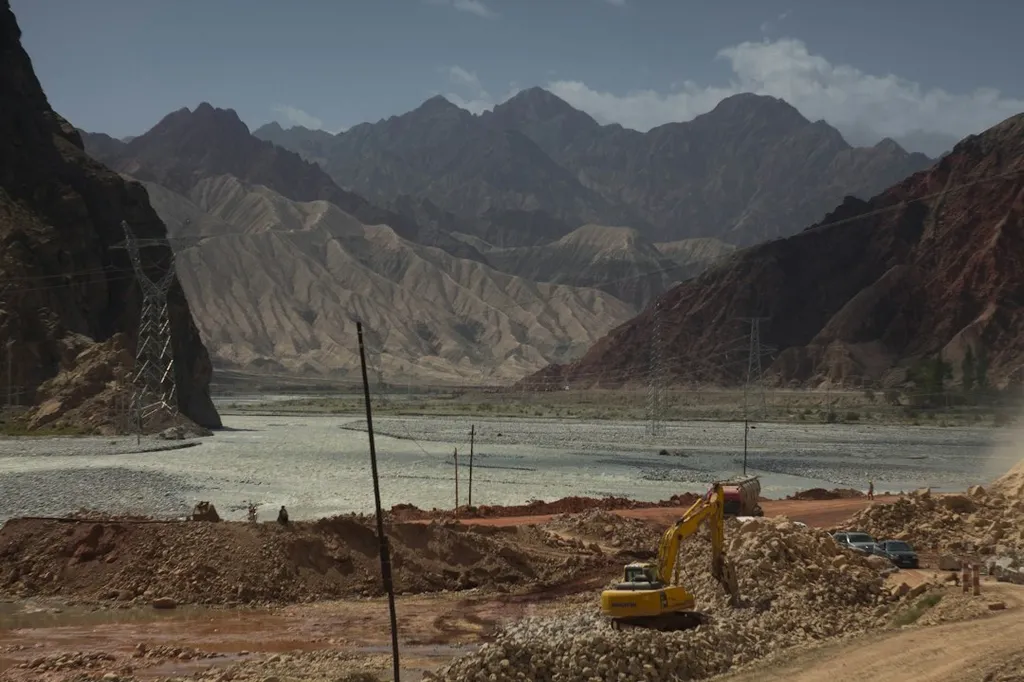
In the heart of China’s far west, where the Taklamakan Desert stretches endlessly, lies South Xinjiang—a region where water isn’t just scarce; it’s the very lifeblood of an oasis economy. Here, agriculture thrives in a fragile ecological balance, sustained by a network of irrigation systems that have supported communities for generations. But as climate pressures mount and resource demands grow, the question isn’t just about survival—it’s about sustainability. And according to research led by Chen Yong-xin, published in *Soil and Water Conservation Research*, the answer lies in a multi-layered approach to water saving that could reshape the future of arid land farming.
Chen Yong-xin, whose affiliation remains unspecified in the study, has outlined a water-saving strategy that goes far beyond simply reducing usage. His work highlights a “comprehensive technology system” that integrates engineering solutions, field-level practices, and agricultural management to address the unique challenges of South Xinjiang’s arid agricultural landscape. This isn’t just about conserving water—it’s about redefining how an entire region can sustain its economy while preserving its environment.
The stakes are high. South Xinjiang’s oasis agriculture depends heavily on irrigation, making water efficiency a commercial imperative. As China’s western development initiatives push forward, the pressure to optimize water use has intensified. “Water saving becomes the point of irrigation engineering in this area,” Chen notes, emphasizing that the implementation of systematic ecological management in the Tarim River basin has made water conservation not just a goal, but a necessity.
What makes this research particularly compelling is its recognition that no single solution will suffice. Instead, Chen’s approach combines structural measures—such as improved irrigation infrastructure—with non-structural tactics like better field management and crop selection. This holistic strategy could have far-reaching implications, not just for agriculture, but for the energy sector as well. Efficient water use reduces the energy required for pumping and distribution, directly impacting operational costs for farms and utilities alike.
For industries reliant on water-intensive processes, such as power generation or mining, the lessons from South Xinjiang could offer a blueprint for sustainable resource management in arid regions worldwide. As climate change exacerbates water scarcity, the commercial viability of such innovations becomes increasingly critical.
Published in *Soil and Water Conservation Research* (translated from *Shuitu baochi yanjiu*), Chen’s work serves as a reminder that in the fight for sustainability, the most effective solutions often lie in the integration of technology, policy, and local practices. For South Xinjiang, the future of farming—and by extension, its economy—may well depend on getting this balance right.