
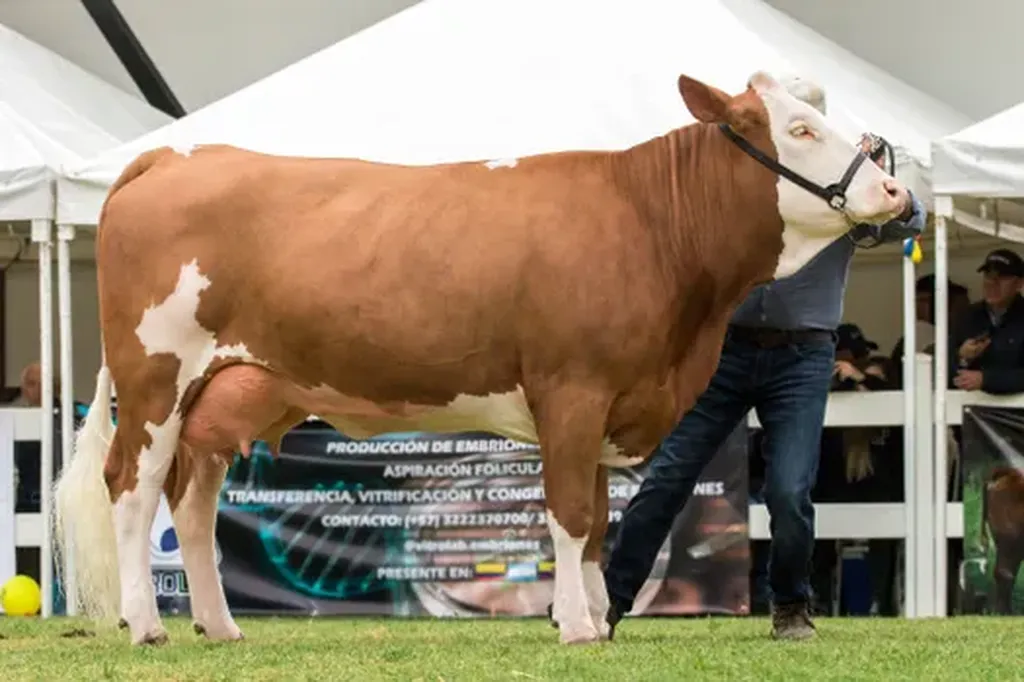
The World Dairy Expo’s Virtual Farm Tour series, now in its 25th year, offers a rare glimpse into the operational diversity and technological advancements shaping modern dairy farming—without attendees leaving Madison. The three featured farms—Coldstream Farms in Washington, Double Eagle Dairy in Michigan, and Rancho Pepper Dairy in Texas—highlight distinct approaches to genetics, sustainability, and labor efficiency, each reflecting broader industry trends.
Coldstream Farms in Deming, Washington, opens the series on September 30 with a focus on genetic precision and environmental stewardship. The family-owned operation, now managed by the second and third generations, produces 115 pounds of energy-corrected milk per cow daily with high butterfat levels, achieved through a rigorous genetic program. “We target approximately 100 sexed-semen pregnancies and 30 embryo pregnancies each month,” said a farm representative, underscoring how selective breeding accelerates herd improvement. Environmental initiatives, such as manure-based bedding systems and nutrient management plans, demonstrate how waste reduction and efficiency can coexist with high-output production. The farm’s participation in the National Dairy FARM Environmental Stewardship Program further illustrates how third-party validation is becoming standard for operations prioritizing sustainability.
Double Eagle Dairy in Middleton, Michigan, shifts the focus to technological integration and generational transition. What began as a five-cow operation post-World War II has expanded into a 3,500-cow enterprise, with technology serving as a catalyst for growth. The farm’s early adoption of a rotary parlor in 2006 and subsequent investments in rumination monitoring collars and advanced parlor systems reflect a broader industry shift toward data-driven herd management. “Recent facility improvements have streamlined cattle handling and reduced labor demands,” noted the farm’s management team. Sustainability efforts, including nutrient management and manure digestion, align with the operation’s expansion trajectory, while a beef-on-dairy breeding strategy optimizes both genetics and revenue streams.
Rancho Pepper Dairy in Dublin, Texas, closes the series on October 2 with a model that blends organic production, robotic milking, and community investment. Transitioning to organic in 2006, the farm now operates on 4,400 acres of pasture-based agriculture, a rarity in an industry often criticized for intensive confinement systems. The 2022 installation of North America’s first DeLaval VMS batch-milking facility—featuring 22 robotic units in a double-11 parallel configuration—challenges conventional labor assumptions in dairy. Cows graze from March to October while maintaining twice-daily milking, a balance that prioritizes animal welfare without sacrificing productivity. “The system allows cows to graze from March through October while maintaining twice-daily milking with limited labor requirements,” said a farm spokesperson. Genomic testing for Jersey and Holstein donors, coupled with A2A2 beta-casein genetics, underscores how modern dairy operations are fine-tuning milk quality and consumer demand. Beyond production, the farm’s philanthropic efforts—including over $1 million in scholarships and $400,000 in food bank donations—highlight how sustainability extends beyond environmental metrics.
The tours collectively underscore three themes shaping dairy’s future: genetic innovation, technological adoption, and environmental accountability. Coldstream Farms’ regenerative practices, Double Eagle Dairy’s tech-driven scalability, and Rancho Pepper Dairy’s organic-robotic hybrid model each respond to distinct market pressures while pushing boundaries. For industry professionals, these case studies offer more than operational insights—they present a roadmap for balancing productivity with responsibility. Whether through precision breeding, automated systems, or regenerative grazing, the farms demonstrate that adaptation is not a luxury but a necessity in an evolving sector.