
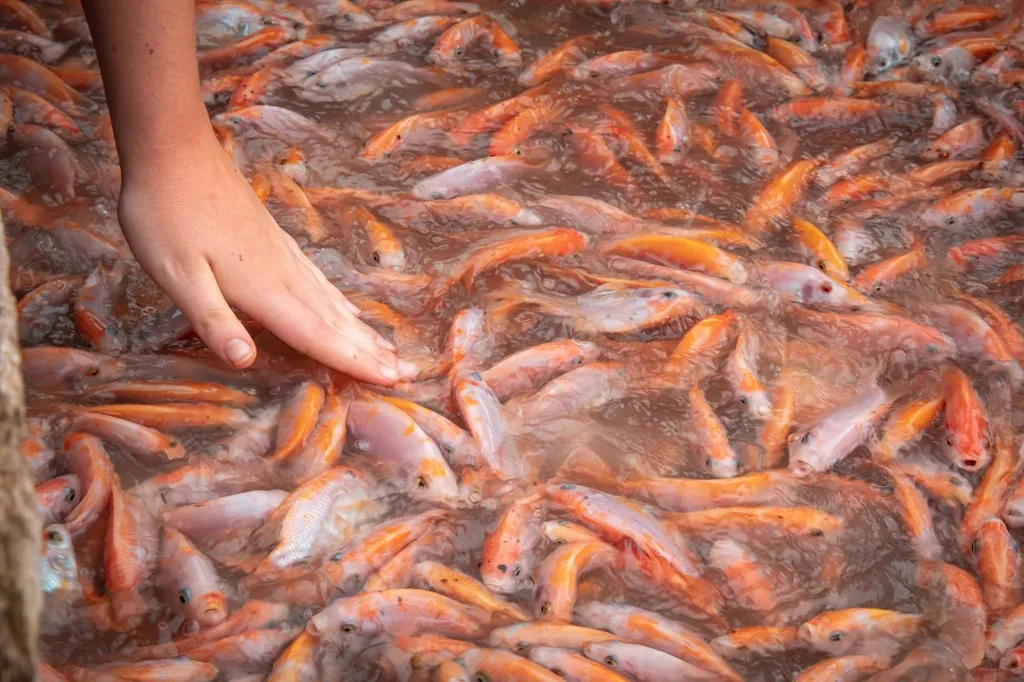
In the bustling corridors of Tobelo’s traditional market, a study by Febrina Olivia Akerina of Universitas Hein Namotemo has quietly underscored the delicate balance between freshness and commerce in one of Indonesia’s most vital food sectors. Her research, published in the *Journal of Scientific Platax* (Jurnal Ilmiah Platax), offers a rare glimpse into how the humble demersal fish—those bottom-dwellers of coastal ecosystems—retain their quality in the hands of local vendors and consumers.
Demersal fish, the lifeblood of many coastal economies, are prized for their flavor and nutritional value but are notoriously perishable. Akerina’s findings reveal that the fish sold in Tobelo’s market not only meet Indonesia’s strict freshness standards but do so without reliance on advanced cold-chain infrastructure. The organoleptic tests—assessing gills, eyes, flesh, smell, and texture—confirmed compliance with the Indonesian National Standard, while pH levels between 6.00 and 6.65 signaled optimal freshness. “This suggests that traditional handling methods, when properly applied, can rival modern preservation techniques,” Akerina noted, hinting at a sustainable pathway for small-scale fisheries.
The implications for the energy sector are subtle but significant. Traditional markets like Tobelo’s operate with minimal refrigeration, yet their supply chains remain resilient. If replicated across other regions, this model could reduce the energy demand for large-scale cold storage—a major cost and carbon footprint in global seafood distribution. “For regions where infrastructure is limited, these findings validate low-tech solutions that don’t sacrifice quality,” Akerina added.
As climate pressures and energy costs reshape food systems, Akerina’s work in *Jurnal Ilmiah Platax* serves as a reminder that innovation isn’t always high-tech—sometimes, it’s about refining the old to meet the new. The study’s blend of scientific rigor and real-world applicability could influence how markets and energy planners collaborate to sustain both livelihoods and ecosystems.